Detailed Explanation of Key Cultivation Techniques for Banana Tissue-Cultured Plantlets
Test-tube plantlets are usually disease- and pest-free, uniform in growth, and easy to transport, which facilitates the large-scale promotion of improved varieties. At present and in the future, bananas, Fenjiao (ABB group bananas), Longyajiao, and even plantains commonly adopt this method. However, test-tube plantlets are relatively tender and weak at the seedling stage, with poor resistance, and are susceptible to mosaic heart rot disease and other pests and diseases. When planted in adverse weather, the plantlets are easily damaged or killed...
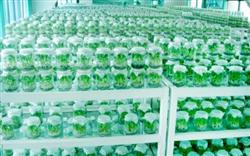
Test-tube plantlets are usually disease- and pest-free, uniform in growth, and easy to transport, which facilitates the large-scale promotion of improved varieties. At present and in the future, bananas, Fenjiao (ABB group bananas), Longyajiao, and even plantains commonly adopt this method. However, test-tube plantlets are relatively tender and weak at the seedling stage, with poor resistance, and are susceptible to mosaic heart rot disease and other pests and diseases. When planted in adverse weather, the plantlets are easily damaged or killed, and the growth period is also relatively long. Variation is easily produced during the tissue culture process, and most variations are still difficult to identify at the time of field planting. In response to these characteristics, the key cultivation and management techniques are as follows:
(1) Land preparation and earthing up. Test-tube plantlets are prone to exposing their corms above the soil, and deep planting is not suitable. During land preparation, it is best to reserve enough soil for later earthing up. In paddy field banana orchards, a 3-level bed preparation method should be used, that is, the center of the bed is 10-15 cm higher than the planting hole rows. As the test-tube plantlets grow, soil from the bed center is earthed up toward the planting holes during fertilization to prevent the corms from being exposed. When preparing dry field land, the furrows may temporarily be shallower, and later the furrows should be continuously deepened to earth up around the plants.
(2) Planting. Test-tube plantlets can be planted when they have 6-8 leaves (including the 3 leaves of the bottle plantlets). Generally, spring planting is preferable. Before field planting, harden the plantlets in advance to let them adapt to the natural climate. When planting, open the seedling bag carefully and do not loosen the bag soil, otherwise the survival rate and recovery growth will be affected.
(3) Fertilization. Test-tube plantlets are extremely intolerant of fertilizer in the early stage. Base fertilizer must be applied deep, and the root system must absolutely not come into contact with the fertilizer soil. Farmyard manure must be fully decomposed and applied deep below 30 cm or applied 60-80 cm away. On rainy days, shallow planting may be used, and topdressing should be carried out when new leaves emerge after field planting. Within two months after planting, on dry days, 0.1%-0.2% compound fertilizer or potassium dihydrogen phosphate, organic fertilizer liquid, Yemianbao, Lüwang series fertilizers, etc. may be used. As the plants grow, the amount of liquid fertilizer or fertilizer applied may be increased. In the mid-term, fertilizer should preferably be applied generously, once every 15-20 days, and in the later stage once every 25-30 days. Spring-planted test-tube plantlets must have strengthened fertilizer and water management to be able to shoot buds before October and pass through winter. Test-tube plantlets with sufficient fertilizer and water grow vigorously, and their newly emerging cylindrical leaves are spirally curved, each one larger than the last.
(4) Water management. Test-tube plantlets have relatively low water requirements in the early stage, but they must not suffer drought or soil waterlogging. During drought, water should be applied promptly. For planting during high-temperature periods, covering the planting holes may be used in combination. When planting in the rainy season, attention must be paid to soil drainage. For relatively clayey soil, soil 30-40 cm outside the planting hole may be scraped away to let the planting hole protrude 5-10 cm, preventing waterlogging in the planting hole that causes root rot or root damage.
(5) Strengthen pest and disease control. In epidemic areas of mosaic heart rot disease, attention should be paid to controlling this disease, including using older and stronger test-tube plantlets with better resistance, promptly clearing weeds in the field, not intercropping virus-host crops, and regularly spraying antiviral agents (see the control of mosaic heart rot disease). During the seedling stage, test-tube plantlets are also very susceptible to feeding by pests such as tobacco cutworm larvae. In the rainy season, in some old coastal banana areas, because the leaves of test-tube plantlets are relatively close to the ground, they are prone to leaf spot disease, and spraying for control should also be noted.
(6) Promptly remove variant plants. Variant plants during the nursery stage, such as those with white stripe patches on leaves, mosaic leaves, deformed leaves, and exceptionally short and sturdy plantlets, are relatively easy to identify and remove. In addition, there are two types of variant plants that occur more frequently and are difficult to identify in the early stage. Usually, they can only be carefully identified 2-4 months after field planting and at a leaf age of 15-20 leaves or more. One is the dwarf type, with short and thick plants, short and broad leaves, slightly thicker, relatively dark green, slightly rolled back downward, short petioles, relatively close to the pseudostem, and a relatively thick and dwarfed pseudostem. The other is leaf abnormality, with the main symptoms being relatively upright leaves, all or part of the leaf margins shrunken, irregular or wavy black or waxy marks on the leaf surface, some mixed with irregular transparent marks, and some plants having abnormal phyllotaxy. The above two main types of variant plants can shoot buds and bear fruit, but the yield is extremely low, the quality is poor, and most have no economic value. They must be discovered and dug out as early as possible, and replanted as soon as possible. Generally, according to regulations, 5% variant plants are allowed, but some banana orchards reach 10%-20%, especially when purchasing substandard plantlets, where there are even more variant plants. Usually, 10% more plantlets should be purchased and temporarily heeled in using large bags of 15 cm x 15 cm x 15 cm or directly at the field edge, to be used for replanting after removing diseased or variant plants and dead plants.
(7) Desuckering. Plants grown from test-tube plantlets produce suckers relatively early, in large numbers but weak and small. Because the selection of retained suckers is determined relatively late, these early-produced suckers should be removed as soon as possible, using a specially made sharp banana spade or sickle when the suckers are 15-30 cm tall.