Detailed explanation of key techniques for early-maturing cultivation of greenhouse eggplant
Seed selection and seedling raising: For protected cultivation of eggplant in early spring, it is advisable to choose early-maturing, high-yielding, disease-resistant, high-quality green eggplant varieties. Such as Zhoukou Waibacao and Xinxiang Caoqing eggplant. These two varieties generally produce flower buds at 7 leaves and are suitable for close planting. When raising seedlings with heating cables in a greenhouse, the seedling age is 90-100 days. It is best to transplant when they reach 7-8 leaves and show large buds. Seedlings...
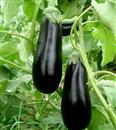
Seed selection and seedling raising: For protected cultivation of eggplant in early spring, it is advisable to choose early-maturing, high-yielding, disease-resistant, high-quality green eggplant varieties. Such as Zhoukou Waibacao and Xinxiang Caoqing eggplant. These two varieties generally produce flower buds at 7 leaves and are suitable for close planting. When raising seedlings with heating cables in a greenhouse, the seedling age is 90-100 days. It is best to transplant when they reach 7-8 leaves and show large buds. If the seedling age exceeds 120 days at transplanting, seedling recovery will be slow, the first eggplant is prone to dropping, and although flowering begins early, early-stage yield is low. If the seedling age is less than 80 days, flowering begins too late and early-stage yield decreases. Temperature is the key to cultivating strong seedlings. Under suitable low temperatures, the node position of differentiated flower buds is lower and the proportion of long-styled flowers is greater. The daytime temperature should be between 20°C-25°C, nighttime between 15-17°C, and soil temperature above 15°C. During the seedling period, thin the seedlings once at the 2-leaf 1-heart stage, with a nutrient area of 100 sq cm per plant. Before transplanting, cut and turn the soil blocks and harden the seedlings at low temperature.
Cultivation management: In early spring, when the soil temperature at a depth of 10 cm in the greenhouse steadily reaches 10°C, open a 15 cm deep furrow according to the row spacing, lay one heating cable at the bottom, cover with 5 cm thick soil, and water thoroughly to raise the soil temperature above 12°C. Choose a sunny noon to water invisibly and transplant the eggplant seedlings. At night cover with a small arch shed, and remove it during the day. In eastern Henan, transplanting should be done in late February. The heating cable should be switched on and off flexibly. Before seedling recovery, turn it off during the day and on at night; after seedling recovery, turn it on in the middle of the night when there is a cold wave, and turn it off when there is no cold wave. To increase early-stage yield, the planting density is 4000 plants, with a plant-to-row spacing of 33 cm x 50 cm. This can increase early-stage yield by about 25%. In the greenhouse, early-stage temperatures are low and light is poor, while later temperatures are high, and the proportion of short-styled flowers is greater. Without insect pollination, flower drop is likely. Therefore, when the first eggplant and opposite eggplant flower, dipping flowers with 20-25 ppm 2,4-D or 40-50 ppm Zuoguoling can make the fruit-setting rate reach more than 85%. Evaporation in the greenhouse is low, and early spring temperatures are low, so watering frequency should be as few as possible. Before transplanting, water heavily once along the furrow, watering enough to soak thoroughly. Water once at transplanting, watering first and then covering with soil. When the eggplant grows to the size of an egg, choose a sunny day to water once to promote fruit growth, and apply one fruit-promoting fertilizer along with the water. Apply 10 kg urea or 1500 kg decomposed human manure per mu. Water less at other times. Eggplant branching increases in multiples of 2, so when implementing dense cultivation, adjust the structure in time. After eggplant harvest, remove 1 row every 2 rows. For the removed rows, after the opposite eggplant sets fruit, retain 2 leaves above it and pinch the growing tip. For the retained rows, promptly remove old leaves and prune empty branches to maintain a reasonable population. From 7 days before transplanting to seedling recovery, do not ventilate. After transplanting until seedling recovery, the soil temperature should be kept above 15°C to promote rapid seedling recovery. When the first eggplant grows to the size of an egg, choose a sunny day to water to promote fruit growth, do not ventilate that day, and ventilate promptly afterward to reduce humidity in the greenhouse. After the first eggplant is harvested, gradually increase ventilation. When ventilating, first let out top air, then side air. Start by ventilating at sunny noon, then transition to all-day ventilation, first daytime ventilation, then transition to nighttime ventilation as well. Keep the daytime temperature in the greenhouse at 25-30°C, not exceeding 35°C and not lower than 20°C; keep the nighttime temperature at 15-17°C.
Pest and disease control: Phytophthora fruit rot, brown spot disease, and Verticillium wilt are the three major diseases in eggplant cultivation, with Verticillium wilt being the most severe in continuous cropping land. During cultivation, cultivate less and shallowly, injure roots less, ventilate more, appropriately control the amount of watering, save seeds from disease-free plants, rotate once with onion and garlic crops within 3-4 years to reduce soil-borne pathogens, soak seeds with 500x dilution of 50% carbendazim wettable powder for 2 hours, then soak seeds with 10 ppm of 10% naphthalene acetic acid liquid, and water the seedling-thinning water with 500x dilution of 50% thiophanate-methyl wettable powder; mix 50% carbendazim wettable powder with 10 times soil and spread it in the sowing bed and transplanting furrow, using 30 g of medicated soil per sq m. Before disease onset, spray the leaf surface 2-3 times with 5 ppm of 10% naphthalene acetic acid liquid, once every 10-15 days. During the occurrence period of Phytophthora fruit rot and ring rot, spray the leaf surface twice with 600x dilution of 75% chlorothalonil wettable powder or 1000x dilution of 48% Ruikumai, once every 5 days. During the occurrence period of Verticillium wilt, drench the roots with 600x dilution of Kangku Ning or 800x dilution of 48% Ruikumai, which can effectively control the spread of the disease.