Key Cultivation Techniques for Winter-Spring Crop Eggplant in Greenhouses
1. Sowing and Seedling Raising: Choose early-maturing or mid-maturing varieties. For seedling raising in a sun-facing cold frame, sowing can be done from late November to early December, with a seedling age of over 90 days. If electric heating seedbeds are used for seedling raising, or seedlings are raised in a winter-warm greenhouse, the seedling age can be shortened to 70-80 days, meaning the sowing date can be postponed to mid-to-late December. The morphological indicator for seedlings of suitable age...
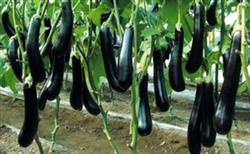
1. Sowing and Seedling Raising
Choose early-maturing or mid-maturing varieties. For seedling raising in a sun-facing cold frame, sowing can be done from late November to early December, with a seedling age of over 90 days. If electric heating seedbeds are used for seedling raising, or seedlings are raised in a winter-warm greenhouse, the seedling age can be shortened to 70-80 days, meaning the sowing date can be postponed to mid-to-late December. The morphological indicator for seedlings of suitable age is when the first flower bud on the main stem begins to appear. See Chapter 5 for specific operational techniques.
2. Transplanting
The suitable temperature indicator for eggplant transplanting is when the 10 cm soil temperature inside the greenhouse stabilizes between 12-15°C. In various parts of Shandong, for arched circular greenhouses covered with a single layer of plastic film, the transplanting period is late March; for arched circular greenhouses with multi-layer protective covering, or single-slope spring-type greenhouses, or single-slope greenhouses without a rear roof, the transplanting period can be advanced to late February to early March.
Before transplanting, the film should be applied and the greenhouse sealed as early as possible to increase the temperature inside. For greenhouses with a previous crop, the previous crop should be cleared early, and old greenhouses should be fumigated with chemicals for disinfection.
After sealing the greenhouse and clearing the previous crop, deep plowing should be carried out. Base fertilizer should be applied in conjunction with plowing, and ridge cultivation should be adopted. The methods and specifications for land preparation, base fertilizer application, and ridging are the same as for overwintering crop cultivation.
3. Management After Transplanting
(1) Management during the seedling recovery stage: Low soil temperature after transplanting is the main limiting factor affecting eggplant growth and development. Within 10-15 days after transplanting, the priority is to raise the greenhouse temperature. During the day, the greenhouse temperature can be allowed to reach above 30°C, using the air temperature to raise the soil temperature. At this time, the top vents should be opened briefly at noon for ventilation, but the door vents must not be opened, and the bottom vents must not be opened either. Soil loosening should be strengthened to raise soil temperature and promote root development. For single-slope greenhouses and multi-layer covered greenhouses, attention should be paid to uncovering opaque coverings early and covering them late, ensuring both tight insulation and sufficient light.
(2) Management during the early fruiting stage: After the first fruit on the main stem sets, in order to achieve early maturity and high yield and increase early-stage production, attention should be paid to preserving flowers and fruits, promoting the growth of branches and leaves, and building a good high-yield framework. During this stage, emphasis should be placed on regulating greenhouse temperature and strengthening ventilation management. During the day, maintain a greenhouse temperature of 28-30°C for more than 5 hours. When the greenhouse temperature reaches 32°C in the morning, begin ventilation; when the temperature drops below 25°C in the afternoon, close the vents. Attention should also be paid to regulating the relationship between plant growth and fruiting. Remove all lateral branches below the first branching point. If double-stem pruning is adopted, excess lateral buds should also be removed promptly. After the first fruit sets, appropriate hilling should be done to a height of about 10 cm to promote root development and prevent lodging. Water management during the early stage of eggplant should focus on control, with less irrigation and more soil loosening. In particular, soil moisture must not be too high during the flowering period of the first fruit, otherwise flower and fruit drop easily occurs. When the first fruit grows to the size of a walnut, topdressing and irrigation should be carried out. Apply 20 kg of urea or 1000 kg of manure per mu. When irrigating, to prevent a drop in soil temperature during the early stage, irrigation can be done on sunny mornings and by the alternate furrow irrigation method. To preserve flowers and fruits, 2,4-D at a concentration of 20 mg/L (20 ppm) can be used to dip the flowers.
(3) Management during the full fruiting stage: After entering the full fruiting stage, the greenhouse has entered a high-temperature period. To prevent high-temperature damage, ventilation should be increased. The film below the greenhouse shoulders can be rolled up entirely. When the nighttime temperature is not lower than 17°C, close the skylights and ventilate day and night. To enhance eggplant photosynthesis and improve coloring, the film on top of the greenhouse can be removed after June. The full fruiting stage requires heavy fertilizer and water to ensure fruit development. Water can be applied every 5-6 days, and topdressing once every two irrigations. It is best to alternate chemical fertilizers with organic fertilizers. After entering the full fruiting stage, old leaves and yellow leaves at the base can be removed to improve ventilation and light conditions, concentrate nutrients on fruit development, and promote fruit growth.
4. Pay Attention to Pest and Disease Control
For winter-spring crop eggplant in greenhouses during the mid-to-late growth period, due to rising temperatures, high humidity inside the greenhouse, pests and diseases occur from time to time. The main diseases include Phytophthora rot and brown spot disease; the main pests include aphids, tea yellow mites, and whiteflies, which should be controlled promptly. For disease control, the first step is to properly manage temperature and humidity inside the greenhouse, with particular attention to temperature control, as the occurrence of these diseases is directly related to excessive humidity inside the greenhouse. The main method for controlling humidity inside the greenhouse is to ensure proper ventilation and dehumidification, especially ventilation after watering is particularly important.