Key Techniques for High-Yield and High-Benefit Banana Cultivation
Banana is an important tropical and subtropical fruit. To achieve high quality, high yield and high benefit in banana production, it is necessary to do a good job in banana orchard selection, use certified varieties and strong seedlings, plant at the right time, establish a rational close planting density, manage fertilizer and water well, remove and retain suckers at the right time, carry out scientific de-budding and bagging, implement integrated pest and disease control, and do good work in wind protection and cold protection...
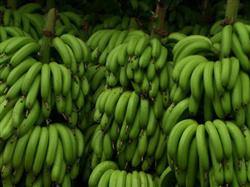
Banana is an important tropical and subtropical fruit. To achieve high quality, high yield and high benefit in banana production, it is necessary to do a good job in banana orchard selection, use certified varieties and strong seedlings, plant at the right time, establish a rational close planting density, manage fertilizer and water well, remove and retain suckers at the right time, carry out scientific de-budding and bagging, implement integrated pest and disease control, and do good work in wind protection and cold protection.
1. Banana orchard selection: The banana root system is a fleshy root system with a strong requirement for air; the horizontal roots are distributed in the surface soil layer at about 15 cm, and the vertical roots can reach as deep as 1.4 m. Banana leaves are large, transpiration is also high, and the plant is sensitive to water requirements. Therefore, an ideal banana orchard should be selected in a place with loose soil texture, deep and fertile soil layers, a pH value between 5.5 and 6.5, no toxic substances, a relatively low groundwater table, and convenient drainage and irrigation.
2. Select good varieties: Selecting excellent varieties is one of the keys to high quality, high yield and high benefit in banana production. Therefore, it is necessary to select varieties with high quality and high yield, strong adaptability and strong wind resistance. After several years of planting practice, relatively good varieties include Guangdong Banana No. 2, Brazil No. 3, etc. 3. Plant at the right time: Due to the reform of the cropping system and the improvement of cultivation techniques, bananas can be planted all year round in our province, but generally spring planting and autumn planting are more common. Spring planting is done from February to April, with bunch emergence in September to October of the same year, and harvest of off-season bananas from February to May of the following year, generally at a relatively high price; autumn planting is done from August to September, with bunch emergence from May to July of the following year, and harvest of main-season bananas from August to October. Main-season bananas have high quality, high yield and good benefit.
4. Rational close planting: If the number of plants per unit area is small, although the bunch is large and the fruit is heavy, the total yield is not high; similarly, if the number of plants is too large, they shade each other, pests and diseases are serious, the yield per plant is low, and the total yield is also not high. Therefore, planting density should be determined according to variety, soil texture, topography and sucker retention method. Generally, the bed width is 2 to 2.5 m, the ditch width is 0.8 to 1 m, double-row planting is used, the plant spacing is 2 m, and 110 to 140 plants per mu is suitable.
5. Scientific fertilization: Banana is a typical potassium-loving crop, with the highest demand for potassium fertilizer, moderate demand for nitrogen fertilizer, and relatively low demand for phosphate fertilizer. Generally, formula fertilization with a nitrogen, phosphorus and potassium ratio of 1:0.4:1.5 to 2 is better. Taking spring-planted banana tissue-cultured seedlings as an example, the fertilization principle is to apply frequently and lightly in the early stage to promote seedling growth, and to apply heavily in the middle and late stages of vegetative growth and during flower bud differentiation; in the early stage, nitrogen fertilizer is dominant, combined with potassium and phosphorus fertilizers; in the middle and late stages, potassium fertilizer is dominant, combined with nitrogen and phosphorus fertilizers. Fertilization begins when new leaves grow 10 to 15 days after planting the tissue-cultured seedlings. Generally, 16 to 18 fertilizations are applied per crop of bananas, including 11 to 13 light applications and 5 heavy applications. The total fertilizer amount per plant is: urea 1 to 1.4 kg, superphosphate 0.4 to 0.5 kg, potassium chloride 0.8 to 1.6 kg, peanut bran 0.75 kg, or banana special fertilizer 3 to 3.5 kg can also be applied. The fertilization method is mainly drenching, supplemented by hole application.
6. Rational drainage and irrigation: Bananas fear both waterlogging and drought. Therefore, in the early stage when the seedlings are small, water should be sprinkled to keep them moist; in the middle stage when growth is fast, "horse-racing water" should be irrigated frequently; in the late stage, to protect roots and leaves, the soil should be kept moist. In the rainy season, attention should be paid to timely draining of accumulated water to prevent the banana orchard from being flooded.
7. Remove and retain suckers at the right time: When bananas grow to about 1 m high, they produce suckers, and each plant can generally produce 4 to 6 suckers. The sucker and the mother plant are an organic whole, and the growth of the sucker and the flowering time of the mother plant will affect each other. Therefore, sucker retention should be based on the principle of not hindering the normal growth of the mother plant. Generally, except for retaining 1 sucker as the fruiting mother plant for the next crop, the remaining suckers are cut off with an iron shovel or a specially made sharp knife when they are 15 to 30 cm long.
8. Scientific de-budding and bagging: De-budding is carried out after the female flowers finish opening. The number of hands on the fruit bunch depends on the plant vigor. Generally, 7 to 8 hands are retained per bunch. At a point 1 to 2 hands below the last retained hand, cut off the fruit axis with a sharp knife (generally the flower bud is cut off and temporarily hung on the fruit bunch, using its own weight so that the lower part of the fruit bunch does not bend and turn upward), then remove the inflorescence in the excess hands, and retain only 1 finger in the last hand. In this way, quality is not affected by retaining too many hands, and the growth of the tail hand is not affected by the cut. De-budding should be carried out in the afternoon on a sunny day. Bagging is carried out about 2 days after de-budding, and carbendazim and Lorsban are sprayed once before bagging. Fruit bagging can improve the effect of pest and disease control, reduce mechanical damage to fruit, improve the fruit growth environment, and increase fruit quality and yield.
9. Integrated pest and disease control: Common banana diseases include bunchy top disease, mosaic heart rot disease, leaf spot disease, anthracnose and black spot disease, etc., and insect pests include leaf roller, aphid, etc. To prevent bunchy top disease and mosaic heart rot disease, generally in March to April, spray 1000-fold high-efficiency Dagongchen solution or 40% dimethoate 800-fold solution to control aphids, eliminate the source of transmission, and once diseased plants are found, they should be promptly dug out and deeply buried or burned. For leaf spot disease, during the peak incidence period from June to September, spray 1000-fold Tilt emulsifiable concentrate once a month for control. For black spot disease, after the female flowers finish opening, spray 50% carbendazim 1000-fold solution on young fruit for control. For anthracnose, 75% chlorothalonil 800-fold solution can be used for control. For leaf roller, 80% dichlorvos emulsifiable concentrate 1000-fold solution can be sprayed to kill it.
10. Wind protection and cold protection: June to September is the season when typhoons occur frequently in coastal areas. Banana is not a wind-tolerant crop, so wind protection work must be done well. In June, each banana plant is supported with wooden strips or bamboo poles. Banana originated in tropical and subtropical regions, and throughout its growth period it requires high temperature and high humidity, and avoids low temperature. Therefore, overwintering management of bananas should be strengthened. For banana plants that have already emerged or been de-budded, before the cold wave arrives, the fruit bunches should be properly covered with plastic bags. For bananas that have not yet emerged, the top leaves of the banana plant can be tied into a bundle to prevent cold damage.