-
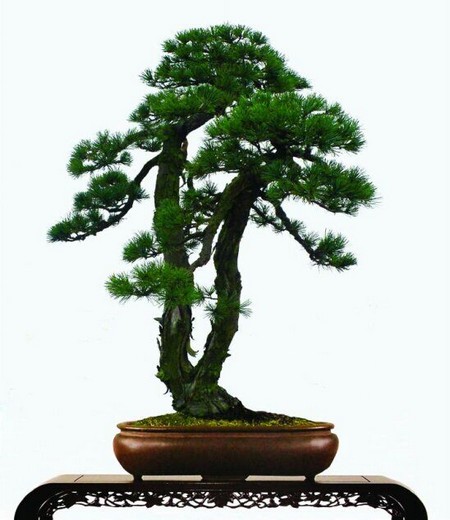
How to shape a pine bonsai in the tall-trunk weeping-branch style? Detailed practical tips
When we walk into the Wenzhou Bonsai Garden on Jiangxin Island, we are soon amazed and filled with admiration by the bonsai of varied shapes, fresh and graceful composition, and scenery that balances movement and stillness. Especially those tall-trunk weeping-branch style pine bonsai, revealing the great in the small, fully displaying the uprightness and vigour of the pine
-
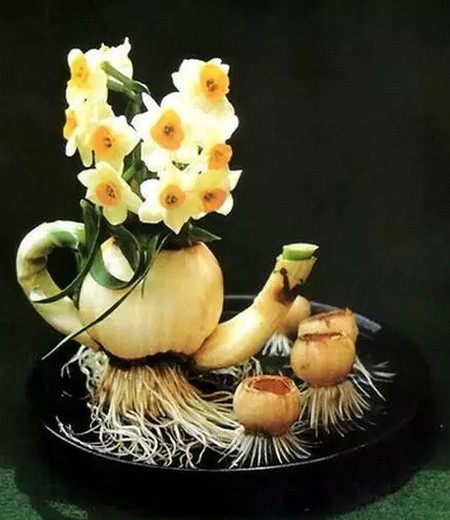
Methods for Carving and Shaping Narcissus Bonsai and Key Points for Care and Management
Narcissus has elegant, understated flowers and a subtle, delicate fragrance. It is commonly grown at home in water and blooms around the Spring Festival, and is known as the "Fairy of the Waves." Careful observers will notice that some bulbs in flower markets bear cut marks. This is not because the bulbs rotted and the shop removed the damaged parts.
-
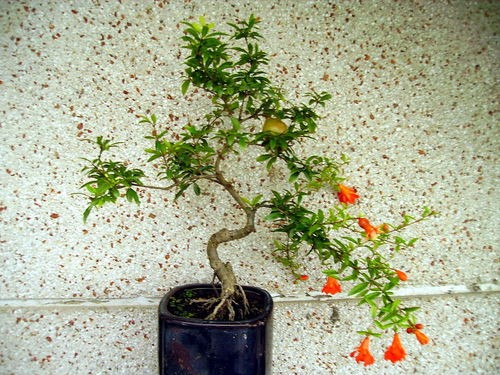
Detailed Guide to Shaping and Pruning Pomegranate Bonsai: Prune Your Way to a Beautiful Tree Form
Shaping and Pruning Because pomegranate branches are fine, dense and tangled, pruning is needed to achieve an attractive plant shape. Generally, pomegranate can be trained into a single-trunk round-headed or flat-topped form; it can also be trained into a clump-forming spreading shape; and it can also be made into bonsai pomegranate. Use thinning and heading cuts to remove dead branches, water sprouts, crossing branches, diseased and weak branches, and dense angular
-
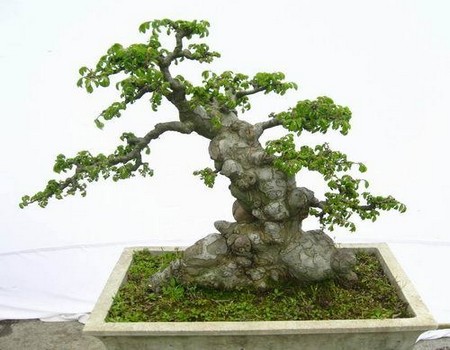
Detailed Explanation of the Key Points of Chinese Scholar Tree Bonsai Shaping and Pruning Techniques
The Chinese scholar tree (Sophora japonica) has a low branching rate, with no lateral branches on the middle and lower parts of the trunk, and the trunk thickens slowly. Moreover, most of these trees have hard wood but a slow lignification process, which makes the trunks of young seedlings thin and soft. Because the upper part of the seedling has a high water content and dense leaves, it easily sprouts branches during the second growth period, causing a top-heavy condition. After wind, rain and sun exposure, the seedling naturally bends.
-
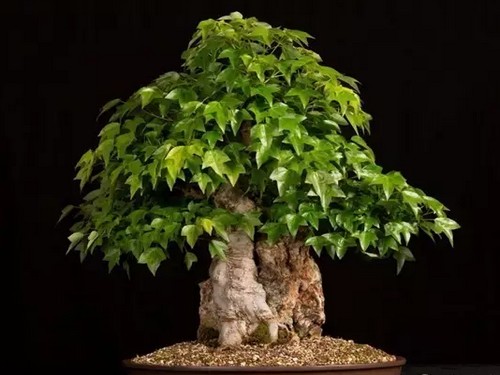
How to shape a trident maple bonsai? Detailed shaping method explained
Trident maple (Acer buergerianum) is a deciduous tree of the Aceraceae family, also known as duck-foot tree. A bonsai made from trident maple has tender leaves covering the branches in early spring, strikingly red and alluring; in early summer, green leaves are lush and graceful; in late autumn, yellow leaves fill the tree, brilliantly orange and elegant; in deep winter, leaves fall and branches are revealed, refined and noble. Because of its many advantages, it is widely used in the bonsai world.
-
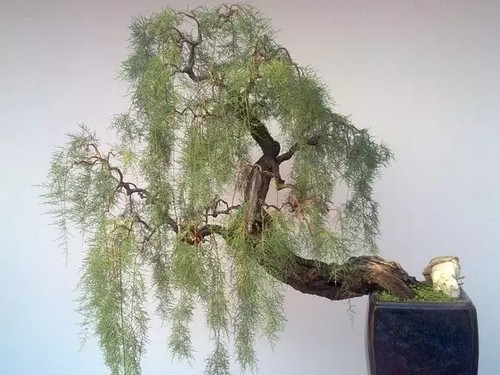
Detailed Explanation of Tamarisk Bonsai Shaping Methods and Techniques
In tamarisk shaping, the trunk is valued for its twists, the branches for their sparseness, the flowers and leaves for their density, and the roots for being exposed. The tamarisk trunk should be aged, twisted and cracked. Tamarisk has extremely strong sprouting ability, so through pruning, sprouts on the trunk must be promptly removed so that scars accumulate and form a mottled, varied effect. Tamarisk branches are soft and drooping, and through pruning and wiring
-
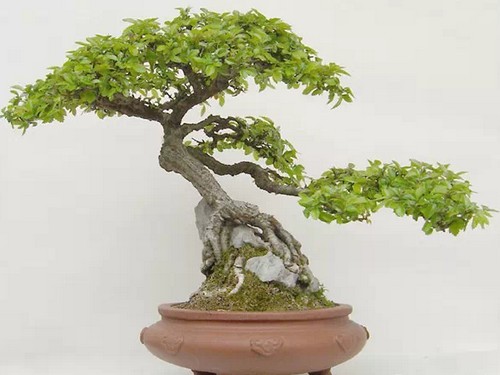
A detailed guide to shaping Chinese elm bonsai to create a beautiful tree form
When buying a Chinese elm bonsai, you must carefully examine the trunk. The fresher the raw trunk material, the better. Do not assume that a withered, decayed trunk has more charm. Some even have poorly developed root systems. Beginners should first keep the Chinese elm alive, then gradually shape it! The processing and shaping of Chinese elm can be carried out by combining pruning with wiring.
-
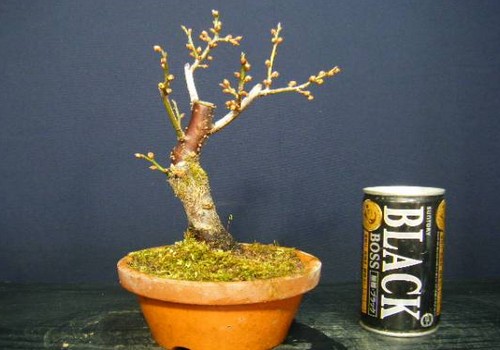
A Complete Guide to Shaping Lantana Bonsai
Lantana used for making bonsai can be propagated by cuttings, generally carried out during the growing season. Cut healthy one-year-old branches, each segment with two nodes, insert them in sandy soil or vermiculite, and keep them under a shade shed. Keep the soil and air moist; roots form in about 40 to 50 days, and the seedlings can then be separated and potted up.
-
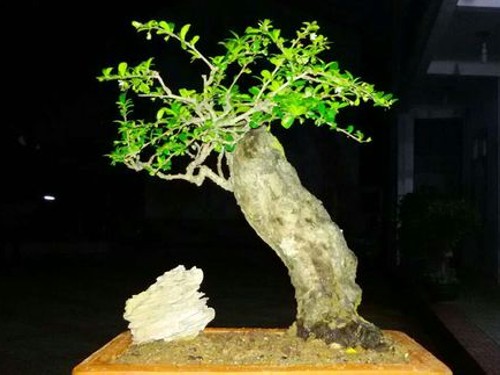
Detailed explanation of Fujian tea bonsai styling methods, easily shaping a graceful tree form
To make a Fujian tea bonsai, you can select robust one-year-old branches or semi-lignified branches of the current year for cutting propagation in spring or the plum rain season; you can also use root cuttings from early summer to early autumn to obtain seedlings; in the south, you can also dig up wild stumps or young trees in the woods, and after cultivating the stock until it survives, process it and pot it
-
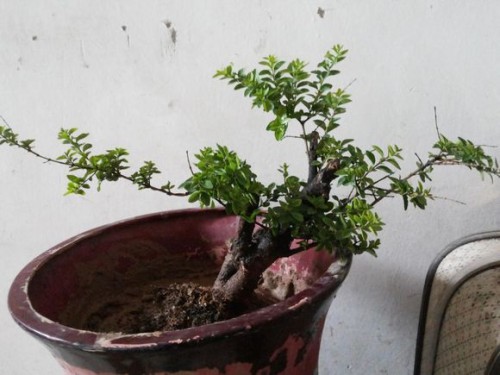
Detailed Guide to Shaping a Chinese Privet (Ligustrum quihoui) Bonsai
Chinese privet (Ligustrum quihoui) likes light, tolerates slight shade, is relatively cold-hardy, and resists many toxic gases, making it an excellent pollution-tolerant tree species. Its branches are soft and spreading, it sprouts vigorously, its leaves regenerate readily and it tolerates pruning, and it has the characteristic of taking shape quickly, making it an excellent material for modern horticultural plant shaping.
条件筛选