-
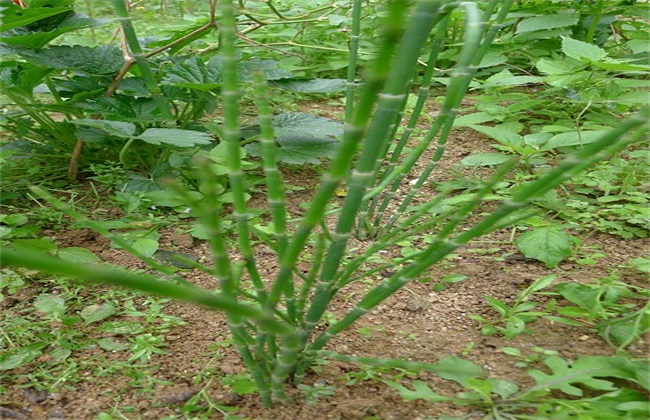
Analysis of the Prospects for Cultivating Horsetail: Is It Worth Developing?
The Cultivation Prospects of Horsetail
-

Detailed Explanation of the Key Points of Cumin Intercropping Cultivation Techniques
Cumin Intercropping Techniques
-

Key Technical Points for Intercropping Pinellia ternata in Woodland
Pinellia ternata, also known as three-leaf pinellia or ground-plant pinellia, is a perennial herbaceous plant with persistent roots in the Araceae family. Its tubers are used as medicine and have the functions of drying dampness and resolving phlegm, and descending adverse qi to stop vomiting. It is shade-tolerant, cold-tolerant, and afraid of sunlight; the seedlings fear heat, so it is suitable for intercropping with trees. 1 Propagation techniques Pinellia ternata is generally propagated by underground corms and bulbils, and can also be propagated by seeds. 1.1 Corm propagation When harvesting corms around Cold Dew, select the smaller ones for seed, bury them in moist soil in a cool, ventilated place, and around Qingming of the second year, transplant them into the field at a row spacing of 10 cm x 6 cm. Transplanting depth
-
What are the benefits of intercropping cotton with Pinellia ternata?
Through our trials, intercropping Pinellia ternata in cotton fields shows no "conflict" between the two, neither crop's yield decreases, and an additional 80-100 kg of dried Pinellia ternata medicinal material can be harvested per mu, increasing income. The benefits of intercropping Pinellia ternata in cotton fields are mainly shown in the following aspects: 1. Clever use of the time difference. According to the characteristics of Pinellia ternata, it grows well from March to June without shade, and from July to September Pinellia ternata must grow under shaded conditions, and at this time cotton enters a rapid growth stage with luxuriant branches and leaves, creating a good microclimate for the normal growth of Pinellia ternata
-
Intercropping Cultivation Techniques for Licorice in Land Returned from Farmland to Forest
Intercropping licorice in land returned from farmland to forest can both conserve soil and water and increase economic returns, achieving the goal of using the land to support the forest and the forest to support the land, and realizing a "win-win" for both the economy and ecology. Since 2002, Regiment 137 has conducted cultivation trials of intercropping licorice in land returned from farmland. After several years of experimentation and exploration, breakthrough progress has been made. 1. Land selection: Select sandy loam plots of land returned from farmland to forest with relatively low salinity and alkalinity, relatively few field weeds, and good drainage for intercropping licorice. The main tree species planted in the sowing area is wolfberry seedlings; the planting pattern is furrow planting
-
What preparatory work is needed for shaping lingzhi bonsai
1. Choose good shaping varieties. In addition to collecting wild lingzhi with odd shapes from nature, a large amount of raw material comes from cultivation. At present, the main varieties available for selection include red lingzhi, purple lingzhi, black lingzhi, pine-fir lingzhi, pine-fir tree lingzhi, tropical lingzhi, Neo-Japanese lingzhi, and more than ten other kinds that can be selected for matching. 2. Make shaping primordia. Bonsai lingzhi can be cultivated in bottles or bags (if conditions do not permit, production can be entrusted to a nearby cultivation site). Generally, bag cultivation has sufficient substrate and produces large fruiting bodies; bottle cultivation has limited substrate and tends to produce a single lingzhi.
-
Practical Techniques and Experience Sharing on Lingzhi (Reishi) Bonsai Shaping
1. The caliber of the cultivation container controls the density of the fungal branches. If a large-capacity, wide-mouth bottle of 1000 ml to 3000 ml is chosen, the fungal branches will mostly form clusters of lingzhi (reishi), resembling swirling colorful clouds; if an infusion bottle is used for cultivation, it will mostly produce single branches with long stems, and a single-stemmed lingzhi symbolizes the ruyi scepter; if a canning jar is used for cultivation, two lingzhi can be kept and tied together to form mandarin-duck lingzhi, the best gift for newlyweds. 2. Oxygen-controlled shaping. Place lingzhi that has already formed a cap but has not stopped growing into a poorly ventilated container (such as a vat or bucket) to promote the appearance of a proliferated layer beneath the cap. From
-
Detailed Explanation of Key Points for Intercropping Cultivation Techniques of Gastrodia elata
1. Intercropping time. Intercropping Gastrodia elata in tree peony root bark fields should be carried out from late autumn after the tree peony leaves fall to early spring of the following year. This is both the dormant period of the tree peony and the harvest period and optimal planting period of Gastrodia elata. 2. Intercropping method. For tree peony root bark plots used for intercropping Gastrodia elata, choose plots where tree peonies have been planted for more than 1 year. First, prepare Armillaria fungus wood and Gastrodia elata seeds, and also prepare enough leaves for use as filler and mulch, then plant according to the conventional planting method for Gastrodia elata. When planting, first spread a layer of leaves between the rows of the tree peony root bark field, with a thickness of 5 cm to 10 cm
-
Why is intercropping tree peony root bark with Gastrodia elata so profitable?
Tree peony root bark (the root bark of the tree peony) and Gastrodia elata are both precious Chinese medicinal herbs. Intercropping Gastrodia elata in tree peony root bark fields is a new high-yield, high-efficiency cultivation model that is worth promoting to herb growers in Chinese medicinal herb growing regions everywhere. The most notable features of intercropping Gastrodia elata in tree peony root bark fields are: first, it makes full use of the land; second, the two are complementary; third, it eliminates the trouble of having to weed the tree peony root bark field frequently. The cultivation method is described below: 1. Planting tree peonies. 1. Site selection: The tree peony field for intercropping Gastrodia elata requires fertile, deep soil, and a slight slope is best.
-
Intercropping honeysuckle yields well, with high returns from multiple harvests on one plot
Honeysuckle is a commonly used bulk Chinese medicinal herb, with wide uses and high value. It is currently in short supply on the market, and there is even a phenomenon of a price with no goods available. According to the growth characteristics of honeysuckle, adopting a high-efficiency intercropping model of widening rows and reducing plant spacing, rational close planting, intercropping medicinal herbs, and using "medicinal herbs" to support "flowers" can achieve the effect of "planting flowers in the current year, seeing results in the current year." Scientific close planting increases yield and income 1. Field cultivation. In autumn, winter or early spring, on the selected plot, apply 5000 kg of organic fertilizer, 100 kg of superphosphate, and 30 kg of sulfur
条件筛选