-
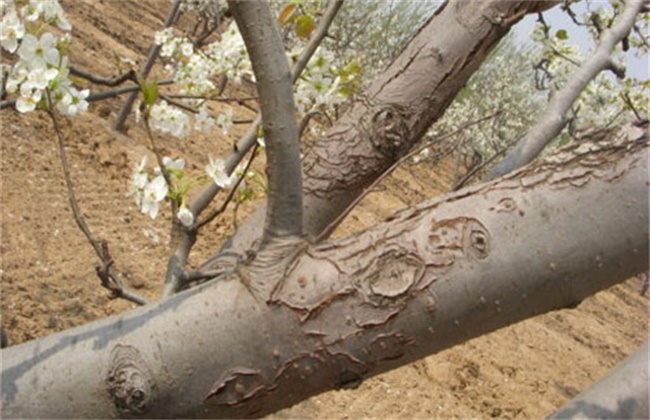
What are the precautions for scraping bark from pear trees in winter
Precautions for scraping bark from pear trees in winter
-
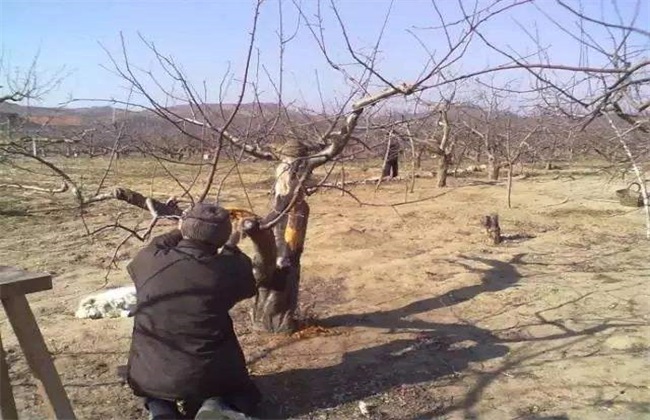
Methods and Technical Key Points for Scraping Bark of Fruit Trees in Winter
Methods for Scraping Bark of Fruit Trees in Winter
-
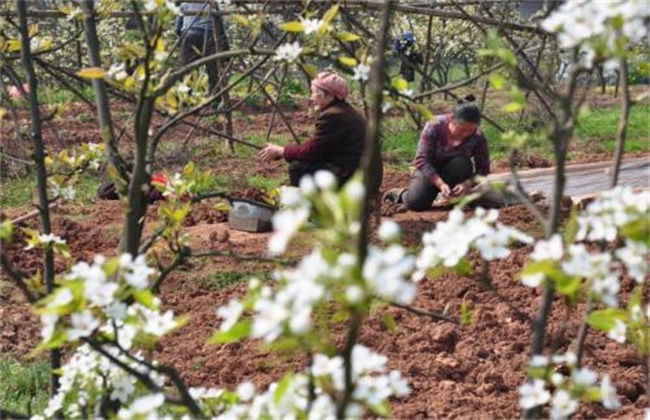
Precautions and Key Technical Points for Intercropping in Pear Orchards
Precautions for Intercropping in Pear Orchards
-

What are the precautions for scraping bark on fruit trees? These key points every fruit grower should master
Precautions for scraping bark on fruit trees
-

Detailed Explanation of the Key Technical Points of Jujube-Grain Intercropping
1 Scientific Basis of Jujube-Grain Intercropping 1.1 Seize the time difference between the growth of jujube trees and intercrops to make full use of fertilizer and water resources. The jujube tree is a fruit tree that sprouts late, sheds its leaves early, and has a relatively short annual growth period. It generally begins to sprout in mid-April and sheds its leaves in mid-to-late October, while wheat is sown in late September and harvested in early June of the following year. The symbiotic period of jujube trees and wheat is about 80 to 90 days. From mid-May to early June is the period when wheat flowers, fills grain, and matures, mainly absorbing phosphorus and potassium fertilizer, with nitrogen fertilizer as a supplement. And the jujube tree is precisely in the period of growing leaves, differentiating young buds
-
Huping Jujube
Taigu Huping jujube is one of the ten famous jujube varieties in Shanxi. It is large, with thin skin and thick flesh. A single large jujube weighing nearly 30g has a flesh weight of more than 29g, making it very satisfying to eat. Beizhang Village in Taigu has 480 households, and every household grows Huping jujubes, covering an area of 133 hectares with an annual output of nearly 4000t. Besides being sold to major domestic cities, they are also exported to South Korea, Japan and other countries. To preserve fresh jujubes, the villagers of Beizhang Village voluntarily built cold storage facilities and put all the high-quality jujubes into cold storage. Because storing 500g can earn 0.2 yuan more.
-
What are the key points of the double-cropping peach cultivation technique?
With advances in breeding technology, extremely early-maturing peaches (such as Siyuehong peach and Wuyuecui peach) and extremely late-maturing peaches (such as Xue tao, Sheng tao and Dong tao) have appeared one after another, creating favorable conditions for extending the market supply period of peach fruit and improving the economic benefits of peach growers. However, in actual cultivation, early-maturing peaches shed leaves early, have many flower buds and a high fruit yield, and are prone to early tree decline. Late-maturing and extremely late-maturing peaches consume few nutrients in the early growth stage, and the trees are rich in nutrients and grow too vigorously, leading to relatively serious fruit drop, which brings difficulties to growers' cultivation management. If extremely early-maturing peach varieties are top-grafted into the inner canopy of late-maturing and extremely late-maturing peach trees,
-
What should be noted when intercropping in a peach orchard?
Points to note when intercropping in a peach orchard: after the peach trees are planted, the trees are still small, so tall-stemmed crops are not suitable for the intercropped land; peanuts, root and tuber crops, and legumes are preferable. Intercropped crops must not be planted too close to the tree trunks. Generally, for newly planted trees, a tree plate of about 1 sq m can be left, and for trees that have just begun to bear fruit, a tree plate of about 2 to 3 sq m should be left, to prevent the intercropped crops from competing with the fruit trees for fertilizer and water. To increase soil organic matter, green manure can be interplanted between the rows of peach trees. Interplanting green manure is an important way to resolve the competition between fruit trees and grain crops for fertilizer.
-
Detailed Explanation of Key Techniques for Jujube Storage and Fresh-keeping
Jujube is one of the fruits unique to China. It is rich in nutrients, containing relatively large amounts of sugar, protein, fat, iron, calcium, phosphorus and other substances. At the same time, its content of vitamin C and cyclic adenosine monophosphate (CAMP) is also very high. In clinical medicine, it has preventive and therapeutic effects on the human body in terms of antioxidation and increasing myocardial nutrition, and is therefore favored by consumers. However, jujube fruit is a fruit that does not store well. At room temperature, it loses its original quality in about 20 days, and at low temperature it can only be stored for 40-60 days. Therefore, the storage and fresh-keeping technology for jujube fruit
-
Detailed Explanation of Key Points for Storage and Fresh-keeping Techniques of Peaches, Plums and Apricots
Peach, plum and apricot (including cherry) fruits all contain a hard stone and belong to the drupe category of fruits, sharing common characteristics in fruit development and postharvest physiology. It is precisely because the fruit contains a hard stone that a double-S growth curve appears during growth. Peach, plum and apricot fruits have high respiration intensity; all have a respiration peak, so they all belong to the climacteric type of fruit, which determines that they have basically similar storage, transport and fresh-keeping technical measures. However, as tree species and varieties differ, the storage, transport and fresh-keeping techniques adopted also differ. Peaches and plums generally
条件筛选