A Complete Guide to Shaping Lantana Bonsai
Lantana used for making bonsai can be propagated by cuttings, generally carried out during the growing season. Cut healthy one-year-old branches, each segment with two nodes, insert them in sandy soil or vermiculite, and keep them under a shade shed. Keep the soil and air moist; roots form in about 40 to 50 days, and the seedlings can then be separated and potted up.
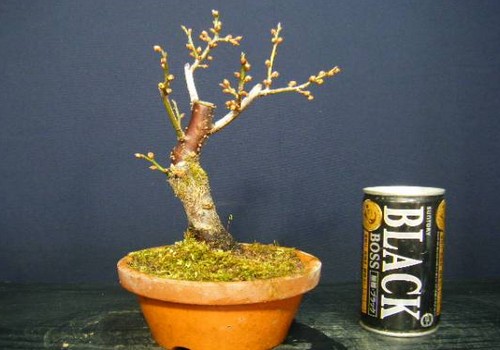
Lantana branches are soft and drooping, making them especially suitable for cascade-style bonsai. In addition, they can also be shaped into different forms of bonsai such as single-trunk, double-trunk, slanting-trunk, waterside, and deadwood styles. Lantana leaves are relatively large, so the canopy is often trained in an elegant natural style rather than deliberately wired into rounded pads. Because it grows rapidly, sprouts vigorously, and tolerates heavy pruning, the shaping method should focus mainly on pruning, supplemented by wiring and pulling; lantana branches are straight and lack grace, so metal wire can be used to bend them. The Lingnan-school technique of "trunk chopping and branch training" can also be used for shaping.
Lantana grows relatively quickly, so during cultivation, branches and leaves that affect the shape should be pruned away promptly to maintain the beauty of the tree form. After each flowering, cut back the overly long young shoots; in late autumn and early winter, before moving the plant indoors, carry out a heavy pruning of the plant, appropriately shortening all current-year branches. In winter, move it to a sunny spot indoors. If a room temperature above 15°C can be maintained, the plant can grow and flower normally, and it should be watered, fertilized, and pruned appropriately. If such a high temperature cannot be maintained, reduce watering and stop fertilizing to let the plant go dormant; it can overwinter safely at above 8°C. Repot once every spring, and prune and reshape the plant again, cutting off dead branches, weak branches, and other branches that affect the tree shape.
Lantana bonsai shaping mainly features curved-trunk or slanting-trunk rounded-crown forms, requiring exposed roots and claw-like root tips, a sturdy and twisting trunk, dense and neat branches and leaves, and abundant flowers like brocade.
Therefore, when shaping, focus on three aspects:
First, when potting, pay attention to the arrangement of the lateral roots, deliberately exposing thick lateral roots above the pot surface. The method is to place small pebbles under the lateral roots, or to coil the roots. After a period of growth, gradually remove soil, flush with water, raise the roots, and expose the roots, presenting the appearance of exposed roots and claw-like root tips.
Second, bend, wound, and coil the trunk. If the trunk's curvature is insufficient, bend it; if the trunk is too smooth, wound and coil it to encourage the trunk to form galls and nodes, giving it an aged appearance.
Third, branch shaping mainly relies on pruning, with heavy pruning of the side branches in winter. Lantana tends to produce opposite branches, so attention should be focused on handling large opposite side branches, generally cutting one and keeping one, or keeping one long and one short. In summer, pinch or cut back frequently; after each flowering, pay attention to shortening the branches to promote short, dense branches and a compact canopy in a rounded form.