-
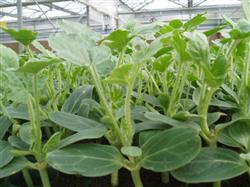
Detailed Explanation of Key Techniques for Spring Watermelon Cultivation
1. Site selection and disinfection: Choose a plot with higher terrain and good drainage as the seedbed. Add 200 grams of "waxy Bacillus" per cubic meter of nutrient soil for soil disinfection. 2. Preventing uneven emergence: When emergence is uneven or there are no signs of emergence, check the seeds in the seedbed. If the tips of the seed radicles are yellow and rotten, it means...
-
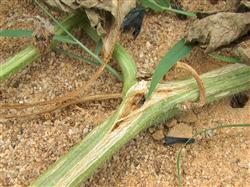
What are the control methods for watermelon fruit hardening in spring
In recent years, protected cultivation of watermelon has developed rapidly in the Jiangsu area. Due to the many rainy days during the growing period, favorable conditions have been provided for the occurrence of watermelon gummy stem blight, and the disease has worsened year by year. Watermelon gummy stem blight mainly damages the stems and vines, and also damages leaves and fruits. When the vines are affected, the disease mostly occurs at the stem nodes near the ground, first appearing as dark green...
-
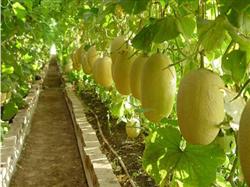
Integrated Control Measures for Gummy Stem Blight of Hami Melon in Rainy Regions
I. Bacterial Leaf Spot Symptoms: In the early stage, water-soaked lesions appear near the veins on the underside of leaves; the lesions expand rapidly and merge into one another, with a yellow halo at the edges. Control method: In the early stage of the disease, spray the foliage 2-3 times with 77% Duoning at 500 times dilution or 3% zhongshengmycin at 800 times dilution, once every 4-5 days. II. Gummy Stem Blight Symptoms...
-
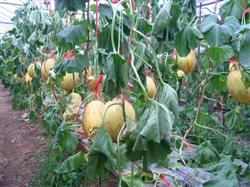
Detailed Explanation of Key Techniques for Greenhouse Cultivation of Hami Melon
In recent years, ** Hami melons have been successfully introduced, demonstrated, and promoted in the Jiading area, and a number of Hami melon varieties suitable for cultivation in the eastern region have been selected, among which Xuelihong has become the leading Hami melon variety in this district. At the same time, through the "base + farmers" model, Hami melons have been promoted to a large number of farmers, and a...
-
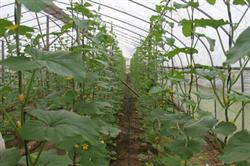
What after-planting management measures are there for Hami melons?
In the past two years, the Hami melon planting area in Jiading District has gradually expanded, and the planted varieties have become increasingly diverse. In 2007, about 60 mu of Hami melons were planted, with the main varieties being "Xuelihong", "9818" and "Xianguo". At present, the Hami melon planting work has basically been completed. To ensure the normal growth of Hami melons, the immediate priority is to...
-
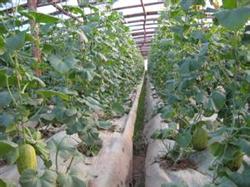
Detailed Explanation of Key Techniques for Eastward Cultivation of Hami Melon
Tests on the eastward cultivation of Hami melon show that growing Hami melon around Beijing is very easy. It has low requirements for soil; sandy loam with a pH of 5-9, a salt content below 1%, and organic matter above 1.5% is best; areas with temperatures of 28-38°C, relative humidity of 15%-70%, light of 30,000 lux (more than 8 hours per day), an altitude below 4000 m, and sufficient light in the half month before ripening can all produce Hami melon of excellent quality.
-
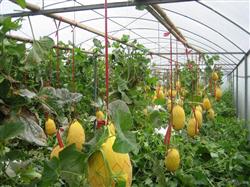
Detailed Explanation of Key Techniques for High-Yield Hami Melon Cultivation
I. Sowing at the Right Time and Raising Strong Seedlings Sow and raise seedlings from the end of December to early January of the following year, with a seedling age of 30 days. Before sowing, disinfect the seeds, soak them, and sprout them. For the nutrient soil, use soil that has never grown cucurbit crops or paddy field soil, and apply 2000 kg of decomposed manure and 10 kg of superphosphate per 667 sq m as base fertilizer. ...
-
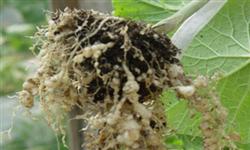
Symptoms and Control Methods of Root-Knot Nematode Disease in Hami Melon
Root-knot nematode disease is an important disease of Hami melon, occurring and distributed in some areas. It can develop both in protected cultivation and in open fields, with more severe incidence in autumn. Infection at the seedling stage has a great impact on production, and after onset the diseased plant rate often reaches more than 60%, significantly affecting Hami melon production. The symptoms mainly damage the root system, producing on the main root and lateral roots...
-
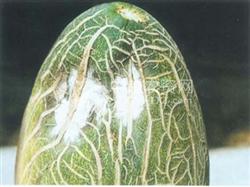
Symptoms and Control Methods of Fusarium Fruit Rot in Hami Melon
Fusarium fruit rot of Hami melon, also known as white mold disease, is an important disease on Hami melon, mostly occurring during storage and transportation, and Hami melon and honeydew melon are susceptible. The symptoms mainly affect the fruit. Initially, circular slightly sunken light brown lesions appear at the fruit stalk, 10-30mm in size, then the surrounding area becomes water-soaked, and some diseased parts crack slightly, with...
-
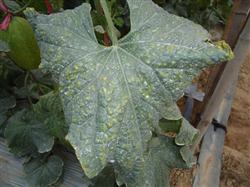
How to treat bacterial leaf spot in Hami melon? Detailed guide to chemical control methods
Bacterial leaf spot is a major disease of Hami melon. It can occur in both protected and open-field cultivation. In severely affected fields or greenhouses, the diseased plant rate can reach over 80%, and severely diseased plants die from the disease, significantly affecting production. The symptoms mainly affect the leaves, and in severe cases also infect the stems, vines and fruit. When leaves are infected, initially dark green oil-soaked small spots appear, with...
条件筛选