Symptoms and Control Methods of Fusarium Fruit Rot in Hami Melon
Fusarium fruit rot of Hami melon, also known as white mold disease, is an important disease on Hami melon, mostly occurring during storage and transportation, and Hami melon and honeydew melon are susceptible. The symptoms mainly affect the fruit. Initially, circular slightly sunken light brown lesions appear at the fruit stalk, 10-30mm in size, then the surrounding area becomes water-soaked, and some diseased parts crack slightly, with...
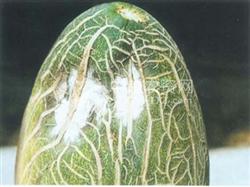
Fusarium fruit rot of Hami melon, also known as white mold disease, is an important disease on Hami melon, mostly occurring during storage and transportation, and Hami melon and honeydew melon are susceptible.
The symptoms mainly affect the fruit. Initially, circular slightly sunken light brown lesions appear at the fruit stalk, 10-30mm in size, then the surrounding area becomes water-soaked, and some diseased parts crack slightly, with white fluffy mycelium growing on the cracks, sometimes pink, and sometimes producing orange-red sticky small granules, which are the spore beds of the pathogen. In severe cases, the flesh becomes spongy, the sweetness fades, then turns purplish red, and the flesh becomes bitter and inedible.
Disease characteristics: Fusarium is widely present in soil and air, living saprophytically. When conditions are suitable, it can invade through wounds, and after infection it produces conidia for secondary infection.
Control methods
(1) Select and plant disease-resistant varieties according to local conditions.
(2) Strengthen cultivation management.
Harvest at the right time, not too late, and make every effort to reduce various wounds; control temperature and humidity well during storage and transportation, Hami melon at 3-9°C, honeydew melon at 5-8°C, relative humidity should not exceed 85%, and pay attention to ventilation to dissipate moisture.
(3) Chemical control.
In the early stage of the disease, spray 60% carbendazim hydrochloride (Fangmeibao) soluble powder at 700 times dilution or 50% carbendazim sulfonate (Rongjunling) wettable powder at 800 times dilution.
Commonly used agents: Fangmeibao, carbendazim.