What after-planting management measures are there for Hami melons?
In the past two years, the Hami melon planting area in Jiading District has gradually expanded, and the planted varieties have become increasingly diverse. In 2007, about 60 mu of Hami melons were planted, with the main varieties being "Xuelihong", "9818" and "Xianguo". At present, the Hami melon planting work has basically been completed. To ensure the normal growth of Hami melons, the immediate priority is to...
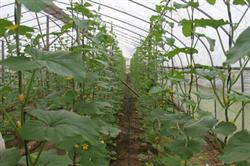
In the past two years, the Hami melon planting area in Jiading District has gradually expanded, and the planted varieties have become increasingly diverse. In 2007, about 60 mu of Hami melons were planted, with the main varieties being "Xuelihong", "9818" and "Xianguo". At present, the Hami melon planting work has basically been completed. To ensure the normal growth of Hami melons, the immediate priority is to promptly carry out all post-planting management work. The main management measures are as follows:
1. Temperature and humidity management
When using multi-layer film covering for heat preservation in spring, special attention should be paid to reducing humidity and preventing disease. Try to create a high-light environment, and on sunny days, under heat-preserving conditions, frequently uncover the film for ventilation to reduce humidity; after fruit set, keep the greenhouse temperature at 28-30°C during the day and not lower than 15°C at night; when the vines grow to the fruit-setting node, appropriately lower the temperature to promote fruit set; during the fruit enlargement period, increase the day-night temperature difference to improve quality. In early April, when the outside minimum temperature stabilizes above 15°C, the small hoop greenhouse can be removed.
2. Fertilizer and water management
Hami melons do not have high water requirements throughout the growth period. It should be determined according to soil moisture, terrain and the growth stage of the Hami melon. One watering at the vine extension stage and 1-2 waterings at the fruit enlargement stage can be applied, usually combined with fertilization.
Fertilization can be based on the growth condition of the plants. After the plants are established, spray plant nutrient solution to promote plant development. When the plants are weak, use compound fertilizer soak solution and apply additional fertilizer for vine extension and thickening. During the fruit enlargement period, apply 1-2 topdressings, which can be applied in holes 30cm away from the roots, using 10-15kg of compound fertilizer per mu, or foliar spraying of potassium dihydrogen phosphate can also be carried out. In the fruit ripening period half a month before harvest, fertilization and watering must be stopped to prevent fruit cracking.
3. Proper pruning
The intensity of pruning should depend on fertilizer and water conditions and plant growth vigor. In principle, it should be done at the right time, in the right amount and reasonably. Pruning should be carried out on sunny days when the temperature is relatively high, and should be done frequently to reduce wounds and decrease disease occurrence.
For early-spring protected cultivation of Hami melons, single-vine pruning is used, that is, the main vine is pinched late, side buds at the base of the main vine are removed, and the branch vines are pinched early after leaving 1-2 leaves before the female flower. During the flowering and fruit-setting period, branch vines that extend out without female buds should be removed early or pinched after leaving one leaf, so as to help regulate nutrient distribution and promote fruit set.