-
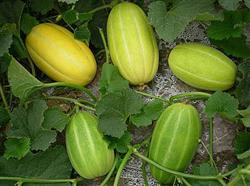
Key Technical Points for Open-Field Cultivation of Melons in Spring
Open-field melon cultivation in spring has low input costs and is easy to manage, making it one of the best choices for farmers to increase income and get rich in the short term. Optional varieties include Xiangmi 900, the Shabai series, and others. 1. Seed soaking: After selecting good varieties, the seeds can be appropriately sun-dried in fine weather and then screened. For warm-water seed soaking, soak in 55-degree water for 1 minute, then cool to 25 degrees, remove after 6 hours and let them dry slightly, then promote germination (keep the germination temperature at around 28 degrees). When the seeds sprout and turn white, sow them promptly.
-
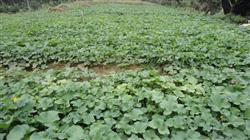
Key Technical Points for Open-Field Spring Muskmelon Cultivation
Apply all the base fertilizer at once, open a furrow 30 cm from the plants, and apply 50-100 kg of potassium sulfate compound fertilizer per mu, or 2-3 cubic meters of decomposed livestock and poultry manure. Or apply 50-100 kg of ternary bio-organic fertilizer, and in the middle and late stages spray the leaves with potassium dihydrogen phosphate + Xin Gao Zhi Mo (New High Lipid Film) at 600-800 times dilution, while also spraying Cuihua Wang No. 3 to balance vegetative growth...
-
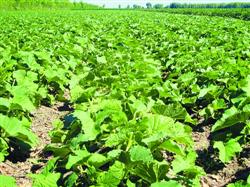
Key Technical Points for Spring Field Management of Melons
Fertilization: Apply the base fertilizer all at once in sufficient quantity. Dig a furrow 30 cm from the plants, and apply 50-100 kg of potassium sulfate compound fertilizer per mu, or 2-3 cubic meters of decomposed livestock and poultry manure. Or apply 50-100 kg of ternary bio-organic fertilizer. In the middle and late stages, spray the leaves with potassium dihydrogen phosphate + 600-800 times dilution of Xin Gao Zhi Mo, and at the same time spray Cui Hua Wang No. 3 to balance vegetative growth...
-
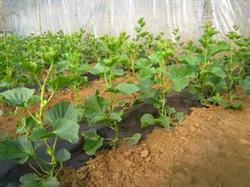
Detailed Explanation of Key Cultivation Techniques for Spring Greenhouse Melons
Melon production is developing very rapidly. Whether in greenhouses or spring greenhouse production, the economic benefits are quite significant, with returns per mu around 10,000 yuan. Based on the characteristics of spring greenhouse production - low investment, easy management, high yield, good quality, short production cycle, and quick market capture - to promote production development, the management techniques are now organized as follows for...
-
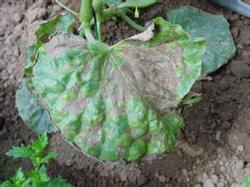
How to treat bacterial leaf blight in greenhouse melons? Detailed control methods
This disease is a bacterial disease that mainly damages leaves, petioles and young melons, and can cause damage throughout the entire growth period. When infected at the seedling stage, the cotyledons show water-soaked yellow sunken spots. When leaves are infected, the early stage shows light green water-soaked spots on the underside of the leaves, and gradually the leaf surface turns into light brown necrotic lesions. After drying, the lesion area becomes brittle and perforated. To prevent this disease...
-
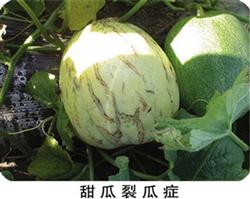
What are the control methods for small fruit and fruit cracking in melons?
As temperatures rise, melons grow rapidly, and the critical period for field management has arrived. Recently, some farmers have reported that small fruit and fruit cracking occur during melon growth. How can this be solved? To prevent small fruit, strengthen fertilizer and water management in the early stage to promote vegetative growth. According to variety characteristics and cultivation...
-

A Detailed Guide to Preventing and Treating Small Fruit and Fruit Cracking in Melons
As temperatures rise, melons grow rapidly, and the critical period for field management has arrived. Recently, some farmers have reported that small fruit and fruit cracking occur during melon growth. How should these problems be solved? To prevent small fruit, strengthen fertilizer and water management in the early stage to promote vegetative growth. According to variety characteristics and cultivation...
-
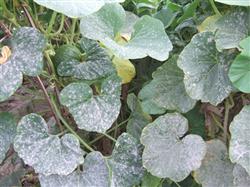
How to apply fungicides for effective control of powdery mildew on melons
1. Choose disease-resistant varieties. Disease resistance varies noticeably among different melon varieties, so choosing disease-resistant varieties is key to controlling the severity of the disease. 2. Clean up the field. After harvest, weeds and crop residues should be removed promptly; during the melon growing season, weed promptly, remove diseased leaves, and take weeds, residues, and diseased leaves...
-
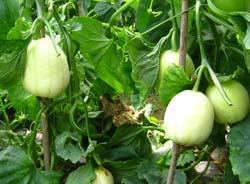
What are the pruning methods for muskmelon?
I. Pruning methods for early-to-mid-maturing varieties. Early-to-mid-maturing varieties generally have a single fruit weight below 1.5 kg and a maturity period of 35-42 days. Depending on the growing season and environment, the following pruning methods can be adopted. 1. Winter-spring crop cultivation in a winter-warm greenhouse. Generally, the method of using the mother vine as the main vine and leaving fruit on a single vine in two layers is adopted, that is...
-
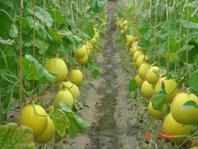
Key Technical Points for High-Yield and High-Efficiency Cultivation of Thin-Skinned Melons in Cold Greenhouses
Thin-skinned melons have traditionally been cultivated by letting the vines trail on the ground, with the vines growing in a tangled and crisscrossing manner that is very difficult to manage, and the yield is also low. When thin-skinned melons are cultivated in cold greenhouses, using the trellising method just like growing cucumbers in large greenhouses, higher yields and economic benefits have been achieved, with an average of 667 sq m producing over 5,000 kg of melons, and a net benefit of...
条件筛选