-
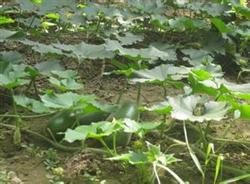
Key Technical Points for Spring Open-Field Cultivation of Ground-Trailing Winter Melon
Ground-trailing winter melon has the advantages of saving trellis materials, reducing labor for building trellises and tying vines, lower costs, being convenient for intercropping and relay cropping, and relatively extensive cultivation management. During spring open-field cultivation in the early spring low-temperature season, intercropping pak choi, small radish, garland chrysanthemum and other vegetables in the vine-running beds can improve land utilization and increase vegetable yield. Our local farmers...
-
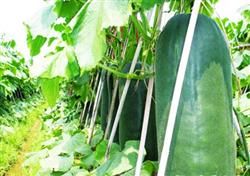
How to identify and control common diseases and pests of winter melon?
Spring-planted winter melon is rich in nutrients; every 100 grams of fresh melon contains 96.6 grams of water, 0.4 grams of protein, 19 mg of calcium, 12 mg of phosphorus, 18 mg of vitamin C and other nutrients. In recent years, demand for winter melon has been increasing in various places. Spring-planted winter melon has high yields, and some varieties can reach up to 10,000 kg, after...
-
There are many local varieties of winter melon, and pest and disease control needs to be strengthened
Winter melon has high yields and is widely cultivated in our country. Every year when the autumn harvest peak arrives, prices often plummet. If farmers use their existing conditions to store winter melon for extended preservation, they can both extend the sales and supply period of winter melon and increase economic benefits, making it worth promoting and applying. 1. Suitable storage conditions and preparation before storage: Winter melon likes...
-
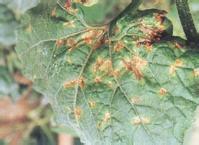
How to prevent and control angular leaf spot of winter melon? First, recognize the disease symptoms
Symptoms: It mainly affects leaves, petioles, and fruit. It can be affected from the seedling stage to the mature plant stage. When true leaves are infected, bright green water-soaked spots appear first, gradually turning light brown; the lesions are restricted by leaf veins and become polygonal, yellow-brown, and when humidity is high, milky white cloudy water-drop-like bacterial ooze exudes from the underside of the leaves, and the diseased tissue is brittle and easily perforated. When stems and petioles are infected, ...
-
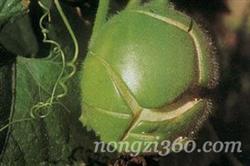
What to Do About Split Winter Melon? Detailed Explanation of Causes and Prevention Methods
When winter melon splits, it not only affects the appearance but also affects the quality and reduces its commercial value. In addition, split melons can also allow pathogens to invade the melon and multiply, causing localized deterioration or rot of the winter melon and affecting storage and transportation. Choose crack-resistant varieties. In rainy areas or rainy seasons, use deep furrows with high beds or ridge cultivation with trellising...
-
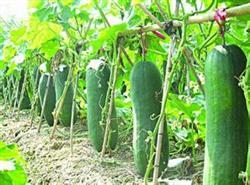
How to store winter melon in a cellar to keep it fresh? Remember these six key points
First, choose excellent varieties and adopt a matching set of scientific cultivation techniques. Give full play to the characteristics of excellent varieties, improve the plant's own stress resistance, and reduce the various drawbacks caused by the application of chemical fertilizers and pesticides. Second, apply organic fertilizer and inorganic fertilizer in combination. Under conditions within your capacity, apply excellent...
-
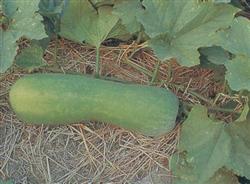
Key Points of Fertilization Management Techniques for High-Quality and High-Yield Winter Melon
In Dongxia Town, Qingzhou City, the overwintering summer melons grown by vegetable farmers are mainly cultivated in a creeping manner, similar to watermelon cultivation, which results in the melon body touching the ground, uneven light exposure on the top and bottom of the winter melon, the part touching the ground turning white or developing yellow-brown necrotic spots, or even rotting, while the upper part of the melon exposed to direct sunlight is prone to sunburn...
-
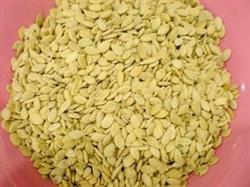
How to plant winter melon seeds for high yield? All the technical points are here
1. Sow at the right time and grow strong seedlings. The sowing period should be arranged according to local climate conditions, aiming to set fruit before the rainy season arrives. Generally sow from late February to mid-March, use a heat-retaining seedbed and nutritional pots for seedling raising, with about 100g of seed per mu. Before sowing, soak the seeds in hot water at about 70 degrees, let them cool naturally, soak for 1...
-
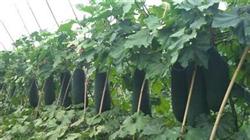
Detailed Explanation of Key Cultivation Techniques for Black-Skinned Winter Melon
Black-skinned winter melon is elongated and cylindrical, with a dark green skin and longitudinal grooves when fully mature. The fruit is 60-80 cm long with a transverse diameter of 15-25 cm. The flesh is white, 5-6 cm thick, and a single fruit weighs 8-15 kg. The yield per mu is 4000-5000 kg, and the entire growing period is 160-180 days. This variety is drought-tolerant, heat-tolerant, storage-tolerant, and transport-tolerant. It has a long supply period and a refreshing...
-
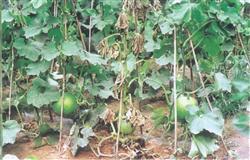
What are the control methods for winter melon pests and diseases?
Fusarium wilt is the most serious disease affecting autumn-planted winter melon. It strikes when the plant begins to flower and set fruit, causing the vines to wither and die. This disease is a fungal disease, and when it occurs severely, it spreads aggressively and rapidly, affecting entire patches and killing whole plants, resulting in heavy losses. Close attention must be paid to its control in order to protect the stems and vines and promote flowering and fruit set....
条件筛选