There are many local varieties of winter melon, and pest and disease control needs to be strengthened
Winter melon has high yields and is widely cultivated in our country. Every year when the autumn harvest peak arrives, prices often plummet. If farmers use their existing conditions to store winter melon for extended preservation, they can both extend the sales and supply period of winter melon and increase economic benefits, making it worth promoting and applying. 1. Suitable storage conditions and preparation before storage: Winter melon likes...
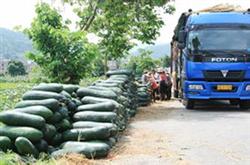 I. Main local varieties of winter melon
Changsha Powdery Skin Winter Melon: a mid-to-late maturing variety, with white waxy powder on the surface, oblong cylindrical shape, hanging flesh, and flat seeds. The melon is 87 cm long, and large melons can reach over 25 kg. It is suitable for planting in the inner suburbs of cities and large winter melon production bases.
Powdery Skin Shoulder Pole Winter Melon: a mid-to-late maturing variety, with white waxy powder on the surface, extra-long cylindrical shape (shoulder pole shape). The melon is about 102 cm long, with a transverse diameter of about 16 cm, a small inner cavity, and hanging flesh. The average single melon weighs about 14 kg, and large melons can reach 25 kg. It is most suitable for cultivation in the inner suburbs of towns and cities.
Changsha Green Skin Winter Melon: a late maturing variety, with climbing stems, and medium growth vigor and branching ability. The first female flower appears at the 24th to 26th nodes of the main vine. The melon is oblong cylindrical, with dark green and smooth skin. A single melon weighs 15 to 30 kg, and it takes about 140 days from sowing to harvest. It has strong heat and drought tolerance, wide regional adaptability, and does not have strict requirements for light conditions.
Guangdong Black Skin Winter Melon: a mid-maturing variety, medium-fruited type. The first female flower appears at the 18th to 20th nodes of the main vine, with 4 to 6 nodes between two female flowers. Sowing in Changsha in March; it takes about 70 days from emergence to the opening of the first female flower. The fruit is shell-shaped, dark green, and hairy. The melon is about 58 cm long and about 19 cm thick. The texture is relatively dense, the flesh is thick, the cavity is small, the flavor is good, and the flesh is loose. A single melon weighs about 12 kg. It likes fertilizer; in late summer and early autumn, pay attention to using grass or training vines to protect the fruit shoulder to avoid sunburn and prevent it from affecting marketability. It is suitable for spring and autumn cultivation in both the north and south.
II. Main diseases of winter melon and their control
Diseases: 1. Phytophthora blight. It occurs severely under high temperature and high humidity, and mostly appears in the early growth stage of winter melon. The affected parts are mainly leaves and stem nodes, and the fruit can also be affected, showing water-soaked lesions. 2. Anthracnose. It mainly occurs on leaves, and the affected parts appear as dark brown irregular small spots. 3. Fruit cottony rot. It mainly occurs on winter melon fruit. In the early stage of the disease, it appears water-soaked, and later white mold-like substances grow, causing the winter melon to become soft, cottony, and rotten. It can occur under high temperature and rainy conditions and throughout the entire fruit development period. 4. Fusarium wilt. It mostly occurs on stems and leaves, and the affected parts turn yellow and wilt. It mainly occurs in the late growth stage of winter melon.
Cultivation control: In the early growth stage, pay attention to clearing ditches and drainage, and ensure that the "bed, waist, and surrounding" three ditches are complete, with no water accumulation in the ditches and the ditches dry after rain stops. Timely cultivate, topdress, and remove weeds. Throughout the whole growth period, use 1:0.5 to 0.8:240 to 300 times Bordeaux mixture for comprehensive disease prevention 3 to 5 times. Pay attention to crop rotation and avoid continuous cropping. Land whose previous crop was cucurbits is not suitable for planting winter melon. Apply appropriate lime to the planting site to reduce pathogenic bacteria. Choose disease-resistant varieties. Fertilize reasonably, increase the application of organic fertilizer, apply topdressing evenly, and do not excessively apply high-concentration quick-acting nitrogen fertilizer.
Chemical control: At the seedling stage, vine elongation stage, and early flowering and fruiting stage, spray 50% carbendazim 800 to 1000 times solution, or 75% chlorothalonil 500 to 800 times solution to control Phytophthora blight. Kexiu, metalaxyl mancozeb, and copper metalaxyl can also be used to control Phytophthora blight. To control anthracnose, carbendazim, thiophanate-methyl, copper oxychloride, miebingwei, chlorothalonil, etc. can be used. To control Fusarium wilt, nongkang 120, thiophanate-methyl, shuangxiaoling, kangKuning, etc. can be used. The pesticides for controlling fruit cottony rot are basically the same as those for Phytophthora blight.
III. Main insect pests of winter melon and their control
The main insect pests of winter melon include melon webworm, red spider mite, aphids, yellow (black) squash beetle, thrips, etc. The melon webworm mainly damages leaves and flowers, spinning silk to curl the melon leaves and hiding inside them. Red spider mites mainly damage leaves, are located on the underside of leaves, and are small in size. Aphids damage the middle and upper leaves and stem tips, yellow (black) squash beetles damage leaves, and thrips damage stem tips, tender leaves, and tender melons. Dimethoate, pirimicarb, imidacloprid, shachongwei, pyrethroids, and other pesticides can be used to control aphids; propargite, manke, hexythiazox, and fenpropathrin can be used to control red spider mites; mieshabi, phoxim, cartap, pyrethroids, etc. can be used to control melon webworm; trichlorfon and pyrethroids can be used to control yellow (black) squash beetles; shachongshuang, cartap, qixingbao, dimethoate, etc. can be used to control thrips.
When pests, red spider mites, and melon webworms occur at the same time, fenpropathrin and similar products can be used for control. Spray pesticide promptly in the early stage of pest occurrence; during the peak period, increase the number of spray applications, generally spraying once every 4 to 5 days. Because pesticide varieties are now updated quickly and there are many product names, vegetable farmers should choose corresponding new pesticide products when purchasing pesticides to ensure the safety of pesticide use and achieve the best control effect.