How to store winter melon in a cellar to keep it fresh? Remember these six key points
First, choose excellent varieties and adopt a matching set of scientific cultivation techniques. Give full play to the characteristics of excellent varieties, improve the plant's own stress resistance, and reduce the various drawbacks caused by the application of chemical fertilizers and pesticides. Second, apply organic fertilizer and inorganic fertilizer in combination. Under conditions within your capacity, apply excellent...
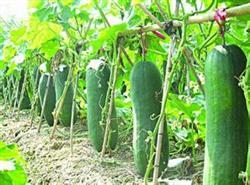 Winter melon has a high yield and is widely cultivated in China. During the peak autumn harvest period each year, prices often plummet. Storage for freshness preservation is an important means of ensuring a long-term supply of winter melon and balancing market shortages and surpluses. Through the storage of winter melon, the sales and supply period can be extended, and selling during the off-season can preserve and increase value. There are various storage methods, among which cellar storage is one of the simpler, easier, and longer-lasting methods.
I. Suitable storage conditions. Winter melon likes warmth and tolerates heat, and is a chilling-sensitive vegetable. Suitable storage conditions: a temperature of 10-15°C, a relative humidity of 70-75%, and good ventilation. Stored at around 10-15°C, winter melon can be kept for several months; winter melon is not tolerant of low-temperature storage, and below 10°C chilling injury often occurs. However, if the storage temperature is too high, the respiration rate accelerates, the tissue quickly becomes soft, pathogenic bacteria multiply rapidly, and the storage period is not long.
II. Preparation of the melons for storage. Winter melon has a relatively high water content. Tender melons and overripe melons are both unsuitable for storage, so winter melons for storage should be nine-tenths ripe, with thick skin, thick flesh, dense texture and relatively good quality, and a surface with bright green skin covered in wax. The melons to be stored must not be exposed to frost. During the growing period, bricks should be placed under the melons or they should be hung in the air, and exposure to direct sunlight should be prevented. No irrigation is allowed in the 1 week before harvest. Before winter melons are put into storage, they must be strictly protected from rain. At harvest, leave 3-5 cm of the melon stem. Choose cool weather and cut them off with scissors in the morning. To prevent mechanical injury from melons colliding with each other, which can cause microbial infection, wrap the winter melons in newspaper. During handling, they should be handled gently, strictly preventing scratches and bruises, with special attention to strictly preventing dropping and rolling, so as not to cause internal damage to the winter melons and create major hidden risks for storage after being put into the cellar.
III. Preparation of the storage cellar. Storage cellars are mostly built in a semi-underground manner, that is, the cellar room is about 3.6 m high, with 1.8 m built above ground and 1.8 m below ground, and cellar windows are set on all four sides, opening opposite each other front and back and left and right, to facilitate ventilation and air exchange. The size of the storage cellar is determined by the amount of winter melon to be stored. This kind of structure has the excellent characteristics of high temperature stability, coolness, easy ventilation, and easily controlled dryness and humidity. 2-3 days before the winter melons are to be put into storage, comprehensive disinfection and sterilization treatment should be carried out inside the cellar by fumigating the sealed cellar with potassium permanganate smoke, and the cellar temperature should be lowered to 13°C. Then put the winter melons that need to be stored into the cellar.
IV. Placement of the winter melons. Select mature winter melons that have been strictly selected, are uniform in size, neat, and undamaged, and store them in the cellar in piles or on racks. Rack storage is best, placed in a single layer. Winter melons stored on racks have better ventilation and are correspondingly better than those stored in piles, but winter melons stored on racks should also first have dry grass and other soft, ventilated materials spread on the storage racks, and then the winter melons should be placed on them. When using pile storage, the winter melons to be stored in piles should first have dry grass or straw mats spread on the bottom of the cellar, and then the winter melons should be placed on top, generally no more than 3 layers, so as to avoid crushing damage. When stacking, passageways should be left for inspection. During placement, it is advocated that however the winter melons grow in the field, they should be placed in the cellar in the same way, that is, placed in the same orientation according to their state when growing in the field. They must not be placed incorrectly, because the melon flesh has already adapted to the direction of gravity. Keeping the original direction of gravity during storage makes the melon flesh less likely to crack, and the storage time can then be longer.
V. Storage management. 24 hours after the winter melons are put into storage, when the melon temperature has dropped to about 13°C, fumigate with a vegetable freshness-preserving smoke agent at a dosage of 5 g/cubic m. After the freshness-preserving treatment, set the cellar temperature at 13-15°C. Relative humidity at about 70%. To prevent the storage cellar from becoming too damp, spread a layer of lime powder on the ground. When the winter melons have just been put into storage, attention should be paid to strengthening ventilation, which not only helps dissipate heat and lower temperature, but also removes moisture, reduces environmental humidity, and maintains a dry state in the cellar. As long as the temperature outside the cellar does not exceed 15°C, ventilation should be continuous. If the outside temperature is high, ventilate with the outside air only in the early morning and evening each day. When the temperature is below 10°C, attention should be paid to keeping warm, and the cellar temperature must never be allowed to fall below 10°C. After 2 months of storage, carry out a second freshness-preserving agent (fruit and vegetable smoke agent) treatment, still at a dosage of 5 g/cubic m. This can greatly enhance the anti-rot and freshness-preserving effect.
VI. Remove diseased melons. During storage, pay attention to inspecting the cellar, and at any time remove soft, moldy, and rotting winter melons from the cellar to prevent the spread of pathogens. At the same time, remove the winter melons around the diseased ones and store them separately, and carry out disinfection treatment properly. During the storage period of winter melon, as long as the temperature and humidity environmental conditions can be properly controlled, they can generally be stored for 3-4 months or longer.