Detailed Explanation of Key Cultivation Techniques for Black-Skinned Winter Melon
Black-skinned winter melon is elongated and cylindrical, with a dark green skin and longitudinal grooves when fully mature. The fruit is 60-80 cm long with a transverse diameter of 15-25 cm. The flesh is white, 5-6 cm thick, and a single fruit weighs 8-15 kg. The yield per mu is 4000-5000 kg, and the entire growing period is 160-180 days. This variety is drought-tolerant, heat-tolerant, storage-tolerant, and transport-tolerant. It has a long supply period and a refreshing...
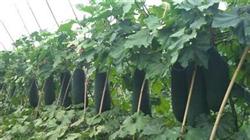
Black-skinned winter melon is elongated and cylindrical, with a dark green skin and longitudinal grooves when fully mature. The fruit is 60-80 cm long with a transverse diameter of 15-25 cm. The flesh is white, 5-6 cm thick, and a single fruit weighs 8-15 kg. The yield per mu is 4000-5000 kg, and the entire growing period is 160-180 days. This variety is drought-tolerant, heat-tolerant, storage-tolerant, and transport-tolerant. It has a long supply period, a clear sweet taste, and a soft, smooth texture. It helps relieve summer heat and quench thirst. Besides being eaten fresh, it can also be processed into candied winter melon, dried winter melon, and other products, which are quite popular both domestically and for export.
I. Sowing and Seedling Raising. It is planted in two seasons, spring and autumn. The spring sowing period is from February to April, with March being the suitable sowing time, and harvest is from July to August. For autumn planting, sow from late July to early August, and harvest in October. After germination, it can be sown directly or raised in nutrient cups and then transplanted. For early sowing, pay attention to cold protection, and transplant when the weather is warm.
II. Land Preparation and Transplanting. Plant on raised beds. The bed width is 2 m including the ditch. Plant a single row in the middle of the bed with a plant spacing of 1 m, allowing 300 plants per mu. For autumn planting, the plant spacing is 0.8 m, allowing 400 plants per mu. It can also be intercropped with other crops with a plant spacing of 1.6 m.
III. Trellising and Vine Training. Generally, when the vine reaches 1 m in length, bamboo trellises are set up to guide the vines' growth. Remove side vines promptly so the vines grow evenly, make rational use of sunlight, and promote fruit setting. When the plant grows to 25-30 nodes, select one normally developed young fruit to keep, and keep only one per plant. After setting the fruit, remove the terminal bud and side vines after leaving 4-5 leaves, so as to promote the young fruit's growth and increase yield.
IV. Field Management. In the early stage, the seedlings grow slowly and need less water and fertilizer. After the fruit-setting stage, the demand for water and fertilizer becomes especially high, accounting for 70% of the total fertilizer amount. Therefore, sufficient base fertilizer should be applied, and topdressing should be applied after fruit setting. The main disease is Fusarium wilt. Control methods include crop rotation, planting on raised beds, keeping the soil moist without waterlogging, and using chemicals such as thiophanate-methyl, carbendazim, and Bordeaux mixture. Pests include melon thrips, melon fruit fly, and aphids, which can be controlled with pesticides such as 25% phosmet, dimethoate, and trichlorfon.