-
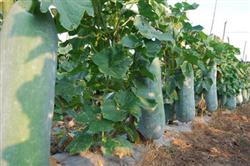
How to fertilize winter melon effectively? A detailed guide to practical methods
Fertilization principles: Winter melon grows best in slightly sandy soil rich in organic matter. It tolerates heavy feeding but not poor, barren soil, and it has comprehensive requirements for nutrients such as nitrogen, phosphorus, potassium and calcium. Basal fertilizer should be applied heavily, with reasonable supplementary fertilization. Nutrient uptake is low at the seedling stage, greater at the bolting stage, and during flowering and fruiting, especially in the early and middle stages of fruit development, uptake is...
-
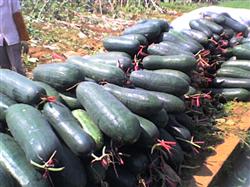
What are the key points for cultivating winter melon in small arched tunnels in early spring?
Winter melon has a well-developed root system, luxuriant branches and leaves, and bears huge fruits; it is a high-yielding crop with strong adaptability. The entire growth period of winter melon is about 100-150 days, and its life is divided into 4 stages: from seed germination to the cotyledons flattening out and the first true leaf appearing is the germination stage; from the first true leaf emerging to the beginning of vine growth is the seedling stage; from the seedling...
-
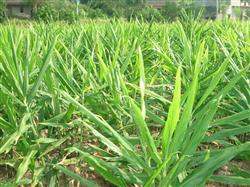
Key Techniques for High-Yield Cultivation of Ginger Intercropped with Watermelon
When planting ginger, apply heavy base fertilizer and increase phosphorus and potassium fertilizer; avoid applying too much nitrogen fertilizer. Apply sufficient base fertilizer, mainly organic fertilizer, with a combination of slow-release and quick-release chemical fertilizers. Base fertilizer generally accounts for 40% of the total fertilizer application. Before sowing, apply 15 kg of imported compound fertilizer plus 50 kg of calcium magnesium phosphate fertilizer per mu as deep-layer base fertilizer. After sowing, use high-quality farmyard manure...
-
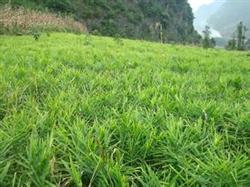
Intercropping and Relay Cropping Technique for Lettuce, Ginger, Watermelon and Bok Choy
1. Topdressing: generally 2 to 3 times. The first is in early to mid-June, applying 1000 kg of barnyard manure plus 15 kg of urea per mu between the rows, covered with a thin layer of soil. The second is in early to mid-July after the mother ginger is dug, applying 150 kg of decomposed rapeseed cake or 30 kg of compound fertilizer per mu; the third is in early September after the frame is removed, applying another dose of human excrement and urine to prevent nutrient deficiency...
-
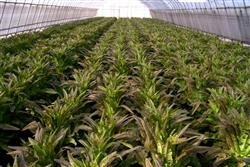
High-Efficiency Multiple Cropping Technology for Greenhouse Lettuce, Thick-Skinned Melon, and Green Garlic
In the multiple cropping model of greenhouse lettuce, thick-skinned melon, and green garlic, lettuce is sown and raised as seedlings in mid-to-late September, transplanted in late October, and harvested in mid-March; thick-skinned melon is sown and raised as seedlings in late February, planted out in late March, and harvested at the end of June and the beginning of July; green garlic is sown in late July and harvested in mid-to-late October. Per mu, the yield can reach 4500-500...
-
Detailed Explanation of Key Cultivation Techniques for Watermelon in Early Spring Greenhouses
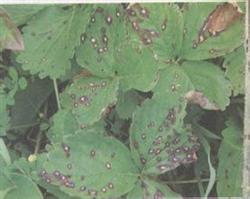
Strawberry snake-eye disease, also known as leaf spot disease, is a common disease of strawberries and occurs widely. When the disease is mild, it has no obvious effect on production; when severe, the incidence rate reaches 60%, and some leaves become necrotic and dry, significantly affecting strawberry yield. Symptom identification: it mainly damages leaves, petioles, fruit stalks, tender stems and seeds. On the leaves it forms small dark purple spots...
-

What are the common methods for controlling pests and diseases in Hami melons?
Common pest and disease control methods for Hami melons
-
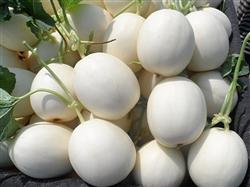
Detailed Explanation of Key Techniques for Open-Field Cultivation of Thin-Skinned Melons
For open-field melon cultivation, the traditional method has always been to let the vines crawl along the ground. The vines intertwine in a chaotic manner, making them very difficult to manage, and yields are also low. If melons are grown the way cucumbers are, with the vines trained up on a trellis, there are quite a few advantages. First, dense planting is possible. Taking Hongcheng No. 7 melon as an example, ground-crawling cultivation uses a plant-to-row spacing of 50 cm x 6...
-
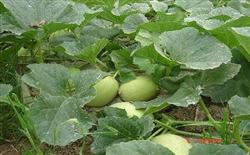
What are the common physiological disorders of watermelons and melons?
I. Causes of gourd-shaped fruit: 1. The fruit is set too far out, water and fertilizer conditions are poor, nutrients cannot be supplied and the fruit cannot swell; 2. The plant's vegetative growth is too vigorous, nutrients all go to the vines, and the small fruits that set are all gourd-shaped; 3. Pollination quality is low, the amount of pollen is insufficient and uneven, the front end of the fruit has many seeds while the base has...
-
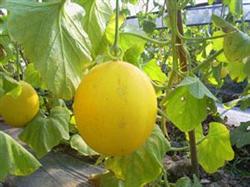
First-Time Melon Growing Experience Exchange: Growing Tips and Insights Shared
In 2009, the price of Elizabeth melons was surprisingly good. Greenhouse-grown melons that hit the market early sold for 5 yuan per jin; the first crop from arched sheds sold for close to 3 yuan per jin, and even the price of the second crop was similar to the first-crop price of previous years, at around 1.5 yuan per jin. As a result, many vegetable growers started planting Elizabeth melons this spring...
条件筛选