-

How to fertilize napa cabbage? Master the fertilization patterns and methods
Fertilization patterns and methods for napa cabbage
-
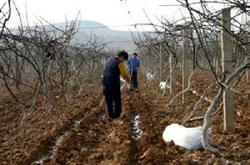
Analysis of Fertilization for Kiwifruit at Different Tree Ages
Kiwifruit trees of different ages grow differently and have different fertilizer requirements. Based on fertilization experience at home and abroad and experimental research on fertilizing Actinidia chinensis varieties, the Horticulture Research Institute of the Jiangxi Academy of Agricultural Sciences proposed proportions of fertilizer application rates for different tree ages, and achieved high-yield, high-quality kiwifruit in production applications, enabling kiwifruit...
-
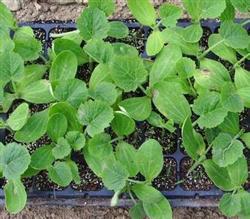
Key Technical Points for Fertilization During the Seedling Stage of Zucchini
Soil preparation and fertilization: Zucchini prefers slightly acidic soil, with a suitable pH value of 5.5 to 6.8. Zucchini has a very strong nutrient uptake capacity; applying too much nitrogen fertilizer easily causes excessive vegetative growth of stems and leaves, leading to flower and fruit drop and the occurrence of diseases. Therefore, nitrogen, phosphorus, and potassium should be applied in combination. Under normal circumstances, for every 1000 kg of fruit harvested, it needs to absorb 3.92 kg of nitrogen...
-
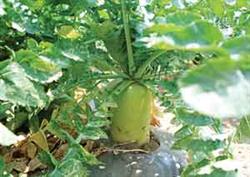
How to fertilize Chinese cabbage and radish? Master the nutrient requirements and fertilization methods
Chinese cabbage is an important leafy vegetable. Chinese cabbage has a very high yield, reaching over 5000 kg per mu, so it has relatively high fertilizer requirements. The ratio of the three is 1:0.4:1.1. Therefore, like other leafy vegetables, Chinese cabbage requires adequate nitrogen nutrition during the vegetative growth period, which is particularly important for promoting the formation of large leaves and increasing the photosynthetic rate...
-
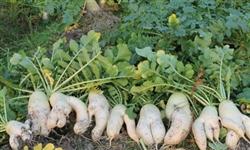
How to prevent forking and pithiness in winter-spring radishes? Reasonable fertilization is key
Right now is the sowing season for winter-spring radishes, and phenomena such as radish forking and pithiness are fairly common in radish production in our province. Agricultural experts point out that mastering fertilizer measures during cultivation can improve radish quality. There are many causes of radish forking, and the main problem is soil quality and cultivation aspects such as soil plowing...
-
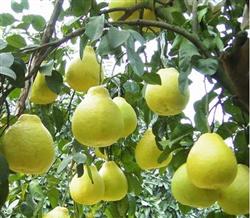
Key Technical Points for High-Quality and Efficient Fertilization Management of Shatian Pomelo
Shatian pomelo is a fruit of important standing in the fruit production of Xingning City. At present, the planting area has reached more than 30,000 mu, and the total output has reached more than 30,000 tons. Quite a number of farmers have already embarked on the road to prosperity by growing pomelo. In the long-term practice of planting Shatian pomelo, fruit growers in Xingning City have continuously experimented and summarized, and explored ways to improve the fruit quality of Shatian pomelo...
-
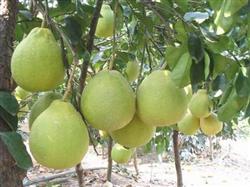
Detailed Guide to Spring Fertilization Methods After Pomelo Trees Bear Fruit
I. Fertilization for 1-3 year old young trees: To accelerate the growth of young trees and bring forward high yields, fertilization should be carried out multiple times in line with the pomelo tree's characteristic of sending out new shoots several times. Fertilizing before shoot emergence can promote shoot emergence and make the shoots grow robustly. Topdressing should mainly use quick-acting fertilizers. Fertilization method: apply frequently and in small amounts, with more fertilizer applied for spring shoots. The fertilization times are February, May and July respectively....
-
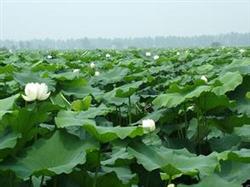
Smart Fertilization for High-Yield Lotus Root: Mastering the Method Is Key
I. Fine Land Preparation and Sufficient Base Fertilizer. Lotus root grows in mud, and it requires soil rich in humus, soft, smooth and loose, with good aeration, which is most favorable for the growth of lotus root and makes it easy to obtain high quality and high yield. Therefore, before planting lotus root, the soil should be deep-plowed, finely prepared, and given sufficient base fertilizer. Generally, at the end of winter when the soil thaws...
-
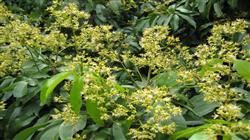
Abundant sunlight during the flowering period of lychee and longan is beneficial for pollination and fertilization
Experimental research and production have proven that placing bees for pollination during the lychee flowering period is the guarantee of a bumper lychee harvest. At the same time, the honey made by bees from collected pollen is also a natural health food for humans. In order to prevent bees from being poisoned and honey from being contaminated, ensure that enough foraging worker bees are dispatched to collect nectar, improve pollination results, and protect human health...
-

How to fertilize kidney beans? Detailed explanation of scientific fertilization methods
How to fertilize kidney beans
条件筛选