Abundant sunlight during the flowering period of lychee and longan is beneficial for pollination and fertilization
Experimental research and production have proven that placing bees for pollination during the lychee flowering period is the guarantee of a bumper lychee harvest. At the same time, the honey made by bees from collected pollen is also a natural health food for humans. In order to prevent bees from being poisoned and honey from being contaminated, ensure that enough foraging worker bees are dispatched to collect nectar, improve pollination results, and protect human health...
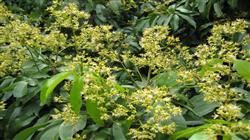 Sunlight is beneficial for pollination and fertilization of lychee and longan
Pay attention to timely fruit retention and control of pests and diseases such as the lychee stem borer
The low temperatures in early April have a great impact on the flowering of late-maturing lychee and longan. Due to insufficient light, relatively low temperatures, bees not climbing the trees, and high air humidity, the anthers do not dehiscence, and pollen cannot pop out or float in the air, which affects pollination and fertilization. In recent days, the sun has been shining brightly, which is very conducive to pollination and fertilization of lychee and longan. At present, the main work in the orchard is to ensure normal pollination and fertilization, retain fruit in a timely manner, and do a good job in pest and disease control.
Early-maturing lychee: effectively prevent the lychee stem borer
Early-maturing lychees such as Sanyuehong and Baitangying are in the flower-shedding stage and young fruit growth stage. The main work is to retain fruit in a timely manner and pay attention to damage by the lychee stem borer. ①Prevent fruit rotting. Shake off the residual flowers in a timely manner to leave space for young fruit growth and reduce the occurrence of pathogens. ②Spray pesticides in a timely manner to retain fruit. Before the young fruits have differentiated in size, some foliar fertilizers such as agricultural nucleotides can be sprayed. After the young fruits have differentiated in size, or 7-10 days after the female flowers fade, spray the first fruit-retention pesticide, such as Guodebao, and spray again after 30 days. At present, some orchards are spraying the first application, while some orchards with early flowers are spraying the second fruit-retention application. ③Prevent and control the lychee stem borer in a timely manner. Do a good job in forecasting and spray pesticides in a timely manner. When the adult emergence rate is close to 40%, spray the first pesticide, then spray again after 5-7 days, for 2-3 consecutive sprays, which can effectively control the lychee stem borer. ④Prevent and control diseases such as downy blight and anthracnose. After rain, drain water in a timely manner, remove weeds, thin branches, and spray pesticides. ⑤Orchards without flowers can be pruned to cultivate new branch groups, expand the tree canopy, and prepare for fruiting next year.
Mid-maturing lychee: spray pesticides to protect young fruit
Mid-maturing lychees such as Shuidong, Heiye, and Feizixiao are in the late flowering stage or young fruit growth stage. The main work is fruit retention and pest and disease control. ①Prevent flower rotting. Shake off residual flowers or rainwater on the flower clusters in a timely manner to ensure the flower clusters have space and less water. ②Introduce bees to help pollination. Lychee flowers have very abundant nectar, which attracts bees to collect nectar and help pollination under clear weather. ③Artificial pollination. Under the current weather, if manpower is available, artificial pollination can be carried out. During the operation, care should be taken to keep the time within 30 minutes; otherwise, not only will it fail to help pollination and fertilization, but because the pollen solution is left for too long, it will inhibit pollen tube germination and thereby affect fertilization. ④Pay attention to damage by the lychee stem borer. It is best to control the occurrence of the pest at the early stage to reduce pesticide spraying and increase yield. ⑤Fruit retention. Before the young fruits differentiate in size, spray 1-2 times with foliar fertilizers such as agricultural nucleotides or Qingyise cytokinin. After the young fruits differentiate in size, spray Guodebao once, and spray again after 30 days. ⑥Fertilization. Whether to fertilize should be decided according to the fruit load and management level. Orchards with a large number of flowers and a large fruit load can apply compound fertilizer once. ⑦Prevent and control diseases. In shaded orchards or orchards prone to diseases, spray pesticide once when the temperature rises after rain.
Late-maturing lychee: ensure pollination and fertilization
Late-maturing lychees such as Nuomici, Guiwei, and Huaizhi are in the flowering stage. The main work is to ensure pollination and fertilization and pay attention to the occurrence of pests and diseases. ①Ensure that pollination and fertilization proceed normally, and introduce bees or carry out artificial pollination. ②Prevent flower rotting. Shake off rainwater and residual flowers on the flower clusters in a timely manner to reduce moisture on the flower clusters and free up space, which is beneficial for fruit set and reducing diseases. ③Prevent and control pests and diseases. Old orchards or orchards planted in low-lying areas should be drained in a timely manner, dead branches and fallen leaves should be cleaned up, and branches should be appropriately thinned. Orchards with relatively sticky soil should also have some quicklime spread appropriately. In orchards with lychee felt disease, diseased branches, diseased leaves, and diseased flower clusters should be cut off and burned, and then acaricides should be sprayed. ④Spray pesticides to retain fruit. Before the young fruits differentiate in size, spray agricultural nucleotides once to increase the photosynthetic efficiency of the fruit peel, which helps keep the young fruits green. After the young fruits differentiate in size, spray the first fruit-retention pesticide: Guodebao. ⑤Physical scoring to retain fruit. After the rain stops, for orchards that underwent spiral girdling in winter, if the wounds have healed, the wounds can be reopened; for orchards that used ring cutting to retain fruit at the initial flowering stage, cut again after 20-25 days. ⑥Apply foliar fertilizer as a supplementary application to improve the photosynthetic capacity of leaves.
Longan: introduce flies to help pollination
Longan is in the flowering stage and full flowering stage. The main work is fruit retention and preventing flower rotting. ①Introduce insects to help pollination. Longan has more bisexual flowers than lychee. Under normal weather conditions, pollen is not lacking in the air, but with insects helping pollination, fruit set will be somewhat higher. Pile chicken manure or garbage in the orchard, or shallowly bury dead fish and dead shrimp, etc., to attract flies to help pollination. ②Spray foliar fertilizer to retain fruit. Longan flower clusters are large and have many flower buds. Flowering consumes a large amount of nutrients, which is unfavorable for young fruit growth. Therefore, within 2-7 days after the female flowers fade, spray agricultural nucleotides or other foliar fertilizers once, which promotes young fruit development. ③Spray pesticides to retain fruit. Under adverse weather conditions, longan should also be sprayed with some fruit-retention pesticides such as longan fruit-retention hormone or Guodebao. ④Clean the orchard and drain water in a timely manner. For orchards that have not yet flowered or have finished flowering, spray a disease-prevention pesticide once after the rain stops, which can prevent and control anthracnose.