How to prevent forking and pithiness in winter-spring radishes? Reasonable fertilization is key
Right now is the sowing season for winter-spring radishes, and phenomena such as radish forking and pithiness are fairly common in radish production in our province. Agricultural experts point out that mastering fertilizer measures during cultivation can improve radish quality. There are many causes of radish forking, and the main problem is soil quality and cultivation aspects such as soil plowing...
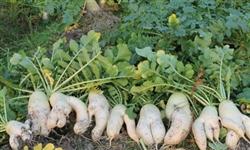
Right now is the sowing season for winter-spring radishes, and phenomena such as radish forking and pithiness are fairly common in radish production in our province. Agricultural experts point out that mastering fertilizer measures during cultivation can improve radish quality.
There are many causes of radish forking, and the main problem is caused by soil plowing that is too shallow in terms of soil quality and cultivation, and by the subsoil being too hard so that fertilizer is absorbed unevenly.
If the soil is not turned and sun-dried enough, and the main root is damaged by underground pests, lateral roots naturally form. If fertilizer is not fully decomposed, the fertilizer contains a large amount of uric acid, which on the one hand burns the main root and on the other stimulates lateral roots to grow. If base fertilizer is applied unevenly and is not turned deep into the soil layer, it likewise harms the elongation activity of the main root, and lateral roots similarly form. Once substances accumulate and the root thickens, forking is formed.
Farmers must conscientiously carry out deep plowing and careful cultivation of the soil and keep the soil loose, crumbly, and soft. Apply fully decomposed organic fertilizer, and spread this fertilizer evenly into the soil layer.
Radish pithiness is an over-maturity phenomenon. The pithiness phenomenon in radishes is closely related to poor soil drainage, uneven application of base fertilizer and topdressing, or topdressing too late, and leaf growth stopping too early.
Improve cultivation measures through intensive plowing and careful cultivation and scientific management to create a good cultivation environment, especially through comprehensive measures such as the choice of soil quality, even fertilization and balanced water supply, and timely harvesting, so that radish plants grow normally. When the fleshy root forms under stable and reliable conditions, the pithiness phenomenon will rarely appear.
Experts point out that, on the premise of mastering basic cultivation techniques, scientific fertilization is the key to solving forking and pithiness in radishes during the winter-spring radish sowing season.