Analysis of Fertilization for Kiwifruit at Different Tree Ages
Kiwifruit trees of different ages grow differently and have different fertilizer requirements. Based on fertilization experience at home and abroad and experimental research on fertilizing Actinidia chinensis varieties, the Horticulture Research Institute of the Jiangxi Academy of Agricultural Sciences proposed proportions of fertilizer application rates for different tree ages, and achieved high-yield, high-quality kiwifruit in production applications, enabling kiwifruit...
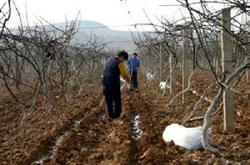
Kiwifruit trees of different ages grow differently and have different fertilizer requirements. Based on fertilization experience at home and abroad and experimental research on fertilizing Actinidia chinensis varieties, the Horticulture Research Institute of the Jiangxi Academy of Agricultural Sciences proposed proportions of fertilizer application rates for different tree ages, and achieved high-yield, high-quality kiwifruit in production applications, bringing kiwifruit yields to 3750-7500 kg per hectare in the initial fruiting stage, 15000-22500 kg per hectare in the early full-fruiting stage, and 22500-30000 kg per hectare in the full-fruiting stage.
1. Fertilization of young kiwifruit trees (1-2 year old trees) The main purpose of fertilizing young trees is to expand the canopy as quickly as possible, take shape early, and bear fruit early. Topdressing should be based mainly on quick-acting nitrogen fertilizer. Apply topdressing 2-3 times per year. Before the first bud break, apply 50 g of urea per tree; during the new shoot growth period, apply 50 g of urea per tree. Thereafter, apply fertilizer according to the growth status of the kiwifruit tree.
2. Fertilization of kiwifruit trees in the initial fruiting stage (3-4 year old trees) For kiwifruit at this stage, pruning and training still take priority. At this time, vegetative growth dominates in kiwifruit, but it has begun to shift toward reproductive growth; all trees flower and bear fruit, with a certain yield. For the total annual fertilizer application rate of kiwifruit trees in the initial fruiting stage and the proportions of fertilizer applied at the main fertilization times, refer to Table 4-4.
At this stage, the fertilizer application rate per hectare for kiwifruit can refer to the following data: base fertilizer, apply 1500 kg of straw or 1500 kg of livestock manure, 1500 kg of cake fertilizer, and 750 kg of calcium phosphate fertilizer; pre-bud fertilizer, apply 150 kg of urea; fruit-swelling fertilizer, apply 450 kg of compound fertilizer or 225 kg of potassium fertilizer.
3. Fertilization of kiwifruit trees in the early full-fruiting stage (5-6 year old trees) At this stage, the kiwifruit tree shape has formed and filled the trellis surface; tree vigor begins to shift to moderate, and reproductive growth and vegetative growth begin to approach balance. For the total annual fertilizer application rate and the proportions of fertilizer applied at the main fertilization times, refer to Table 4-5.
At this stage, the fertilizer application rate per hectare for kiwifruit is as follows: base fertilizer, apply 2400 kg of cake fertilizer, 22500 kg of livestock manure or 22500 kg of straw, and 1200 kg of calcium magnesium phosphate fertilizer; pre-bud fertilizer, apply 225 kg of urea or 375 kg of compound fertilizer; fruit-swelling fertilizer, apply 750 kg of compound fertilizer or 375 kg of potassium fertilizer; post-harvest fertilizer, depending on tree vigor.
4. Fertilization of kiwifruit trees in the full-fruiting stage (trees over 6 years old) At this stage, reproductive growth and vegetative growth of kiwifruit are relatively balanced, and this is the period for achieving high quality and high yield in kiwifruit. For the total annual fertilizer application rate and the proportions of fertilizer applied at the main fertilization times, refer to Table 4-6.
The fertilizer application rate per hectare for kiwifruit in the full-fruiting stage is as follows: base fertilizer, apply 36000 kg of cake fertilizer, 30000 kg of livestock manure or straw, and 3000 kg of calcium magnesium phosphate fertilizer; pre-bud fertilizer, apply 450 kg of compound fertilizer or 300 kg of urea; fruit-swelling fertilizer, apply 900 kg of compound fertilizer or 450 kg of potassium fertilizer; post-harvest fertilizer, apply as appropriate depending on tree vigor.
The types of fertilizers applied can be determined according to local fertilizer source conditions. When applying, the required amount of each fertilizer should be converted according to different tree ages and the effective component content of different fertilizers, with reference to the above standards, and fertilization should be carried out reasonably.
5. Determination of fertilizer application rate Determine the amount of fertilizer applied according to the tree size and fruit load of the kiwifruit orchard, soil conditions, and fertilization characteristics. The combined ratio of nitrogen, phosphorus, and potassium in the fertilizer is 1:0.7-0.8:0.8-0.9.