-

Symptom Identification and Control Methods for Powdery Mildew on Euonymus japonicus
Symptoms mainly affect young new shoots and leaves, mostly occurring on the underside of leaves. When the disease strikes, small round powdery spots first appear on the surface of young leaves, then gradually expand, and the lesions gradually spread into round powdery layers; the powdery layer on old lesions turns grayish-white. In severe cases, the entire leaf is covered with powdery mildew, the leaf shrinks and develops faded patches
-
Identification and Control Methods for Common Pests of Pilea
Scarab Beetles Scarab beetles are invertebrates and are considered omnivorous, eating just about anything. Different species live in different environments, such as deserts, farmland, forests and grasslands; in short, they can be seen just about anywhere. There are many species of scarab beetles.
-
Identification and control methods for diseases of the Brazilian wood plant
Gray mold control: During cultivation, the soil must be moist and sunlight abundant, and the soil is required to be loose, fertile and well drained, with the wintering temperature not lower than 16°C. When the disease occurs in the rainy season, remove diseased residues, drain promptly after rain, prevent moisture from lingering, and strengthen ventilation and light penetration
-

Taipei City to promote food and agriculture education farm certification, combining agricultural instructors and teachers
Combining agricultural instructors and teachers, Taipei City to promote "food and agriculture education farm" certification
-

Keelung's Low-Carbon Sustainable Homeland Certification Achieves Outstanding Results; City Government Recognizes the Efforts of All Units
In recent years, global warming has caused extreme weather to occur with increasing frequency. The Keelung City Environmental Protection Bureau, in line with the Executive Yuan Environmental Protection Administration's "Low-Carbon Sustainable Homeland Rating and Grading Certification" policy, has continued to assist villages and neighborhoods under Keelung City's jurisdiction in promoting low-carbon sustainability-related...
-

What are the common pest and disease identification and control methods for cyclamen?
Cyclamen is highly prone to disease and should be planted in a clean, well-drained location. The main diseases include Fusarium wilt, wilt disease, soft root rot, gray mold, verticillium wilt, and spider mites. 1. Fusarium wilt. The pathogen often lies dormant on seedlings until transplanting, when the disease begins to develop.
-
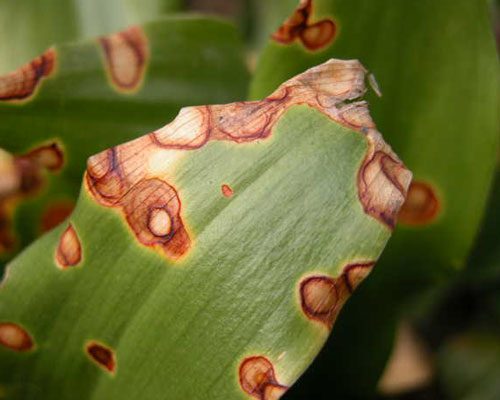
Symptom Identification and Control Methods for Gardenia Leaf Spot
Symptoms and pathological changes: In the early stage, light yellow round spots appear on the leaves, surrounded by orange-red halos, gradually expanding into round, irregular brown spots with faint concentric rings, causing the leaves to dry up. This disease is a fungal disease caused by infection with Glomerella cingulata. The pathogen mainly overwinters as mycelium latent in diseased leaves
-

Identification and Control Methods of Hydrangea Leaf Spot
Symptoms and pathological changes: Hydrangea leaf spot is mainly distributed in Sichuan, Henan, Guangdong, Taiwan, China, Jilin, Shanghai, Zhejiang, Hunan and other places. The disease mainly occurs on leaves. The leaf spots are initially light yellowish-brown water-soaked small spots, which later expand into circular or nearly circular spots, 2-5 mm in diameter
-

Symptom Identification and Control Methods of Camellia Anthracnose
Symptoms and pathological changes: Mainly damages leaves. Diseased leaves have round or irregular brown to grayish-brown lesions, with darker edges or yellow halos; some lesions are grayish-white, and leaf spots are sunken or have dark edges. On the lesions, concentric-ringed or scattered small black spots appear
-
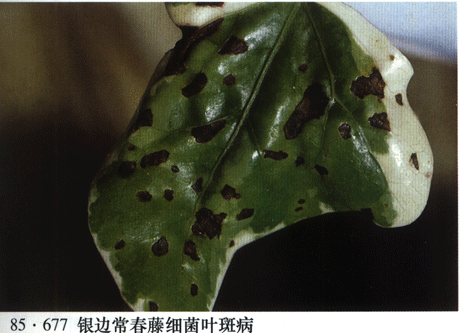
Symptom Identification and Control Methods for Ivy Leaf Spot Disease
Symptoms and pathological changes: In the early stage of the disease, very small round dark spots appear on the leaf surface, with oily-looking halos. They later enlarge and turn black. Some become polygonal, and sometimes brown deposits surround the lesions; occasionally canker spots also form on the petioles. Infected leaves generally do not drop off. The disease overwinters in the diseased tissue
条件筛选