How to prevent and control pests, diseases and weeds during the seedling stage of cabbage-family vegetables
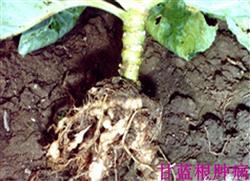
Cabbage clubroot mainly harms cruciferous vegetables. After the disease occurs, the roots swell and become tumor-like, hence the name clubroot disease. Generally, after the main root is infected, it becomes lump-shaped, and after the fine roots, branch roots, lateral roots and fibrous roots are infected, they are mostly locally swollen and deformed. Simple diagnosis: clubroot disease and root-knot nematode disease have similar field symptoms. When distinguishing them, you can dissect...
 In autumn, cabbage-family vegetables such as cauliflower and cabbage are in the seedling stage. At this time, high temperature and rainy weather cause severe outbreaks of pests, diseases and weeds, so measures should be taken early for prevention and control.
Diseases: The main diseases occurring at the seedling stage include black rot, downy mildew, etc. For control, the method of soaking seeds in warm water and then dressing them with chemicals is often used, that is, soaking the seeds in 50°C warm water for 10 minutes, then after removing them, dressing the seeds with 50% thiram or 75% chlorothalonil at 0.4% of the seed weight. For fields with severe downy mildew at the seedling stage, spray with 58% metalaxyl·mancozeb 600-fold dilution for control.
Insect pests: The main insect pests harming cabbage-family vegetables at the seedling stage include beet armyworm, tobacco cutworm, grasshoppers, etc. Where conditions permit, insect-proof nets can be used to cover and raise seedlings to prevent pests from entering and causing damage. When pests are found, spray with Gaoda (8% flufenoxuron·high-fluorine emulsifiable concentrate) 1500-fold dilution or 10% Chujin 2000-fold dilution for 2-3 applications. Apply a good pre-transplanting treatment 1-2 days before transplanting.
Weed damage: Soil treatment after sowing and before seedling emergence is an important measure to effectively control weed damage at the seedling stage. Generally, after sowing and covering with soil, use 20% napropamide 150-200 ml per mu, or 33% pendimethalin 60-80 ml, or 96% metolachlor 40-50 ml, add 50 kg of water and spray for control.