How to prevent and control diseases and pests during the mango flower spike stage? A detailed practical guide
After mango flower spikes are damaged by diseases and pests, the spikes become deformed, flower quality declines, buds drop, flowers dry up, and they cannot bloom or set fruit. The control methods for the diseases and pests harming mango flower spikes are as follows: 1. Anthracnose Anthracnose is the most serious disease harming flower spikes. It strikes as soon as the flower spikes emerge, first appearing as black...
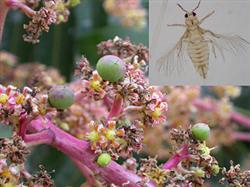
After mango flower spikes are damaged by diseases and pests, the spikes become deformed, flower quality declines, buds drop, flowers dry up, and they cannot bloom or set fruit. The control methods for the diseases and pests harming mango flower spikes are as follows:
I. Anthracnose Anthracnose is the most serious disease harming flower spikes. It strikes as soon as the flower spikes emerge, first appearing as black spots on the pedicel, which then expand into black patches and cover every part of the spike, causing buds to die and large numbers of buds and flowers to drop. In spring, when there is plenty of rain and high humidity, the disease is severe and spreads rapidly; if not controlled in time, it will also affect young fruit. When the flower spikes are just beginning to swell, spray the foliage once with a 0.8-1 degree Baume lime sulfur aqueous solution, or spray once with a 1:1:100 equal-strength Bordeaux mixture. After the flower spikes emerge, continuously spray 2-3 times with an 800x Sporgon aqueous solution, or a 600x copper green aqueous solution, or an 800x Sportak aqueous solution, etc., once every 7-10 days, evenly wetting all leaves and flower spikes until water droplets begin to drip down; this can control the occurrence and damage of mango anthracnose.
II. Sooty mold Mango sooty mold is mainly induced after flower spikes are damaged by piercing-sucking pests such as scale insects, aphids, flat-headed leafhoppers, and white moth planthoppers. First, a sticky liquid appears on the flower spikes and the leaves at the base of the spikes, and afterward it becomes covered with soot-like material, affecting photosynthesis, weakening the spikes, and easily causing flower drop. To control sooty mold, in addition to promptly controlling the above piercing-sucking pests, when sticky soot-like material appears, continuously spray 2-3 times with an 800x thiophanate-methyl aqueous solution, or a 600x phosethyl-Al and mancozeb aqueous solution, or an 800x carbendazim aqueous solution, etc., once every 10-15 days; the soot-like material will then quickly come off.
III. Scale insects The scale insects harming mango flower spikes are mainly the cottony cushion scale, which gathers on the flower spikes and the leaves at the base of the spikes to do damage, piercing and sucking sap, causing wounds, weakening the growth vigor of the spikes, deforming the spikes, and inducing sooty mold. If control is not timely, it will also turn young fruit black and form spotted fruit. After the flower spikes emerge, be sure to inspect the leaves and spikes. If white cotton-like material appears, or the spikes and leaves are covered with sticky soot-like material with scale insects attached, continuously spray 2-3 times with a 1500x scale-killing aqueous solution, or a 1000x Daipusha aqueous solution, or a 1000x Supuji aqueous solution, etc., once every 7-10 days, and be sure to wet the flower spikes and the base of the leaves.
IV. Powdery mildew When the flower spikes have just emerged, small powdery spots appear on the pedicels of the spikes, and afterward they merge and expand to form a layer of white powdery material. After the flowers are infected, they stop opening and then drop, and the inflorescence turns black. When small powdery patches appear on the flower spikes, continuously spray 2-3 times with a 600x sulfur suspension concentrate aqueous solution, or an 800x triadimefon aqueous solution, or a 1000x fenbuconazole aqueous solution, etc., once every 7-10 days.
V. Aphids, thrips, flat-headed leafhoppers, and white moth planthoppers are all piercing-sucking pests. They attach to the flower spikes, pierce and suck sap, and induce sooty mold, weakening the spikes and affecting flowering and fruiting. During the growth and development period of the flower spikes, continuously spray 2-3 times with a 1000x Nongdile and 800x trichlorfon mixed solution, or a 1000x dichlorvos and 1000x Lorsban mixed solution for control, spraying once each when the spikes reach 5-10 cm, 15-20 cm, and 25-30 cm.
VI. Horizontal-lined owlet moth, scarab beetles, and tussock moths The horizontal-lined owlet moth is a spike-boring pest. After the flower spikes emerge, it bores in from the middle of the pedicel to do damage, causing the spikes to dry up. Scarab beetles and tussock moths mainly bite and feed on the flower spikes, forming bare spikes that cannot bloom or set fruit. To control the above pests, the main method is to spray promptly during the growth and development period of the flower spikes. Generally, when the spikes are just beginning to swell, when the spikes are 15-20 cm long, and when the spikes are 25-30 cm long, spray once each with a 2500x Decis aqueous solution, or a 2500x Anlubao aqueous solution.