What are the control methods for soybean mosaic virus disease?
Suihua City in Heilongjiang Province is a major soybean-producing area, with a perennial soybean planting area of nearly 300,000 hectares. In recent years, the occurrence of soybean mosaic virus disease has shown a trend of worsening year by year, occurring in most fields, with the disease incidence rate in the field generally around 4.8%, and reaching over 20% in severe cases; the rate of brown (black) mottled seeds in soybean grain is over 10%,...
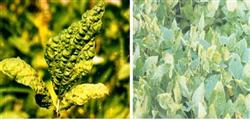
Suihua City in Heilongjiang Province is a major soybean-producing area, with a perennial soybean planting area of nearly 300,000 hectares. In recent years, the occurrence of soybean mosaic virus disease has shown a trend of worsening year by year, occurring in most fields, with the disease incidence rate in the field generally around 4.8%, and reaching over 20% in severe cases; the rate of brown (black) mottled seeds in soybean grain is over 10%, causing reduced soybean yield and lower quality. We adopted comprehensive supporting technical measures including carefully selected seeds, timely removal of diseased plants combined with cultivation and ridging, use of highly effective, low-toxicity, low-residue insecticides to control aphids, and chemical prevention, and achieved very good control results, with a control effect of over 90%.
I. Causes of the disease
1. Seed-borne virus The pathogen is mosaic virus, and the virus particles are filamentous. The primary infection source of soybean mosaic virus disease is mainly virus-carrying seeds. Plants grown from virus-carrying seeds become the source of secondary infection in the field, and soybean mosaic virus is very easily transmitted by contact. Soybean seeds infected with the virus disease have many brown (black) mottled seeds, with a brown (black) mottled seed rate of around 10%.
2. Aphid transmission The main vector insect of soybean mosaic virus is the soybean aphid. High temperatures and little rainfall, along with high soybean sap concentration and rich nutrition, are favorable for aphid reproduction. The greater the aphid population and the earlier they appear, the more early diseased plants there are, and the more severe the occurrence of mosaic disease. In recent years, the occurrence of soybean aphids has been relatively large, providing a transmission vector for the occurrence of soybean mosaic virus. From 2000 to 2003, the aphid occurrence level was nearly 10,000 aphids per 100 soybean plants, with an aphid-infested plant rate of over 90%.
II. Disease symptoms
1. Symptoms on diseased soybean leaves Typical mosaic symptoms appear on the leaves. Generally, mosaic symptoms are obvious on young leaves, while often not obvious on old leaves. There are three common types of mosaic symptoms: First, the severe mosaic type, in which diseased leaves show mottling of alternating yellow and green, severe wrinkling, brown and curved veins, blister-like protrusions of the mesophyll, dark green color, the entire leaf margin curling backward, and in the later stage vein necrosis and plant dwarfing. Second, the wrinkled mosaic type, in which diseased leaves show yellow-green mosaic mottling and wrinkling, the leaves have blister-like protrusions along the veins, the leaf margins curl downward, often causing the leaves to wrinkle into distorted, irregular shapes, with plant dwarfing and few pods. Third, the mild mosaic type, in which leaf growth is basically normal, with slight pale yellow mottling visible to the naked eye, and when diseased leaves are picked and viewed against sunlight, yellow-green mottling can be seen. Generally, resistant varieties or plants infected in the later stage mostly show these symptoms.
2. Symptoms at the soybean seedling stage Generally, vein clearing appears on the true leaves, and soon they become mosaic-like. The internodes of diseased plants shorten and the plants become dwarfed. Plants dwarfed from virus-carrying seeds are more severely dwarfed, while plants infected later by aphid transmission show less obvious dwarfing.
3. Symptoms of diseased spots on soybean grain Brown or black markings in a radial or irregular shape often begin to appear from the hilum. Whether the markings are present and their severity are related to the period of infection. Seeds produced by diseased plants grown from virus-carrying seeds have obvious markings, and the rate of seed-borne virus transmission is high. For plants infected later through aphid transmission, especially those infected after flowering, the markings on the seeds are often not obvious. However, whether seeds carry the virus is not completely determined by the presence or absence of markings; seeds without markings are not necessarily virus-free.
III. Control measures
1. Carefully select soybean seeds Before sowing, seeds must be strictly screened, and infected soybean grains should be carefully selected out by hand, removing brown (black) mottled grains to minimize the primary infection source.
2. Control aphids to prevent the disease The occurrence and epidemic of soybean mosaic virus disease are closely related to the number of aphids and the timing of peak occurrence. Therefore, conducting pest surveys and forecasting, spraying timely to kill aphids, and eliminating aphids at the spot and patch stages are key to controlling soybean mosaic virus disease.
Insecticides for controlling aphids include: per hectare, 300-450 g of 10% imidacloprid (Dagongchen, Yibianjing, Pushiya, Shiyajing, etc.) wettable powder, or 450 mL of 3% Mobilan emulsifiable concentrate, diluted in 450 kg of water for spraying; or per hectare, 600 mL of 2.5% Green Kung Fu emulsifiable concentrate, or 300-450 mL of 20% Huifeng Kuaike emulsifiable concentrate, diluted in 450 kg of water for uniform spraying.
3. Chemical disease prevention At the soybean seedling stage, remove diseased plants promptly in combination with hoeing and ridging. At the same time, before disease onset or in the early stage of disease, begin spraying to control the viral disease. Per hectare, use 1.7-2.25 kg of 2% Junkeduke aqueous solution, diluted in 450 kg of water for spraying, ensuring uniform spraying with no missed areas, applying continuously 2 times with an interval of 7-10 days each time; or per hectare, use 900 g of 20% Du A wettable powder, diluted in 450 kg of water for spraying, with uniform spraying, once every 7-10 days, for 3 consecutive sprays. In addition, in July and August, chemicals for controlling viral diseases can also be sprayed in combination with aphid control.