-
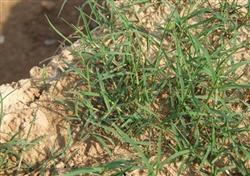
How to prevent and control weeds during autumn radish cultivation?
How to prevent weeds when growing autumn radish? Please explain the methods. Late August to early September is the sowing period for autumn and winter radish. After emergence, radish grows slowly in the early stage, and the seedlings are small, making them vulnerable to weed damage. Especially in weather with frequent autumn rain, the amount of weed emergence and growth is large, which can severely inhibit the growth and development of radish, so it should...
-
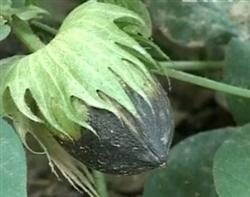
What are the control methods for cotton boll rot (boll)?
How to control cotton boll rot (boll)? Please introduce the methods. Cotton boll rot mostly occurs from mid to late August to early September. During this period, if there is cloudy and rainy weather with high humidity, and the cotton field is dense with poor ventilation and light penetration, various pathogens will rapidly breed and multiply. Common cotton boll rot diseases mainly include anthracnose, black boll disease, blight, red rot, pink rot...
-
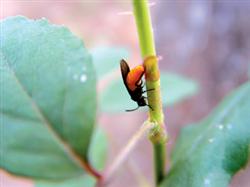
What common insect pests need to be controlled when growing roses?
What pests need to be prevented when growing roses? Please give an introduction. When growing roses, the following pests need to be prevented: 1. Cnidocampa flavescens (Walker), of the order Lepidoptera, family Limacodidae, also known as the slug moth, octagonal worm, octagonal jar, itching chili, poisonous hairy caterpillar. It is distributed in almost every province nationwide. Besides damaging roses, it also damages crabapple, jujube, redbud, mulberry, ...
-
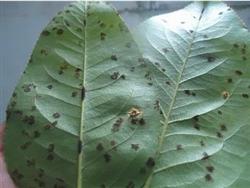
What are the control methods for black spot disease in roses?
How to control black spot disease in roses? Please help guide. Black spot disease is most prevalent in Beijing in summer and autumn. On the leaves of diseased rose plants, dark brown spots 3-4 mm in diameter appear, surrounded by yellow halos, and the leaves fall off. When the disease is severe, only the branches and infected young buds remain on the rose plant. 2. Early prevention...
-
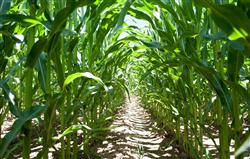
How to Control Weeds in Corn? A Detailed Guide to Practical Weed Control Methods
How to prevent weed damage in corn? Please provide prevention methods. Weed damage is one of the factors restricting high and stable corn yields. The annual area affected by weeds in corn fields in China exceeds 350 million mu-times, causing about 9.5 billion kg in corn losses each year. In response to the weed species present and their damage characteristics, an integrated control strategy should be adopted that takes agricultural control as the foundation, ...
-
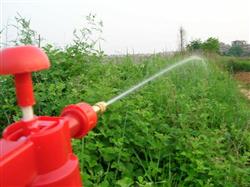
What are the precautions for glyphosate weed control?
What should be noted when using glyphosate for weed control? Please explain. The precautions for using glyphosate for weed control are: 1. Glyphosate herbicide is a non-selective herbicide, and when applying it, never let it contaminate crops, so as to avoid herbicide damage. 2. For perennial malignant weeds, such as cogon grass, purple nutsedge, etc., apply again 1 month after the first application...
-
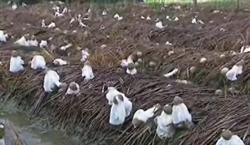
How to prevent and control pests and diseases after bamboo fungus cultivation is flooded
How to prevent and control pests and diseases after bamboo fungus cultivation is flooded? Please give guidance. The pathogens that commonly occur in bamboo fungus cultivation after flooding: slime molds, sooty mold fungi; pests: slugs, termites, mites, etc. The control methods are introduced below for mushroom growers' reference. 1. Slime molds occur on the exposed soil of the bamboo fungus bed or on the covering rice straw. In the early stage they are sticky...
-
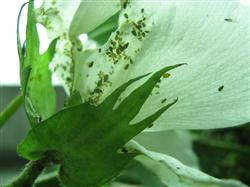
What are the control methods for cotton mirid bugs?
How do you control mirid bugs when growing cotton? Please explain the methods. Cotton mirid bugs can cause damage during both the seedling stage and the bud and boll stage of cotton. Right now, during the vigorous reproductive growth period of squaring, flowering and boll setting, is also the main damage period of mirid bugs, and they can cause cotton squares and bolls to drop. However, current genetically modified insect-resistant cotton has no resistance to piercing-sucking pests such as mirid bugs...
-
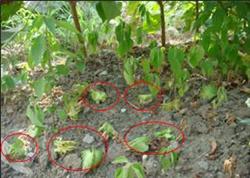
How to prevent and control boll shedding in cotton during high temperatures?
How to prevent and control boll shedding in cotton during high temperatures? Please introduce control methods. Boll shedding in cotton during high temperatures can be prevented and controlled by referring to the following methods: 1. Apply heavy boll fertilizer. Boll fertilizer is generally applied in 2-3 applications. The first and second applications are made at flowering and about 10 days after flowering. Quick-acting nitrogen fertilizer can be applied as a top dressing at 10-15 kg per mu, potassium...
-
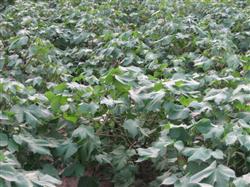
What are the methods to control excessive growth of cotton in summer?
How do you control excessive growth of cotton in summer? Here are some methods to introduce. To control excessive growth of cotton in summer, you can refer to the following methods: timely chemical regulation by spraying mepiquat chloride or chlormequat, which can control cotton plant growth, improve plant shape, and produce more buds and bolls. At the initial flowering stage, use 6-8 ml of chlormequat or 1.5-2 g of mepiquat chloride per mu, add water to 25...
条件筛选