What are the control methods for black spot disease in roses?
How to control black spot disease in roses? Please help guide. Black spot disease is most prevalent in Beijing in summer and autumn. On the leaves of diseased rose plants, dark brown spots 3-4 mm in diameter appear, surrounded by yellow halos, and the leaves fall off. When the disease is severe, only the branches and infected young buds remain on the rose plant. 2. Early prevention...
How to control black spot disease in roses? Please help guide.
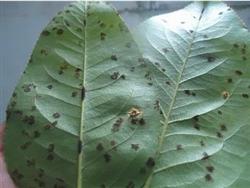
Black spot disease is most prevalent in Beijing in summer and autumn. On the leaves of diseased rose plants, dark brown spots 3-4 mm in diameter appear, surrounded by yellow halos, and the leaves fall off. When the disease is severe, only the branches and infected young buds remain on the rose plant.
2. Early prevention
(1) During the rose seedling stage, avoid dripping water onto the leaves and avoid sprinkler irrigation. If sprinkler irrigation is necessary, it must be done on a sunny morning.
(2) Before planting, spray 800-1000 times diluted chlorothalonil to prevent disease. After planting, from May to June, when the rose seedlings are no more than 30 cm tall, spray once a week for disease prevention, and re-spray promptly after rain. Each time, spray both the front and back sides of the rose leaves. Mature old leaves of roses are not easily infected. When the roses grow taller than 40 cm and there was no black spot infection during the seedling stage, then even in the rainy summer and autumn season, black spot disease will not occur on the roses without fungicide prevention.
3. After onset of disease, treat early and treat few. On
discovering that a small number of rose leaves are diseased, remove them promptly. Spray 800-1000 times diluted chlorothalonil promptly, once a week, for 4-5 consecutive sprays. After the first removal of diseased leaves, pay strict attention: if new leaves show black spot lesions again, remove all of them when the lesions are 1 mm in diameter. Practice has proven that removing diseased leaves at this time will not cause reinfection through the operation. In this way, generally one course of treatment can cure it completely. Observe for a period; if no new diseased leaves appear, stop treatment. Generally, when roses grow taller than 50-60 cm without black spot infection, no spraying for control is carried out, and black spot disease will not occur.
Click to get more rose growing techniques
Click to get more flower growing techniques