What are the control methods for cotton boll rot (boll)?
How to control cotton boll rot (boll)? Please introduce the methods. Cotton boll rot mostly occurs from mid to late August to early September. During this period, if there is cloudy and rainy weather with high humidity, and the cotton field is dense with poor ventilation and light penetration, various pathogens will rapidly breed and multiply. Common cotton boll rot diseases mainly include anthracnose, black boll disease, blight, red rot, pink rot...
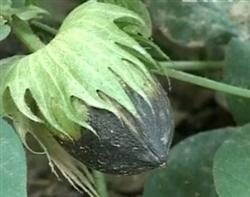
How to control cotton boll rot (boll)? Please introduce the methods
Cotton boll rot mostly occurs from mid to late August to early September. During this period, if there is cloudy and rainy weather with high humidity, and the cotton field is dense with poor ventilation and light penetration, various pathogens will rapidly breed and multiply. Common cotton boll rot diseases mainly include anthracnose, black boll disease, blight, red rot, pink rot, soft rot, etc. In mild cases, the bolls cannot open normally and the lint quality declines; in severe cases, the cotton bolls cannot crack open, the shells become stiff and the lint rots with no harvest, seriously affecting the high yield and quality of cotton. The control measures are as follows:
1. Drainage to prevent waterlogging
When there is excessive rain in the mid-to-late growth stage of cotton, attention should be paid to timely clearing ditches and draining water to reduce soil moisture in the cotton field, so as to prevent premature root senescence and reduce boll rot.
2. Careful pruning
Late-stage pruning is an effective measure to reduce nutrient consumption, improve ventilation and light penetration, and prevent boll rot. By late August, remove the terminal buds of the upper fruiting branches and the ineffective flower buds in the middle of the cotton plant to reduce nutrient consumption. Also remove the old lower branches that have lost their function and all empty branches, to reduce the density of the cotton field, increase air and light penetration, and promote smooth opening of mature bolls.
3. Chemical control
For cotton fields where boll rot has already occurred, spray 1:1:100 Bordeaux mixture, or mancozeb 400 times dilution, or zineb 600 times dilution, 2 to 3 times, for an obvious effect in controlling boll rot.
4. Early picking of rotted bolls
If rainy weather occurs and rotted bolls are found, pick cotton bolls over 40 days old and lower bolls with black spots, soak them in 0.5%-0.1% ethephon solution, then dry them in the sun and they can open normally, with no effect on boll weight or quality.
5. Pushing plants and merging rows
In cotton fields with tightly closed rows, on a sunny day, use your hands to push the cotton plants apart between the rows, and use your feet to press the base of the cotton plants outward, so that the plants lean outward and a ventilation channel is formed. After 5-7 days, push apart the two rows of cotton plants that were merged and press them to the side again. This can reduce humidity between rows and reduce boll rot.
6. Intertillage to dissipate moisture
While pushing plants and merging rows, carrying out intertillage at the same time can also loosen the soil and dissipate moisture, reducing boll rot.
7. Increase phosphorus and supplement potassium
For cotton fields with vigorous growth, phosphorus and potassium should be supplemented early, with about 20 kg of calcium phosphate and 10 kg of potassium sulfate applied per mu. From mid-August to early September, use 150-200 g of monopotassium phosphate per mu, mixed with 40 kg of water, and spray 2-3 times to promote early cracking and opening of cotton bolls.
8. Spray ripening agent
Spraying ethephon in cotton fields can improve the disease resistance of green bolls, promote early shedding of old leaves, prevent field shading, and promote early cracking and opening of cotton bolls. The method is about 20 days before Frost's Descent, use 150-200 g of 40% ethephon per mu, mixed with 50 kg of water, and spray evenly.
Click to get more cotton cultivation techniques
Click to get more grain crop cultivation techniques