-
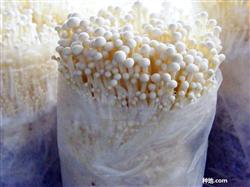
Control Methods for Black Spot Disease and Rust Spot Disease in Enoki Mushrooms
What to do when enoki mushrooms develop black spot disease and rust spot disease? Please advise. 1. Black spot disease: a bacterial disease caused by Pseudomonas bacteria. After infection, oval brown or dark brown spots appear on the caps of enoki mushrooms, initially needle-tip sized, expanding to 2-4 mm in diameter, with neat edges, and sometimes the caps crack. Control methods...
-
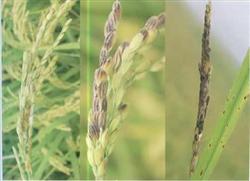
Why does rice produce empty and blighted grains, and how should it be prevented and controlled?
Why does rice produce empty and blighted grains, and how should it be prevented and controlled? Please give a detailed introduction. Under normal conditions, the rate of empty and blighted rice grains is generally 10%-20%, and in severe cases can reach 40%, which greatly affects rice yield. 1. Causes of formation. The rate of empty and blighted rice grains is mainly affected by 3 factors. 1. Climatic...
-
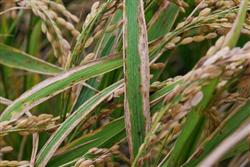
What are the control methods for the three major rice diseases?
How do you control the three major rice diseases? Please explain the control methods. The three major rice diseases can be controlled by referring to the following methods: 1. Rice blast (1) Leaf blast: dark green, nearly round or oval lesions, which later become slightly pointed at both ends; generally, when acute-type lesions appear or an infection center develops, especially in rice fields with high nitrogen fertilizer rates and tender, lush green growth, when the total number of leaf blast lesions occurring on 20 hills of rice during the entire growth period before heading reaches more than 400, spraying must be carried out, with an interval of 3 to 5 days, and continuous spraying 2 times.
-
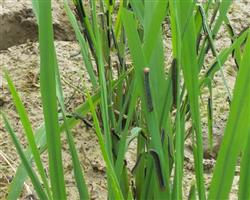
Main Pests and Control Methods for Rice in the Mid-to-Late Growth Stage
Which pests should be controlled in the mid-to-late growth stage of rice? Please provide an introduction and control methods. The pests to be controlled in the mid-to-late growth stage of rice are: 1. Control of rice planthopper: Rice planthoppers mainly inhabit the base of rice clumps, suck plant sap, causing rice plants to turn yellow and affecting yield. The control agents selected are: ① 25% Youlede wettable powder at 30 grams per mu: ② 25% sumicidin wettable powder at 100 grams per mu, mixed with 45 kg of water for spray control; ③ 20% yamailing emulsifiable concentrate at 100 mL per mu mixed with 45 kg of water for spray control; ④ saiqinone or 10% imidacloprid at 30 grams/mu mixed with 45 kg of water for spraying.
-
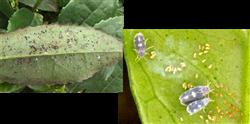
What are the control methods for the tea black spiny whitefly?
How to control the tea black spiny whitefly? Please advise. The tea black spiny whitefly causes obvious damage to the tender buds and tender leaves of tea. Generally, what is found causing damage on tea garden leaves is the nymph of the tea black spiny whitefly, and most tea farmers do not recognize the adult of the tea black spiny whitefly. The feeding damage of large numbers of adults directly affects the quality and yield of tea processing. ...
-
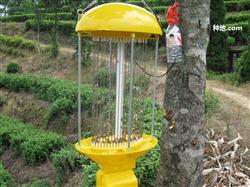
What are the pollution-free pest control methods for tea plants?
How to control tea plant pests without pollution? Please guide on pollution-free pest control methods for tea plants: 1. Intercropping with other tree species. On the surrounding slopes and leftover corners of the tea garden, appropriately plant some tree species such as ginkgo and persimmon (planting Eucalyptus grandis is strictly prohibited) to improve the microclimate of the tea garden, increase biodiversity, and reduce the occurrence and damage of tea plant diseases and pests. Plant about...
-
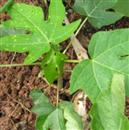
Papaya Cultivation Techniques: How to Prevent and Control Papaya Seedling Root Rot?
How to prevent and control papaya seedling root rot? Please explain. Papaya root rot is also called papaya root rot disease. Symptoms: This disease mainly affects the root collar and roots. Seedlings during the nursery period and those planted not long ago are more susceptible. It is especially likely when the groundwater level in the nursery and cultivation area is high or poor drainage causes waterlogging, and when the soil is highly clayey. Affected plants...
-
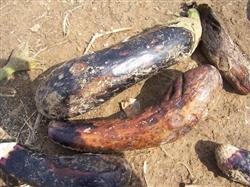
Common Summer Eggplant Pests and Diseases and Their Control Methods
Which pests and diseases need to be controlled in summer eggplant? The following are several pests and diseases that need to be controlled in summer eggplant for reference: I. Control of eggplant insect pests 1. Red spider mite: For agricultural control, keep the soil moist regularly, avoid excessive drought, remove weeds and fallen leaves in time, and reduce sources of the pest. For chemical control, strengthen...
-
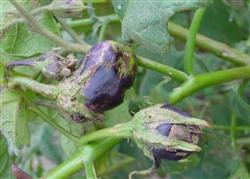
Control Methods for Stone Eggplant in Summer and Autumn Eggplant
How to prevent stone eggplant in summer and autumn eggplant? Please provide an introduction to the causes and control methods. Stone eggplant in summer and autumn eggplant is mainly caused by the following factors: too early flower treatment or too high a concentration of the flower treatment solution. When temperatures are low in winter, the concentration of the flower treatment solution is relatively high, and when temperatures are high in summer, the concentration of the flower treatment solution is relatively low. According to the concentration used in winter...
-
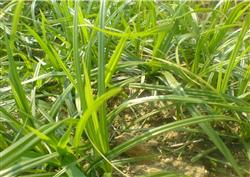
How to control weeds, pests and diseases during summer corn cultivation?
How to control weeds, pests and diseases when planting summer corn? Please explain: after sowing summer corn and before emergence, it is susceptible to damage from underground pests such as cutworms; at the seedling stage it faces damage from small brown planthoppers, Athetis lepigone, wireworms, thrips, aphids, etc.; at the grain-filling stage, major diseases such as stalk rot (green wilt), ear rot, leaf spot diseases and southern rust occur locally, and major pests such as corn borers and aphids cause severe damage; there may also be harmful organisms that cause corn lodging and stalk breakage, affecting corn yield and mechanized operations.
条件筛选