What are the methods to control excessive growth of cotton in summer?
How do you control excessive growth of cotton in summer? Here are some methods to introduce. To control excessive growth of cotton in summer, you can refer to the following methods: timely chemical regulation by spraying mepiquat chloride or chlormequat, which can control cotton plant growth, improve plant shape, and produce more buds and bolls. At the initial flowering stage, use 6-8 ml of chlormequat or 1.5-2 g of mepiquat chloride per mu, add water to 25...
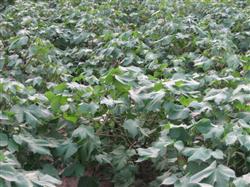
How do you control excessive growth of cotton in summer? Here are some methods to introduce.
To control excessive growth of cotton in summer, you can refer to the following methods:
Timely chemical regulation
Spraying mepiquat chloride or chlormequat can control cotton plant growth, improve plant shape, and produce more buds and bolls. At the initial flowering stage, use 6-8 ml of chlormequat or 1.5-2 g of mepiquat chloride per mu, add 25-28 kg of water and spray; at the full flowering stage (late July to early August), use 3 g of mepiquat chloride per mu, add 30-40 kg of water and spray. Generally spray after 3 p.m. or before 10 a.m. to avoid the liquid evaporating with high temperatures. If heavy rain occurs after spraying, respray, but halve the dosage.
Control fertilizer and water
During the rainy season, sufficient rainwater helps fertilizer take effect and easily causes vigorous growth of cotton plants. For cotton fields with sufficient base fertilizer and a large amount of topdressing at the seedling stage, apply less or no fertilizer, and pay attention to clearing ditches and draining water to strictly prevent waterlogging. For cotton fields where plant development is slow, red stems reach the top, and leaves are small and yellow, fertilize early and increase the amount of fertilizer, applying about 8 kg of urea per mu. If continuous drought occurs and the soil moisture content is lower than 60% of field capacity, irrigate in a timely manner.
Remove superfluous buds and pinch out the terminal bud
During the rainy season, cotton plants grow faster and superfluous buds are also likely to appear, so remove superfluous buds promptly during breaks in the rain. When the cotton plant reaches the predetermined plant shape and has the predetermined number of fruiting branches, pinch out the terminal bud to break or inhibit the apical growth advantage, reduce the consumption of nutrients by ineffective upper branches, and promote cotton boll development. Generally, pinching out the terminal bud is done in mid-to-late July.
Click to get more cotton cultivation techniques
Click to get more food crop cultivation techniques