What are the control methods for cotton mirid bugs?
How do you control mirid bugs when growing cotton? Please explain the methods. Cotton mirid bugs can cause damage during both the seedling stage and the bud and boll stage of cotton. Right now, during the vigorous reproductive growth period of squaring, flowering and boll setting, is also the main damage period of mirid bugs, and they can cause cotton squares and bolls to drop. However, current genetically modified insect-resistant cotton has no resistance to piercing-sucking pests such as mirid bugs...
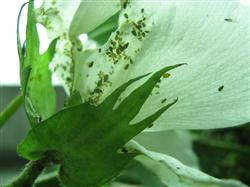
How do you control mirid bugs when growing cotton? Please explain the methods
Cotton mirid bugs can cause damage during both the seedling stage and the bud and boll stage of cotton. Right now, during the vigorous reproductive growth period of squaring, flowering and boll setting, is also the main damage period of mirid bugs, and they can cause cotton squares and bolls to drop. However, current genetically modified insect-resistant cotton has no resistance to piercing-sucking pests such as mirid bugs, so once climatic conditions and other factors favor mirid bug outbreaks, they can very easily cause severe losses in cotton yield. Therefore, control must be strengthened on the basis of understanding the patterns of mirid bug occurrence and damage.
Cotton mirid bugs include species such as the green mirid bug and the black mirid bug, which often occur together. They are small to medium-sized oblong insects with three life stages: egg, nymph and adult. The eggs are long and eggplant-shaped; on cotton, eggs are laid under the epidermis of the main veins of leaves, the edges of large leaves, petioles and green bolls. Both adults and nymphs cause damage and are highly active. After the terminal bud and lateral buds of cotton are damaged, they cause perforated cotton leaves, "broken-leaf madness," headless seedlings and multi-headed seedlings. After flower buds are damaged, yellow spots appear on the bud crown, the anthers shrivel, fertilization is affected, and shedding occurs. After young bolls are damaged, water-soaked brown round puncture spots appear on the boll shell, later turning dark brown; the internal ovules are damaged, affecting fiber development and formation, and in severe cases they can become sunken in patches, forming hard, deformed bolls or even dropping.
Cotton mirid bugs are polyphagous pests with multiple hosts. In addition to damaging cotton, they also damage broad beans, alfalfa, hairy vetch, soybeans, potatoes, carrots, sunflowers, mint, peanuts, goji berries, comfrey, velvetleaf, wild radish, red clover, sugar beets, celery, garland chrysanthemum and other crops, as well as trees such as poplar, willow, mulberry and pagoda tree, and many kinds of weeds. Controlling mirid bugs in source areas outside cotton fields is crucial for reducing the occurrence and damage of mirid bugs in cotton fields.
Damage by mirid bugs in cotton fields is often difficult to detect in the early stages, and control is too late by the time the damage symptoms on cotton plants are obvious. Therefore, on the basis of pest monitoring, chemical control must be strengthened both in source fields and in cotton fields, with scientific pesticide use according to the guidance of local agricultural technology departments. When mirid bug populations reach 4-5 per 100 plants at the seedling stage, 10-12 at the bud stage, and 20-25 at the boll stage, Shixian, Xinbao, Regent and phoxim can be used for control, with attention to simultaneous control of other cotton field pests. For example, spraying 90 ml of 12% Shixian emulsifiable concentrate or 90 ml of 24% Xinbao emulsifiable concentrate per mu uniformly can control mirid bugs, corn borers and cotton bollworms at the same time. Organophosphorus pesticides such as omethoate and phoxim, as well as 2.5% Kung Fu cypermethrin and Regent, also have good effects against mirid bugs. Motorized mist blowers give good results when spraying; with small manual sprayers, several machines can be operated at the same time, and spraying from the surroundings of the cotton field inward gives better results. Where host crops of mirid bugs are intercropped in cotton fields, they should be sprayed as well, focusing on the tender tips, lateral buds and buds and bolls. Pay attention to safe pesticide use in high-temperature seasons, and prohibit the use of highly toxic and extremely toxic pesticides. For multi-headed seedlings formed on cotton plants damaged by mirid bugs, remedial measures such as timely pruning to retain two heads or one strong branch can be used to give full play to the cotton plant's regulatory and compensatory ability, especially the large compensation of buds, promoting an increase in the number of bolls set, recovering part of the loss, and reducing mirid bug damage losses to a minimum.
Click to get more cotton growing techniques
Click to get more grain crop growing techniques