How to prevent and control boll shedding in cotton during high temperatures?
How to prevent and control boll shedding in cotton during high temperatures? Please introduce control methods. Boll shedding in cotton during high temperatures can be prevented and controlled by referring to the following methods: 1. Apply heavy boll fertilizer. Boll fertilizer is generally applied in 2-3 applications. The first and second applications are made at flowering and about 10 days after flowering. Quick-acting nitrogen fertilizer can be applied as a top dressing at 10-15 kg per mu, potassium...
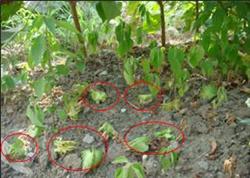
How to prevent and control boll shedding in cotton during high temperatures? Please introduce control methods
Boll shedding in cotton during high temperatures can be prevented and controlled by referring to the following methods:
1. Apply heavy boll fertilizer. Boll fertilizer is generally applied in 2-3 applications. The first and second applications are made at flowering and about 10 days after flowering. Quick-acting nitrogen fertilizer can be applied as a top dressing at 10-15 kg per mu and potassium fertilizer at 5-10 kg per mu. For fields where verticillium wilt, fusarium wilt, or red leaf stem blight caused by potassium deficiency occur frequently, more potassium fertilizer should be applied to improve the disease resistance of cotton. The third application should be made before the end of July, with a top dressing of 5 kg of nitrogen fertilizer per mu being appropriate. The application period should not be too late; being too late or applying too much can easily cause cotton to remain green and mature late.
2. Irrigate with boll water in a timely manner. The boll period coincides with the dog days of summer, which is when the transpiration of water from cotton leaves is greatest and also the period of greatest water demand in the entire life of cotton. If soil moisture is insufficient during this period, it can easily cause water imbalance in the cotton plant, block metabolism, and cause a large number of squares and bolls to shed. Therefore, when the weather shows drought, if cotton plants are found to be wilting before 11 a.m. and still cannot recover to normal after 5 p.m., they should be irrigated promptly. Irrigation should preferably be carried out in the morning and evening to avoid too great a temperature difference between water and soil, which can cause sudden shedding of cotton squares and bolls.
3. Scientific chemical regulation. Pay attention to one principle: early, light, frequent. Early means timely chemical regulation 3-4 days before watering and fertilizing or after rainfall; spraying too late will not produce the proper regulatory effect. Light means preventing the occurrence of inhibited cotton growth caused by too high a concentration of mepiquat chloride in a single application, so when spraying, it must be applied in small amounts multiple times, and it is better to be light than heavy. For spraying, mepiquat chloride, chlormequat, or foliar fertilizers containing such effective ingredients, such as Zhengjiling, can all be used.
Click to get more cotton planting techniques
Click to get more grain crop planting techniques