-
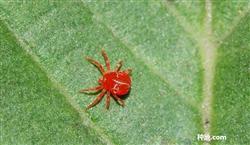
What are the methods for controlling red spider mites on chrysanthemums?
How should red spider mites on chrysanthemums be controlled? Here is an introduction to red spider mites: they damage leaves, initially causing small yellow spots; in severe cases the leaves curl, wither and drop, affecting growth and preventing flowering. Control methods: spray 20% dicofol emulsifiable concentrate at 800 times dilution or "Yaman Qisha" at 1000 times dilution, which also controls aphids; apply 2 to 3 times consecutively. Click...
-
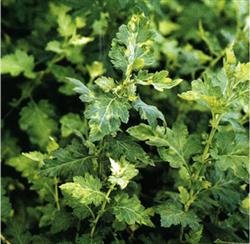
What are the effective control methods for chrysanthemum viral disease?
How to effectively control chrysanthemum viral disease? Please explain. Viral disease is a disease that occurs easily on chrysanthemums, and control must be strengthened. 1. Strict quarantine. Chrysanthemum plants with viral disease are virus-carrying bodies. When introducing varieties, strict quarantine must be carried out to prevent the virus from being spread artificially to virus-free areas, or spread out from virus areas and expanding the affected area...
-
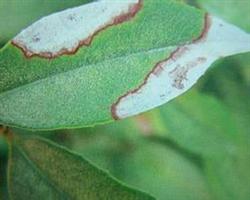
What are the control methods for sweet osmanthus brown spot disease?
How to control brown spot disease in sweet osmanthus? Please provide guidance. Brown spot disease is a common disease of sweet osmanthus, caused by infection with fungi of the Deuteromycotina. It occurs in both field-grown and potted sweet osmanthus plants. When it occurs, mild cases affect the ornamental effect, while severe cases cause plant death. Symptoms mostly occur on leaves, mostly starting from the leaf tip...
-
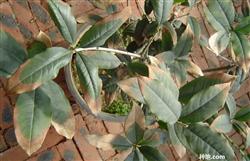
What are the control methods for leaf blight of osmanthus trees?
How to control leaf blight in osmanthus trees? Please introduce and guide. Leaf blight is a common disease in osmanthus cultivation. Its symptoms: it occurs at the leaf margins and leaf tips. It starts as small light brown spots, then gradually expands into irregular large patches. If several lesions connect, the entire leaf dries up by 1/3-1/2. The lesions are grayish brown to reddish brown,...
-
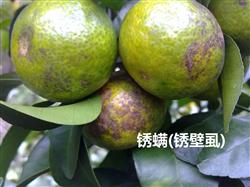
Common Pests and Diseases of Shatang Mandarin in August: Prevention and Control, and Cultivation Techniques
What pests and diseases affect Shatang mandarin in August? Here is an introduction and guidance on prevention and control methods. August is the period from summer shoot growth to autumn shoot sprouting for Shatang mandarin, so pests and diseases occur more frequently. The main pests are: rust mites, red wax scale, citrus leafminer, citrus flatheaded borer, and longhorn beetles; the main diseases are: citrus canker and foot rot; for detailed prevention and control methods, see...
-
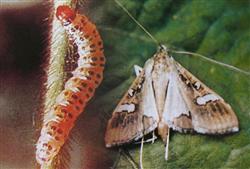
Growing Techniques for Controlling the Fruit-piercing Moth in Shatangju Mandarins
How do you control the fruit-piercing moth in Shatangju mandarins? What are the damage patterns of the fruit-piercing moth in Shatangju mandarins? Please provide an introduction. Adult fruit-piercing moths can be found in Shatangju mandarin fields from March to November, but they are more numerous in autumn. Eggs occur more frequently in the wild in early June, August, and early September, but because the egg hatching rate is low and larval mortality is high, the number of larvae occurring is not great...
-
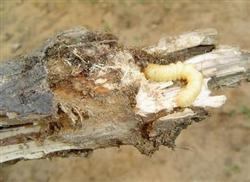
Sugar mandarin (Citrus reticulata 'Shatangju') - Control Methods for Stem-Boring Insects and Key Points of Cultivation Techniques
How to control stem borers in sugar mandarins? Please advise on control methods. The stem borers of sugar mandarins are mainly the larvae of longhorn beetles or jewel beetles. The control methods are as follows: 1. Pricking or hooking out the larvae. From August to September, based on the frass of the larvae in the tunnels, determine the larval instar and whether there are insects and their life stages inside the tunnel, then use a thin, sharp wire from the fresh...
-
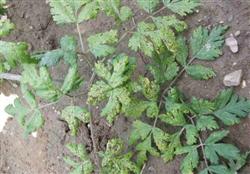
How to identify and control brown spot disease of Angelica sinensis?
What is brown spot disease of Angelica sinensis? How to control it? Please provide guidance. The pathogen of brown spot disease of Angelica sinensis is a fungus of the genus Septoria in the subphylum Deuteromycotina. The pycnidia are round, and the conidia are filiform to needle-shaped, colorless and transparent, straight or slightly curved, mostly with slightly pointed tips, with 1-3 septa. 1. Damage symptoms: it damages the leaves. At...
-
Identification and control methods of Angelica sclerotinia disease
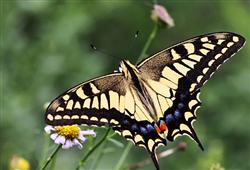
What is the Angelica yellow swallowtail butterfly? Please introduce the Angelica yellow swallowtail butterfly, also known as the fennel swallowtail, belonging to the order Lepidoptera, family Papilionidae. 1. Damage situation: the larvae cause damage, feeding on leaves at night, causing notches, and in severe cases eating the leaves completely, leaving only the petioles and veins, and also feeding on flowers and fruits. This insect has a large appetite, seriously affecting the growth of Angelica, ...
-
How to prevent and control Angelica rust? Detailed explanation of control methods
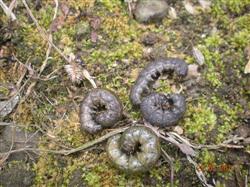
How to control cutworms in Angelica? Please advise. Cutworms, also known as "soil silkworms" or "black soil silkworms", belong to the order Lepidoptera, family Noctuidae. The main cutworms affecting Angelica are the black cutworm and the yellow cutworm, and their damage conditions and control measures are the same. 1. Damage situation: The larvae damage Angelica seedlings, hiding by day and emerging at night; in the young larval stage they mostly feed on tender leaves...
条件筛选