How to Control Weeds in Corn? A Detailed Guide to Practical Weed Control Methods
How to prevent weed damage in corn? Please provide prevention methods. Weed damage is one of the factors restricting high and stable corn yields. The annual area affected by weeds in corn fields in China exceeds 350 million mu-times, causing about 9.5 billion kg in corn losses each year. In response to the weed species present and their damage characteristics, an integrated control strategy should be adopted that takes agricultural control as the foundation, ...
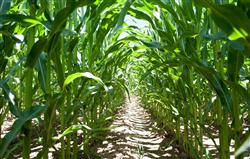
How to prevent weed damage in corn? Please provide prevention methods.
Weed damage is one of the factors restricting high and stable corn yields. The annual area affected by weeds in corn fields in China exceeds 350 million mu-times, causing about 9.5 billion kg in corn losses each year. In response to the weed species present and their damage characteristics, an integrated control strategy should be adopted that takes agricultural control as the foundation, focuses on chemical weed control through the "combination of pre-emergence closure and post-emergence kill," supplements this with manual and mechanical control, and coordinates all measures, so as to effectively control weed damage in corn fields.
Non-selective weed control before sowing: In fields where a large number of weeds have emerged before corn sowing, non-selective herbicides such as paraquat, glyphosate and glufosinate can be selected for spray weed control.
Soil closure weed control after sowing and before emergence: Promote the use of 90% and 99% acetochlor emulsifiable concentrate, 72% and 96% S-metolachlor emulsifiable concentrate, 90% atrazine water-dispersible granules, 38% atrazine suspension concentrate, 25% thifensulfuron-methyl wettable powder, 87.5% 2,4-D isooctyl ester emulsifiable concentrate, 57% 2,4-D butyl ester emulsifiable concentrate, 90% acetochlor emulsifiable concentrate or 96% S-metolachlor emulsifiable concentrate + 75% thifensulfuron-methyl, 67% isopropyl·atrazine suspension concentrate, 40% acetochlor·atrazine emulsifiable concentrate, 50% metribuzin·acetochlor emulsifiable concentrate and other agents, applied by uniform spray with water after corn sowing and before emergence.
Post-emergence foliar spray weed control in corn: Promote the use of 30% topramezone suspension concentrate, 10% mesotrione suspension concentrate, 4%, 6% and 8% nicosulfuron suspension concentrate, 90% atrazine water-dispersible granules, 38% atrazine suspension concentrate, 25% bromoxynil octanoate emulsifiable concentrate, mesotrione·atrazine and nicosulfuron·atrazine mixed formulations, and tank mixes of atrazine with topramezone and nicosulfuron with bromoxynil octanoate, applied by uniform spray with water at the 3-5 leaf stage of corn and the 2-4 leaf stage of weeds. Nicosulfuron must not be used in sweet corn, waxy corn or popcorn fields, must not be mixed with organophosphorus pesticides, and organophosphorus pesticides must not be used within 7 days before or after application.
Directed weed control at the middle and late stages: In response to weed emergence in the middle and late stages of corn growth caused by various reasons, 20% paraquat aqueous solution and 25% rimsulfuron water-dispersible granules can be selected for directed spraying between corn rows. When applying, spray nozzles should be fitted with protective hoods to avoid splashing onto corn plants and causing herbicide damage.
In addition, two points require special attention: First, the rational selection of vegetable oil-type spray adjuvants. The rational selection of vegetable oil-type spray adjuvants can improve weed control efficacy, reduce the amount of herbicide used, reduce the amount of spray water, reduce droplet drift, and is safe for crops.
Second, control weeds around corn fields according to the situation. Weeds around corn fields are diverse in species and occur in large amounts, including both grass weeds and sedges and broadleaf weeds, and both annual and winter annual weeds as well as perennial weeds. Legume crops can be planted to suppress weed occurrence; manual removal can also be adopted, or non-selective herbicides such as glyphosate, paraquat and glufosinate can be used for control.
Click to learn more herbicide application techniques
Click to learn more pesticide application techniques