-
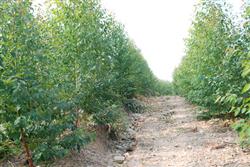
Eucalyptus planting: master the suitable growing areas and strictly control seedling quality
I. Fertilizer requirements. Eucalyptus is one of the three major fast-growing tree species, with a well-developed root system, strong absorption capacity and large growth volume. With sufficient water and fertilizer supply, it grows 1.5-5.5 m taller in 1 year and can be harvested for use in 4-5 years. The main nutrient elements absorbed by eucalyptus are: nitrogen, phosphorus, potassium, calcium, magnesium, zinc, boron, etc. According to research, each eucalyptus tree annually averagely...
-
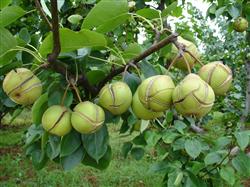
What to Do About Fruit Cracking in Pear Trees? Cause Analysis and Control Methods
What should be done about fruit cracking in pear trees? Please give guidance. Causes of fruit cracking in pear trees: First, excessive fruit growth, imbalanced soil moisture supply, and uneven fruit growth; second, no potassium fertilizer applied or insufficient potassium fertilizer causing fruit cracking; third, pear scab can also severely cause cracking. To control fruit cracking in pear trees, it should be done from May to July...
-
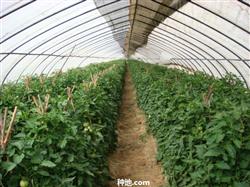
What to Do About Spindly Greenhouse Tomatoes? Detailed Prevention and Control Methods
What to do about spindly greenhouse tomatoes? Please advise. The main causes of spindly or stunted seedlings in greenhouse tomato cultivation are insufficient light, excessively high temperatures and excessive moisture. Once seedlings become spindly or stunted, the harm is considerable. Spindly seedlings differentiate flower buds late, drop many flowers, have a low survival rate, and suffer major yield reductions, while early maturity cannot be achieved...
-
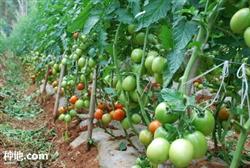
How to prevent and control green-shoulder in tomatoes? These methods you need to know
What methods can prevent green-shoulder in tomatoes? Please advise. The green-shoulder fruit of tomato is a type of rib rot. There are many causes of green-shoulder fruit in tomatoes, the most important of which is unbalanced fertilization, caused by high nitrogen and low potassium. Excessive application of nitrogen fertilizer with relatively insufficient potassium is the main cause of green-shoulder fruit in tomatoes....
-
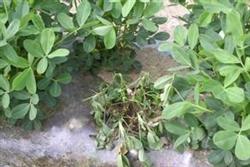
Comprehensive Control Methods for Peanut Wilt Disease in Early Spring Plastic Mulch Cultivation
Peanut wilt disease includes stem rot, root rot, southern blight, stalk rot and several other diseases, and it severely affects early spring plastic mulch peanut production. 1. Disease characteristics. Their common feature is that the peanut stem or leaf wilts and the affected part becomes discolored and necrotic. Generally, continuous cropping plots and plots with poor soil are more severely affected; rotation plots and plots with high fertility...
-
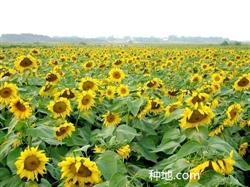
What are the methods for controlling underground pests in sunflowers?
How should underground pests be controlled when growing sunflowers? The main underground pests of sunflowers include mole crickets, white grubs, cutworms, wireworms, and other soil-dwelling pests. The control measures are as follows. (1) Agricultural control. ① Before sunflower emergence or during the peak outbreak period of 1st to 2nd instar cutworm larvae, promptly remove weeds from the field, bury them deep or haul them out of the field for composting, to eliminate egg-laying hosts.
-
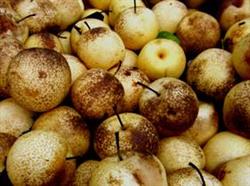
What are the control methods for core browning in Ya pears?
How to control core browning in Ya pears? Please give guidance. Core browning is a physiological disorder that occurs during the storage of Ya pears. Ya pears can develop the disease after being stored in a 0°C cold-air warehouse for 30-50 days. In the early stage of the disease, brown patches can be found on the outer skin of the core, gradually spreading to the entire core; in severe cases, the flesh also develops brown discoloration with indistinct boundaries...
-
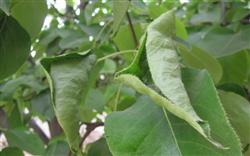
Common Pests and Diseases in Pear Tree Cultivation and Their Control Methods
What pests and diseases should be prevented in pear tree cultivation? Here is an introduction to the main pests and diseases in pear tree cultivation: For diseases, generally spray fungicide 7 days after flowering, then spray again at an interval of 15 days. After June, on sunny days, spray the protective agent 1:3:240 Bordeaux mixture 3 to 4 times, at intervals of 15 to 20 days. During the rainy season, fungicides can be sprayed on the trees. ① Black spot disease: 75% carbendazim at 800 times dilution.
-
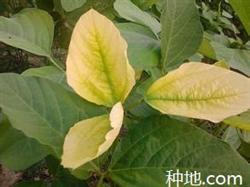
What Causes Soybean Yellowing? A Detailed Guide to Prevention and Control
What is soybean yellowing and how should it be prevented and controlled? The main causes of soybean yellowing are as follows: First, soybean cyst nematode disease. This disease occurs mainly in plots where soybeans have been grown continuously for many years and in areas with a low groundwater table. After infection at the seedling stage, the leaves turn yellowish-brown and growth is stunted; in severe cases, the entire plant withers and dies. After infection at the adult plant stage,...
-
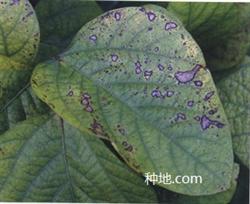
What is soybean frogeye leaf spot? A detailed guide to prevention and control methods
What is soybean frogeye leaf spot and how do you prevent and control it? Looking for guidance. Soybean frogeye leaf spot: (1) Damage and symptoms. Soybean frogeye leaf spot, also known as brown spot, leaf spot or frog-eye disease, is a worldwide disease and an important disease in China's main soybean-producing regions, especially severe in the three northeastern provinces. The pathogen is in eastern Heilongjiang...
条件筛选