What is soybean frogeye leaf spot? A detailed guide to prevention and control methods
What is soybean frogeye leaf spot and how do you prevent and control it? Looking for guidance. Soybean frogeye leaf spot: (1) Damage and symptoms. Soybean frogeye leaf spot, also known as brown spot, leaf spot or frog-eye disease, is a worldwide disease and an important disease in China's main soybean-producing regions, especially severe in the three northeastern provinces. The pathogen is in eastern Heilongjiang...
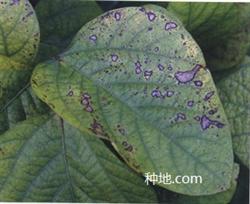
What is soybean frogeye leaf spot and how do you prevent and control it? Looking for guidance
Soybean frogeye leaf spot:
(1) Damage and symptoms. Soybean frogeye leaf spot, also known as brown spot, leaf spot or frog-eye disease, is a worldwide disease and an important disease in China's main soybean-producing regions, especially severe in the three northeastern provinces. This pathogen is the main disease in the low-lying, flood-prone areas of eastern Heilongjiang Province. According to 1963 statistics, the Hejiang region lost as much as 10 million kg of soybeans to frogeye leaf spot. Since the 1980s, it has gradually spread westward, and it has now become a province-wide soybean disease. In recent years, as the area of continuous and repeated soybean cropping has increased, frogeye leaf spot has become increasingly severe. Soybean frogeye leaf spot is an intermittently epidemic disease commonly occurring in soybean production in our province. In epidemic years, it causes serious losses in soybean yield and quality, generally reducing yield by 5%-10%, and up to 30%-50% in severe cases, with 100-seed weight dropping by 2-3 grams and protein and oil content decreasing to varying degrees. Soybean frogeye leaf spot can damage soybean leaves, stems, pods and seeds, with leaves and seeds suffering the most. Lesions on cotyledons are round, semicircular or elliptical, dark brown, and slightly sunken. Lesions on leaves are mostly round, elliptical or irregular, with a grayish-white center and a reddish-brown margin, clearly demarcated from healthy tissue, which is the main feature distinguishing frogeye leaf spot from other leaf diseases. When the climate is humid, dense gray mold layers, the pathogen's conidiophores and conidia, appear on the underside of the lesions. In severe cases, dozens of lesions can form on a single leaf, causing the leaf to drop early. On stems, branches and petioles, after pod formation, elliptical or spindle-shaped lesions appear, brown in the center with reddish-brown edges, later gray in the center with dark brown edges, covered with tiny black dots. Lesions on pods are round or elliptical, with the same shape and color as those on leaves. Lesions on seeds are round to irregular, gray in the center with reddish-brown edges, forming a frog-eye pattern.
The physiological differentiation of the soybean frogeye leaf spot pathogen is very pronounced, with many physiological races. In the Northeast spring soybean region, 14 physiological races have been reported so far. Among them, race 1 has the highest frequency at 50% and the widest distribution; in Hejiang, Mudanjiang, Songhuajiang, Nenjiang, Suihua and other regions, race 1 is dominant. Next is race 7 with a frequency of 22%; in the Heihe region, races 1 and 7 occur at the same frequency. Races 1 and 7 are the dominant races in the soybean-producing areas of Heilongjiang Province. Race 10 has a frequency of 9%, ranking third.
The relationship between soybean frogeye leaf spot and temperature and humidity. Temperature is the basis for spore germination of the frogeye leaf spot pathogen, and humidity is the key. The minimum temperature for spore germination is 12°C, with 21-26°C being optimal; above 35°C the germination rate drops markedly. The minimum humidity for germination is 65%-75%, and the higher the humidity, the higher the germination rate. In Heilongjiang Province, soybean frogeye leaf spot begins in early July and peaks from late August to early September. If there is abundant rain, many rainy days and high relative humidity from early July to mid-August, the disease will be severe.
(2) Prevention and control. Select disease-resistant varieties. In recent years, the soybean varieties approved and promoted in Heilongjiang Province are all new varieties resistant or highly resistant to the dominant races of frogeye leaf spot. However, note that after continuously planting one resistant variety in an area, the selection pressure from the variety will cause changes in physiological races, causing the resistant variety to lose its resistance. Therefore, several varieties should be used alternately to extend the useful life of the varieties.
Chemical control: 1. 40% carbendazim suspension concentrate, 100 grams per mu, diluted to 1000 times for spraying. 2. 50% carbendazim wettable powder or 70% thiophanate-methyl, 100-150 grams per mu, diluted with water to a 1000-fold solution. 3. 2.5% deltamethrin emulsifiable concentrate, 40 milliliters per mu, mixed with 50% carbendazim wettable powder at 100 grams per mu, which can also control soybean pod borers. For chemical control, seize the right timing; the key period for a single field application is from the initial pod stage to the full pod stage.
Click to see more soybean cultivation techniques
Click to see more grain crop cultivation techniques