Eucalyptus planting: master the suitable growing areas and strictly control seedling quality
I. Fertilizer requirements. Eucalyptus is one of the three major fast-growing tree species, with a well-developed root system, strong absorption capacity and large growth volume. With sufficient water and fertilizer supply, it grows 1.5-5.5 m taller in 1 year and can be harvested for use in 4-5 years. The main nutrient elements absorbed by eucalyptus are: nitrogen, phosphorus, potassium, calcium, magnesium, zinc, boron, etc. According to research, each eucalyptus tree annually averagely...
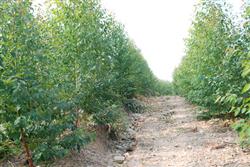 Eucalyptus is the leading tree species for fast-growing and high-yield plantations worldwide, with main advantages such as fast growth, a short rotation period, good wood properties, wide uses, strong adaptability and good economic returns, and it occupies an absolute advantage among the fast-growing and high-yield plantation as well as pulpwood and fiberwood tree species in southern China. However, eucalyptus is an introduced tree species and also has shortcomings such as intolerance to cold and a high demand for fertilizer and water, with unique requirements for climate and geographical environment. Growers must rationally grasp its suitable growing areas in order to achieve scientific cultivation.
Wang Huoran, director of the Tree Introduction and Domestication Professional Committee of the Chinese Society of Forestry, said that after eucalyptus was introduced to China from Australia, its response traits differed across regions. In China, the land resources suitable for planting eucalyptus are very limited. According to many years of eucalyptus introduction and geographic provenance trials, the cultivation areas of eucalyptus plantations in China roughly form a "U" shape, namely the coastal areas of Zhejiang and Fujian in the east and the Yunnan and Sichuan regions in the west, which can extend northward to 30 degrees north latitude, while in the central part it can only be south of the Nanling Mountains. Planting eucalyptus outside this range carries great risk, and it may fail to survive or fail to achieve ideal economic returns. Therefore, in places not located in the suitable growing areas for eucalyptus, as well as places without irrigation conditions, it is best not to introduce eucalyptus, otherwise the loss will outweigh the gain.
Xie Yaojian, a researcher at the Eucalyptus Research and Development Center of the State Forestry Administration, believes that when planting eucalyptus in the northern margin of the suitable growing areas, the first key issue is cold and freezing damage, so the selected varieties must be cold-tolerant. The cold tolerance of eucalyptus is limited, and it definitely cannot currently be promoted north of the Yangtze River. For places where eucalyptus has not been cultivated on a large scale in the past, introduction trials and pilot cultivation trials must be conducted first before promotion, otherwise the risk is extremely high. At present, the northern margin of eucalyptus planting in China is Huaihua and Changde in Hunan, Ganzhou in Jiangxi, Chongqing, Sichuan and some hotter-climate areas of Guizhou.
At present, tropical eucalyptus has fully achieved clonal afforestation, and the utilization rate of improved varieties is above 90%. Cold-tolerant eucalyptus afforestation still mainly uses seedling-grown planting stock; for example, Dunn's eucalyptus seeds still mainly rely on imports, and there are basically no seed orchards in China, so controlling the source of imports is very important. Imports must be made through proper channels, otherwise quality is difficult to guarantee.
In the technical links of eucalyptus seedling raising, foreign countries currently all use lightweight substrate seedling cultivation. Seedlings cultivated by this method have well-developed roots, are light in weight and low in transportation cost, and do not need bag removal, thus giving a high afforestation survival rate. In addition, eucalyptus seedling raising has basically achieved tissue-culture factory production, which can avoid the influence of seasons and keep seedling quality and varieties stable, with few pests and diseases. If eucalyptus planting areas still use the traditional plastic-bag soil seedling method, it clearly can no longer meet the needs of the rapid development of the industry.
When eucalyptus was first introduced to China, there were basically no pests or diseases. Today, with large-scale eucalyptus planting, diseases and pests such as damping-off, southern blight, brown spot, purple spot, canker and the eucalyptus gall wasp have appeared one after another. Therefore, the broad masses of eucalyptus growers must strictly inspect for pests and diseases when transferring eucalyptus seedlings.