What Causes Soybean Yellowing? A Detailed Guide to Prevention and Control
What is soybean yellowing and how should it be prevented and controlled? The main causes of soybean yellowing are as follows: First, soybean cyst nematode disease. This disease occurs mainly in plots where soybeans have been grown continuously for many years and in areas with a low groundwater table. After infection at the seedling stage, the leaves turn yellowish-brown and growth is stunted; in severe cases, the entire plant withers and dies. After infection at the adult plant stage,...
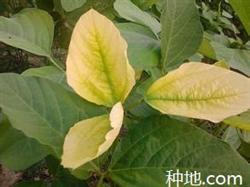
What is soybean yellowing and how should it be prevented and controlled? Seeking answers
The main causes of soybean yellowing are as follows:
First, soybean cyst nematode disease. This disease occurs mainly in plots where soybeans have been grown continuously for many years and in areas with a low groundwater table. After infection at the seedling stage, the leaves turn yellowish-brown and growth is stunted; in severe cases, the entire plant withers and dies. After infection at the adult plant stage, the plant is dwarfed, the leaves turn yellow from the bottom upward, flowering is delayed by 5 to 10 days compared with the control, the pods are few, and the seeds are not plump and are rather dull in color. Sensory identification: the root system is poorly developed, with many fibrous roots and very few root nodules, and many cyst nematodes (in the form of tiny yellow granular particles) are attached to the roots. Prevention and control method: rotate crops to a different field and prevent drought. For affected fields, a coarse spray of 40% omethoate 1000-fold dilution can be applied to the base of the plant stems. Note that mist spraying is less effective for control.
Second, viral disease. It occurs mainly in fields with a heavy aphid infestation. The plant is infected by aphid-transmitted viruses, causing leaf crinkling and yellowing, shortened internodes, and stunted plants. Prevention and control method:
When aphids occur in summer soybean fields, spray with 40% omethoate 1000-1500-fold dilution, or with decis or fenvalerate 5000-10000-fold dilution for control.
Third, bean stem maggot disease. It occurs mainly in fields where large amounts of undecomposed organic fertilizer have been applied or in continuous cropping fields. Plants are susceptible at the seedling stage, showing normal lower leaves but complete yellowing of the upper leaves. Sensory identification: when the root stem is split open, bean stem maggot larvae and larval frass can be seen inside the stem. Prevention and control method: use 40% omethoate or phoxim 1000-fold dilution, spraying once each at the seedling stage and the flowering stage, for relatively good control results.
Fourth, nutritional imbalance. It occurs mainly in fertilizer-deficient fields, or fields where a single nutrient fertilizer has been applied heavily or alone, or in severely drought-stricken highland plots. Plants show varying degrees of leaf yellowing, crinkling, and stunted growth. Prevention and control method: spray each mu with 50-80 ml of Huimanfeng, or Aopuer or Lufeng 95 plus 100 g of potassium dihydrogen phosphate mixed with 30-50 kg of water for foliar spraying, which can relieve or eliminate the symptoms and restore normal plant growth. Mist spraying gives better results.
Click to see more soybean cultivation techniques
Click to see more grain crop cultivation techniques