How to prevent and control cucumber blight and eggplant Phytophthora fruit rot
Disease symptoms: Cucumber blight can occur at the seedling stage and the adult plant stage. At the adult plant stage, it mainly affects the base of the stem, the tender stem nodes, leaves, and fruit. It first causes dark green water-soaked spots at the stem base and stem nodes, which then become soft, with obvious constriction and thinning of the stem nodes. The leaves above the diseased area wilt, or the entire plant dies. When leaves are infected, they produce...
Disease symptoms
Cucumber blight can occur at the seedling stage and the adult plant stage. At the adult plant stage, it mainly affects the base of the stem, the tender stem nodes, leaves, and fruit. It first causes dark green water-soaked spots at the stem base and stem nodes, which then become soft, with obvious constriction and thinning of the stem nodes. The leaves above the diseased area wilt, or the entire plant dies. When leaves are infected, they produce round or irregular water-soaked lesions with indistinct edges that spread rapidly. When dry, they appear pale greenish-white and tend to rupture. When the lesions spread to the leaf stalk, the leaf droops. If the fruit is infected, it first becomes water-soaked and dark green, then gradually constricts and becomes sunken. When humid, a sparse white mold grows on the surface, and it rapidly rots, giving off a fishy, foul odor.
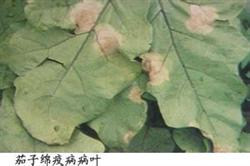
Eggplant Phytophthora fruit rot mainly affects the fruit, leaves, stems, flowers, and other parts. Fruit near the ground is affected first. Water-soaked round spots appear on the fruit surface, slightly sunken, and the flesh turns blackish-brown and rots, making it prone to dropping. When humidity is high, dense cottony mycelium grows on the surface of the diseased area and spreads rapidly. This is the characteristic feature of this disease. Diseased fruit that falls to the ground rots quickly. When stem nodes are infected, they are initially water-soaked, then turn dark green or purplish-brown, and the diseased area constricts. The branches and leaves above it wilt and droop, and when humidity is high, sparse white mold grows on it. When leaves are damaged, they show irregular or nearly round water-soaked light brown or brown lesions with relatively obvious concentric rings, and sparse white mold grows on the lesions in humid conditions.
Control methods: Focus on strengthening cultivation management to prevent disease, supplemented by chemical control. (1) Choose locally disease-resistant varieties. (2) Grafting to prevent disease: Yunnan black-seed pumpkin (for cucumber) and Torubamu (for eggplant) can be used as rootstocks and grafted with disease-resistant cucumbers and disease-resistant eggplants, which can prevent blight as well as Fusarium wilt and root rot. (3) Soil treatment for seedbeds or greenhouse soil. Seedbed soil treatment: For each square meter of seedbed soil (or each cubic meter of soil), mix 8 g (or 150 g) of 77% Duoning wettable powder with 5-10 kg of fine soil and spread it on the seedbed (or dilute in 10 kg of water and spray it into each cubic meter of soil; after spraying, put the soil into plug trays or nutrient pots). Greenhouse soil treatment: 15-20 days before planting or direct seeding, treat the soil by combining a soil purifying agent (calcium cyanamide) with solar high-temperature disinfection. Method: After harvest, clean the greenhouse of plants and diseased residues. Under the condition that soil moisture is 60%-70%, use 50-75 kg of calcium cyanamide per mu, add decomposed cow manure or livestock and poultry manure, evenly spread it on the soil surface, then plow, form ridges, and cover with film. Remove the film 3-5 days before planting, turn the soil 1-2 times, and then transplant and set the seedlings. (4) Chemical control: When planting, drench the holes with 600 times dilution of 77% Duoning wettable powder, using 0.1 kg of the solution per hole. After the seedlings recover, the roots can be drenched with 600 times dilution of 77% Duoning wettable powder. A 800-1000 times dilution of 72% Kelu wettable powder can also be sprayed on the stem base and soil surface, once every 10-15 days, or depending on disease development, for 2-3 consecutive applications. During the same period, resistance inducers can also be sprayed, such as 1000 times dilution of 6% Apollo 963 aqueous solution or 600 times dilution of 0.5% OS-Shiteling aqueous solution.