How to control root maggots in autumn cabbage? These methods you need to master
During the growth of autumn cabbage, the most dreaded pest is the root maggot (also called cabbage root maggot). It gnaws at the epidermis of the Chinese cabbage roots, allowing soil-borne pathogens to invade through the wounds, causing the cabbage to drop its outer leaves and rot. This not only reduces cabbage yield but also affects its edible value. If not controlled in time, it can damage the entire field, causing serious losses to vegetable growers...
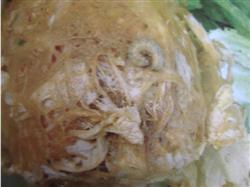
During the growth of autumn cabbage, the most dreaded pest is the root maggot (also called cabbage root maggot). It gnaws at the epidermis of the Chinese cabbage roots, allowing soil-borne pathogens to invade through the wounds, causing the cabbage to drop its outer leaves and rot. This not only reduces cabbage yield but also affects its edible value. If not controlled in time, it can damage the entire field, causing serious losses to vegetable growers. The root maggot that damages autumn cabbage is the larva of the cabbage root fly (Delia floralis), an oligophagous pest that mainly damages cruciferous vegetables such as Chinese cabbage and radish.
I. Occurrence characteristics
The cabbage root fly produces 1 generation per year in all regions, overwintering as pupae in the soil, with a dormancy period of about 10 months. The adult emergence period the following year mainly begins in early August and continues until late September, with mid-to-late August being the peak period. Adults are active in the morning and evening of each day or on cloudy days, and remain motionless in the shade of cabbage plants when the midday sun is strong. When the autumn climate is warm and humid, the outbreak is severe; 1~2 days after rainfall or irrigation, the number of adults increases significantly. About 7 days after emerging from the soil, adults lay eggs in the leaf axils of the first and second outer layers of the cabbage plant and in the surface soil or cracks in the surface soil around the base. The eggs hatch into larvae after 4~7 days, and the larval stage lasts about 30 days. After these larvae appear, they first bore into the leaf stalk bases near the cabbage roots and the surrounding leaf bases, then tunnel into the roots, forming curved galleries or holes. When the temperature drops, the damage worsens and soft rot of cabbage is easily triggered.
II. Control methods
1. Soil treatment. Before planting Chinese cabbage, apply 2.5~3.5 kg of phoxim granules per mu, mixed with chemical fertilizer and incorporated into the soil, to kill the eggs and larvae of the seed fly.
2. Sugar-vinegar liquid trapping. Trap and kill cabbage root flies based on their habit of feeding on sugar-vinegar liquid. Mix 0.5 kg of sugar, 1 kg of vinegar, 7.5 kg of water, and add 20 g of trichlorfon powder to make a mixed liquid. Around early August, dig bowl-sized holes in the field every 8~10 m, place a plastic bag in each hole according to its size, pour in 100 g of the mixed liquid, and refill the mixed liquid about every 10 days. This can kill large numbers of adults.
3. Ground spraying. When Chinese cabbage has grown to 2~3 true leaves, either apply 2.5% trichlorfon powder at 1~1.5 kg per mu, or apply 0.5~1 kg of dimethoate powder per mu, by dusting the field ground to prevent seed flies from entering the field to lay eggs.
4. Applying pesticide at the root. When Chinese cabbage has grown to 6~8 leaves, mix plant ash, lime powder, and 2.5% trichlorfon powder in a ratio of 2:1:1, and broadcast it around the roots of the cabbage to prevent seed flies from laying eggs and to kill larvae before they enter the soil.
5. Chemical root drenching. When root maggot damage is found in the field, use a 1000-fold dilution of 90% crystalline trichlorfon, or a 1500-fold dilution of 40% dimethoate emulsifiable concentrate, or a 2000-fold dilution of 50% phoxim emulsifiable concentrate for root drenching, applying about 200 g of solution per plant, so that the solution flows from the cabbage heart to the area around the roots and keeps the root-zone soil moist. Generally, 1~2 root drenchings can kill the root maggots.
Topdressing with ammonia water can also prevent the occurrence of root maggots. About 30 days after cabbage transplanting, use 1 kg of ammonia water, add 1 kg of clean water, stir well, and then use it for root drenching, applying about 150~200 g per plant. Alternatively, in combination with irrigation of autumn cabbage, slowly pour the ammonia water into the flowing water for furrow irrigation. This can both prevent the occurrence of root maggots and serve as a topdressing.