Symptoms and Control Methods of Bacterial Red Stripe Disease in Sorghum
Symptoms mainly affect leaves. Leaf spots initially appear as water-soaked, narrow, fine small stripes, which after expansion turn light reddish-brown. Some lesions have brown centers with red edges, and broad long-ovate lesions appear intermittently on the stripes. Sometimes the lesions can cover most of the leaf area. When humidity is high, small granular bacterial ooze can be seen overflowing, and after drying...
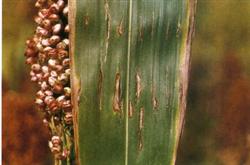
Symptoms Mainly affects leaves. Leaf spots initially appear as water-soaked, narrow, fine small stripes, which after expansion turn light reddish-brown. Some lesions have brown centers with red edges, and broad long-ovate lesions appear intermittently on the stripes. Sometimes the lesions can cover most of the leaf area. When humidity is high, small granular bacterial ooze can be seen overflowing, and after drying it becomes a scaly thin layer. Distributed in Hebei, Henan, Shandong, Jiangsu, Hubei and other provinces.
Pathogen Xanthomonas campestris pv. holcicola (Elliott) Dye, synonym X. holcicola (Elliott) Starr et Burkholder, called Xanthomonas campestris pv. holcicola or Holcus pathovar (sorghum bacterial stripe disease Xanthomonas). The bacterial cells are short rod-shaped, measuring 1.05-2.4 x 0.49-0.9 (um), occurring singly, in pairs, or in short chains, with capsules, without spores. Single polar flagellum, Gram stain negative, aerobic. The suitable growth temperature is 28-30°C, maximum 36-37°C, minimum about 4°C. Killed at 51°C after 10 minutes. Besides infecting sorghum, this bacterium can also harm foxtail millet.
Transmission routes and disease conditions The pathogenic bacteria overwinter on diseased plant residues,
Invades the host through stomata. At temperatures of 25-30°C, rainy and windy weather, especially when these conditions are encountered in the early growth stage, favor the occurrence and spread of this disease.
Control methods (1) Select resistant varieties. (2) Strengthen field management to prevent infection.