Green control methods for rice diseases, insect pests and weeds
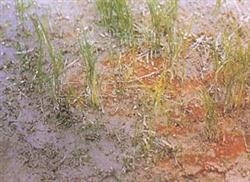
Rice seedling rot refers to the death of rice seeds and seedlings during the seedling-bed stage (that is, seed rot, bud rot and seedling death), and can be divided into two major categories: physiological and infectious. Physiological seedling rot refers to that caused purely by adverse environmental conditions; infectious seedling rot mostly refers to adverse environmental conditions inducing weakly parasitic fungi such as Pythium, Achlya, Fusarium and Rhizoctonia...
 With the continuous improvement of people's living standards, people's consumption concepts and consumption behavior are changing. In particular, the quality requirements for food are becoming higher and higher, and development has already begun to move from mere satiation toward pollution-free, safe and nutritious products. Rice is an indispensable staple on the dining table in modern life. In order for consumers to eat rice with peace of mind, strict control must be exercised over disease prevention, insect control and weed control in rice production, so that green rice undergoes whole-process quality control from land to table, ensuring people's health.
Over the past few years, we have explored the prevention and control of diseases, insect pests and weeds in green rice: first, adopting agricultural measures; second, using low-toxicity, low-residue, high-efficiency pesticides to reduce pollution and ensure the quality of rice. The specific practices are as follows.
1 Prevention and control of rice diseases
First, select disease-resistant varieties; second, strengthen fertilizer and water management. Apply more organic fertilizer, prevent excessive and too-late nitrogen fertilizer, maintain reasonable dense planting and reasonable irrigation; third, do a good job of forecasting and prediction. This provides a basis for "preventing early, preventing when small, preventing thoroughly"; fourth, chemical control.
1.1 Prevention and control of seedling-stage diseases
The main rice seedling-stage diseases are bakanae disease, damping-off and bacterial wilt.
(1) Prevention and control of bakanae disease: use 10% Jinshiling (seed-soaking agent) diluted 5000 times with water. That is, 2 mL of the agent mixed with 10 kg of water can soak 6-8 kg of seed.
(2) Use Wobida-brand DSK rice seedling-strengthening agent. Pour out the contents of the three small DSK bags inside the large bag, 15 kg in total, mix them evenly, then blend into 1 cubic meter (1050-1150 kg) of sieved dryland fertile soil with a pH value below 6.5 to make nutrient soil. When loaded into pots, it can be used for 60 sq m of seedling bed; after arranging it level, water it thoroughly. This seedling-strengthening agent combines the three functions of disease prevention, acid adjustment and fertility building, and its control effect on bakanae disease, damping-off and bacterial wilt reaches 99%.
(3) Preventing damping-off and bacterial wilt: use 50 mL of Ruimiaoqing diluted in 100 kg of water and spray 50 sq m of seedling bed. It has a clear effect on preventing and controlling soil-borne diseases such as damping-off, bacterial wilt and seedling collapse, and is currently the preferred agent.
1.2 Prevention and control of diseases in the main field
In early July, low-temperature and rainy weather easily leads to rice blast. For every 667 sq m, use 20 g of 75% Biyan plus 50 mL of the micro-fertilizer Lvzhou No. 4 for foliar spraying, which can both prevent rice blast and promote early maturity.
2 Prevention and control of rice insect pests
2.1 Agricultural measures.
Carry out shallow-water irrigation during the peak egg-laying period of adults; when larvae are causing damage, drain the field and sun-dry it, and at the same time remove weeds along roadsides and on field ridges, reducing insect sources and lowering damage and pesticide dosage.
2.2 Chemical control
The key to green rice production lies in insect-control techniques. The use of highly toxic, high-toxicity and high-residue pesticides, as well as pesticides that cause teratogenicity, gene mutation or cancer, must be resolutely eliminated. For every 667 sq m, use 40-60 mL of Lesiben diluted in 50-60 kg of water and spray to control leaf miners, rice leaf beetles and rice midges, with low residue and high control effect.
3 Prevention and control of rice weeds
3.1 Weed control in the seedling bed
(1) Air separation and screening: screen out grass seeds and impurities from the seeds, improve seed purity and reduce the occurrence of weed damage.
(2) Chemical weed control in the seedling bed: use 20 mL of 40% Ding-Pu emulsifiable concentrate diluted in 6 kg of water, spray it on the covering soil of 50-60 sq m of seedling bed, and cover with film immediately after application.
3.2 Weed control in the main field
(1) Closed weed elimination: when preparing the land and soaking the field, apply 80-100 mL of Machete per 667 sq m by the poisoned-soil method; for plots with many three-square bulrush, add 10 g of Weinong, keep the water layer at 3-5 cm, and transplant rice seedlings after 3 d. Then 10-15 d after transplanting, together with topdressing urea, mix in 40-60 mL of Machete per 667 sq m, and add 10 g of Weinong or Caoke for a second round of weed elimination.
(2) Post-emergence weed control: 5-7 d after transplanting, use 100-120 mL of Machete per 667 sq m, and add 10 g of Weinong or Caokexing; or, after the rice seedlings have thoroughly recovered 10 d after transplanting, use 70-80 mL of Ruifeite per 667 sq m.