Introduction to Several Control Measures for the Rice Stem Borer
The rice stem borer, also known as the rice stalk borer or heart borer, is one of the major pests harming rice. Its larvae have a diverse diet and also damage corn, sorghum, and other crops. A normal outbreak can reduce yields by 5-10%, and a severe outbreak can reduce yields by more than 30%. Snatching grain from the pest is also an urgent matter. Several control measures are introduced here for reference only. 1....
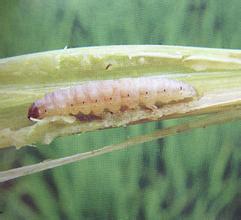
The rice stem borer, also known as the rice stalk borer or heart borer, is one of the major pests harming rice. Its larvae have a diverse diet and also damage corn, sorghum, and other crops. A normal outbreak can reduce yields by 5-10%, and a severe outbreak can reduce yields by more than 30%. Snatching grain from the pest is also an urgent matter. Several control measures are introduced here for reference only.
1. Choose excellent rice varieties with strong insect resistance, which can reduce the base population of the rice stem borer.
2. Encourage autumn plowing. Autumn plowing can turn the larvae overwintering in rice stubble and field weeds into the soil, thereby helping to kill them.
3. Do a good job of sealing stacks in spring. Overwintering of the rice stem borer and proper handling of rice straw are also key to cutting off the source of the pest. It is recommended to seal stacks in April and May for better results.
4. Master a reasonable timing for pesticide application. It should be neither too early nor too late. When moths are found in the field in late June, effective measures should be taken, such as drops of insecticide. Seize the best time for application; the application time should not be too early or too late.
5. Physical control. Light trapping and sex pheromone control can be used. Light trapping takes advantage of the adult insect's phototactic habit. Trapping lamps can be installed where adults are often active, effectively trapping newly emerged adults and reducing the number of eggs laid that year. Sex pheromones mainly work by artificially synthesizing the scent of female moths to kill male moths, reducing mating opportunities and lowering the hatching rate.
6. Chemical control. This control method is currently an important measure. For agent selection, generally 90% monosultap wettable powder 900 g/ha can be diluted with 300 kg of water for spraying; 3.6% bisultap granules 20-24 kg/ha can be broadcast, taking care to maintain a 3-5 cm shallow water layer for 3-5 days; 45% bisultap powder 1050-1500 g/ha can be diluted with 300 kg of water for spraying, or mixed evenly with 225-300 kg of fine soil and then broadcast evenly... For chemical control, select agents according to local conditions, reduce the number of applications and the dosage as much as possible, rotate agents, slow the development of resistance, and choose low-toxicity and high-efficiency products.
7. Do a good job of field management. Apply nitrogen fertilizer reasonably to avoid excessive rice growth, and increase the application of phosphorus and potassium fertilizers to promote robust plant growth and improve resistance.
Controlling the rice stem borer is an arduous task, and I hope everyone can draw inspiration from this.