Control Methods and Technical Key Points for the Buckwheat Hook-wing Moth
The buckwheat hook-wing moth belongs to the order Lepidoptera, family Drepanidae. The adult has a body length of 10-13 mm and a wingspan of 30-36 mm, with 3 outward-curving ">"-shaped yellowish-brown lines on the forewings. The larva has a body length of 20-30 mm; young larvae are green or grayish-brown, gradually turning dark brown as the instar increases, and mature larvae are dirty white. This pest mainly...
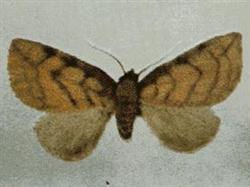
The buckwheat hook-wing moth belongs to the order Lepidoptera, family Drepanidae. The adult has a body length of 10-13 mm and a wingspan of 30-36 mm, with 3 outward-curving ">"-shaped yellowish-brown lines on the forewings. The larva has a body length of 20-30 mm; young larvae are green or grayish-brown, gradually turning dark brown as the instar increases, and mature larvae are dirty white. This pest mainly damages buckwheat in the larval stage and has a voracious feeding habit. When outbreaks are severe, yield losses can exceed 50%, or even result in total crop failure. Recent temperature and humidity conditions are very favorable for the occurrence and damage of the buckwheat hook-wing moth, so growers need to actively investigate and control it.
Control Measures
1. Manual capture and killing: Taking advantage of the larvae's death-feigning behavior, they can be captured and killed manually. The method is to hold a sieve in one hand and tap the buckwheat plants with the other, so that the larvae fall into the sieve and are then collected and destroyed.
2. Chemical control: Before the larvae reach the 3rd instar, spray with BT powder at 800-1000 times dilution, 4.5% beta-cypermethrin at 2000-2500 times dilution, or 20% fenpropathrin emulsifiable concentrate at 1500-2000 times dilution for control.
Safety Precautions
When using chemical pesticides, the dosage must be prepared according to the instructions to prevent excessive dosage from causing phytotoxicity (buckwheat is at the flowering stage and has poor pesticide tolerance). When spraying, wear protective clothing, glasses and gloves, and set up spraying warning signs to prevent incidents of human and livestock poisoning.