Key Technical Points for Green Prevention and Control of Garlic Pests and Diseases
Green prevention and control of crops means using agricultural control, physical control, biological control, precision pesticide application and other techniques during agricultural production to control pests and diseases, with the aim of reducing pesticide use, lowering pesticide residues in agricultural products, and comprehensively improving the quality and safety level of agricultural products. This year, the garlic planting area in our town...
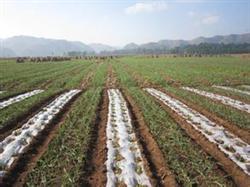
Green prevention and control of crops means using agricultural control, physical control, biological control, precision pesticide application and other techniques during agricultural production to control pests and diseases, with the aim of reducing pesticide use, lowering pesticide residues in agricultural products, and comprehensively improving the quality and safety level of agricultural products. This year, the garlic planting area in our town has increased compared with last year. To ensure the normal growth of garlic, we should attach great importance to it, actively take action, adhere to the plant protection policy of "prevention first, integrated control", vigorously promote green prevention and control techniques, reduce pesticide residues, and achieve the goals of high quality, high yield, high efficiency, and meeting the needs of export agricultural products. The green prevention and control techniques for garlic pests and diseases mainly focus on the following aspects:
I. Agricultural Control
Adopt agricultural technical measures such as cleaning the fields, scientific fertilization and irrigation, and strengthening intertillage management to create ecological and environmental conditions favorable to the growth of scallions and garlic and unfavorable to the occurrence and damage of pests and diseases, enhance the pest and disease resistance of plants, and reduce damage.
II. Physical Control
First, use frequency-vibration insect-killing lamps to trap and kill adult moths of the Noctuidae family; each frequency-vibration insect-killing lamp can control an area of up to 30-50 mu. Second, use the color-taxis habit of pests to trap and kill them, such as using yellow sticky boards to trap and kill winged aphids, leafminers (Liriomyza spp.) and other pests, and using blue sticky boards to trap and kill thrips. Hanging 20-30 sticky boards (20 cm x 24 cm) per mu can effectively control the occurrence of pests.
III. Chemical Control
Use pesticides scientifically and rationally, and follow the principles of "strict, accurate, and appropriate", apply the right pesticide for the problem, and alternate pesticides; strictly observe the pre-harvest interval of pesticides, and prohibit the use of highly toxic and high-residue pesticides; adopt new types of spraying equipment to improve the atomization effect of the spray solution, so as to reduce pesticide dosage, improve pesticide effectiveness, and improve control results.
1. Chemical control of garlic leaf blight and purple blotch: In the early growth stage of garlic and scallions, that is, before the seedling stage and flower bud and bulbils differentiation stage of garlic, and before the tillering stage of scallions, use 70% mancozeb WP 500-fold solution or 75% chlorothalonil WP 500-fold solution and other pesticides for spray prevention, once every 10 days, for 2-3 consecutive applications; in the early stage of disease onset, choose 10% difenoconazole (Score) WG 4000-5000-fold solution or 75% chlorothalonil WP 500-600-fold solution or 25% propiconazole EC 2500-3000-fold solution for spray control, once every 7-10 days, for 3-4 consecutive applications.
2. Chemical control of Noctuidae pests (beet armyworm, Acrolepiopsis sapporensis, etc.): At the 1st-2nd instar larval stage of Noctuidae pests (beet armyworm, Acrolepiopsis sapporensis, etc.), choose 5% cyfluthrin (Baythroid) EC 2000-3000-fold solution or Bacillus thuringiensis (BT) ME 500-1000-fold solution or 50% flufenoxuron EC 1000-1500-fold solution for spray control, once every 7 days, for 2-3 consecutive applications.
3. Chemical control of thrips: Choose 10% imidacloprid WP 1000-1500-fold solution or 5% acetamiprid EC 1500-2000-fold solution for spray control, once every 7 days, for 2-3 consecutive applications, and it can also control aphids at the same time.
4. Chemical control of leafminers (Liriomyza spp.): Choose 1.8% abamectin EC 2000-2500-fold solution or 50% cyromazine EC 4000-5000-fold solution for spray control, once every 7 days, for 2-3 consecutive applications.