Key Cultivation and Control Techniques for Major Watermelon Pests and Diseases
Yu Yongjun, a villager from Group 3 of Yuwanggang Village, Qifang Town, Zaoyang City, Hubei Province, once hailed as the "Watermelon King," has through years of practice worked out a good method for making watermelons sweeter, now offered to fellow growers for reference. 1. About 1 week after fruit set, dig a hole 10 cm from the main root, apply 50 g of cake fertilizer per plant, cover with soil and water. This method can make...
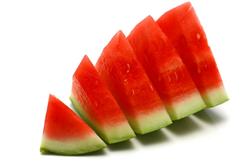 Watermelon is a popular refreshing and health-promoting fruit, but pests and diseases occur frequently during production, especially diseases. Paying attention to health-promoting cultivation can effectively control and reduce the damage of pests and diseases.
1 Cultivation Techniques
1) Site selection and land preparation. Watermelon is drought-tolerant, intolerant of waterlogging, and unsuitable for continuous cropping. Choose well-aerated, fertile sandy loam soil, and generally do not choose land where watermelon has been planted continuously. Land preparation requires deep ploughing and fine tillage, with the furrow, waist ditch and surrounding ditch connected so as to facilitate drainage and irrigation.
2) Fertilizer and water management. Applying sufficient base fertilizer and topdressing reasonably are the prerequisites for high yield and good quality of watermelon. Base fertilizer accounts for about 60%-70% of the total amount, and the best application method is banding between rows or hole application, mainly using organic fertilizer, with 100 kg of cake fertilizer, 50 kg of bone meal (if cake fertilizer and bone meal are lacking, 50-80 kg of ternary compound fertilizer can be used), 2000 kg of barnyard manure, and 2000-3000 kg of high-quality compost per 667 sq m. Topdressing is determined according to the growth stages of watermelon. After the watermelon seedlings survive transplanting, apply a seedling-promoting fertilizer, that is, 10 kg of ternary compound fertilizer per 667 sq m applied in furrows or holes; at the 5-6 true-leaf stage, apply a vine-promoting fertilizer, that is, 10-20 kg of ternary compound fertilizer per 667 sq m applied in furrows or holes; when the young fruit has set firmly (egg-sized), heavily apply a fruit-swelling fertilizer and fruit-strengthening fertilizer, that is, 1000 kg of decomposed human excrement and urine or 40-70 kg of ternary compound fertilizer per 667 sq m applied in furrows or holes; in the late growth stage of watermelon, combined with pest and disease control, foliar topdressing can be carried out (0.3% potassium dihydrogen phosphate + 0.3% urea aqueous solution or other foliar fertilizers), to preserve leaves and increase yield.
2 Control of Major Watermelon Diseases
2.1 Watermelon Fusarium wilt The pathogen is mainly soil-borne, and the pathogen in soil can survive for 5-7a. Control measures:
1) Crop rotation. Carry out crop rotation with non-cucurbit crops for more than 3a.
2) Grafting. Bottle gourd, long gourd, calabash gourd and waist gourd perform better as rootstocks. The insertion grafting method is simple and easy to carry out. Sow watermelon when the gourd rootstock sprouts and shows its tip; the suitable grafting period is when the rootstock has two leaves and one heart (two leaves unfolded and the third true leaf emerging). During grafting, first use a bamboo stick to remove the growing point of the rootstock, then use the tip of the bamboo stick to insert a small hole vertically from the growing point (about 1 cm deep), then take the watermelon seedling, close and pinch the cotyledons together, and use a small knife to cut the hypocotyl about 1 cm below the cotyledons into a wedge shape, with the cut surface about 0.8 cm long; after the sap has flowed out, insert it into the small hole of the rootstock, and grafting is complete. Finally cover with film to retain moisture.
3) Chemical control. At the early stage of disease onset or when the vines grow to 50 cm, use 40% carbendazim suspension or 25.9% copper ammonium zinc complex aqueous solution (Kanguling) and other 500-800 times dilutions for root drenching, once every 7-10 days, for 2-3 consecutive times. In areas with frequent nematodes, nematicides should be added when drenching roots.
4) Select disease-resistant (tolerant) varieties. Zhengkang No. 1, No. 2, Zhong 8602F, Jingxin No. 1 and others are relatively resistant (tolerant) to the disease.
2.2 Watermelon anthracnose The pathogen is mainly carried on soil and seed coats, and spreads and invades through flowing water and wounds. Control measures:
1) Deep furrows and high beds to prevent water accumulation, and spread grass under the fruit so that the watermelon does not directly contact the ground.
2) Seed treatment. Soak seeds in 55°C water for 15 min or in 100 times formalin solution for 30 min, wash clean with water and then sow.
3) Chemical control. At the early stage of disease onset, choose 40% carbendazim suspension or 70% chlorothalonil wettable powder or 25% Tanteling wettable powder 600-700 times dilution for spraying. Apply once every 7-10 days, for about 3 consecutive applications.
2.3 Watermelon bacterial angular leaf spot The pathogen is mainly carried by soil and seeds, and spreads through rainwater. Control measures:
1) Seed treatment (same as for watermelon anthracnose).
2) Chemical control. At the early stage of disease onset, choose 72% agricultural streptomycin 250 mg/kg or 40% metalaxyl-copper wettable powder 500 times dilution or Xinzhi streptomycin 200 mg/kg and others for spraying.
3 Control of Major Watermelon Pests
The damage caused by watermelon pests is mainly as follows: melon aphids pierce and suck leaves; American leafminer adults pierce leaves to feed and lay eggs, and larvae mine and feed on the mesophyll inside the leaves; palm thrips rasp and suck the sap of tender shoots, tender leaves, flowers and young fruits; yellow squash beetle adults eat leaves, tender stems, floral organs and young fruits, while larvae damage the roots; spider mite adults and nymphs both suck sap on the undersides of leaves, etc. Control measures:
1) Plastic film mulching to avoid aphids (film width 70-100 cm).
2) Chemical control. Use 1.8% abamectin emulsifiable concentrate 3000 times dilution or 20% fenvalerate emulsifiable concentrate 2000 times dilution for spraying to control yellow squash beetle adults, American leafminer, palm thrips, etc.; use 10% imidacloprid wettable powder 1500 times dilution for spraying to control melon aphids, whiteflies, etc.; use 80% trichlorfon soluble powder 1000 times dilution for root drenching to control yellow squash beetle larvae and underground pests; use 73% propargite emulsifiable concentrate 2000-3000 times dilution for spraying on the undersides of leaves to control red spider mites, etc.