Key Integrated Pest and Disease Control Techniques for Onion Seedlings
I. Selecting Superior Varieties In production, purple-skinned varieties such as Ziyu No. 1, Ziyu No. 2, Zixing, and Shuanghuanhong can be selected. These varieties have the characteristics of strong pungency, high yield, excellent quality, and suitability for export. These varieties generally yield about 5000 kg per mu, and high-yielding plots can reach 7500 kg per mu. II...
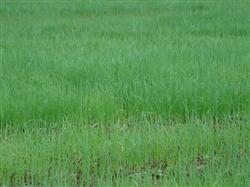 In rainy weather, onion pests and diseases will occur severely during the seedbed stage, so preventive and control work should be done in advance.
Selecting a good seedbed Select a field that has been rotated for more than 2 years with non-onion and non-garlic crops as the seedbed. Be careful not to choose a field where the previous crop was treated with excessive herbicides, so as to avoid onion seedling stunting or death.
Deeply dig drainage ditches Adhere to deep ditches and high beds, and open high-standard drainage ditches around the seedbed, so that there is no standing water in the bed after rain, reducing the groundwater level and soil moisture in the bed. In dry weather, water can be sprinkled with a watering can; flooding irrigation must be avoided.
Controlling underground pests Before land preparation, apply 48% chlorpyrifos emulsifiable concentrate 150-200 ml mixed with 30 kg of fine soil per mu of seedbed, which can control white grubs and cutworms. After sowing, use 48% chlorpyrifos emulsifiable concentrate 50 ml mixed with 2.5 kg of roasted bran or soybean cake per mu of seedbed to make bait, and scatter it around the seedbed in the evening, which can trap and kill mole crickets and older cutworm larvae moving into the seedbed from outside.
Soil disinfection Per mu of seedbed, use 45% wu-bromobacterium (containing 30% quintozene and 15% bromothalonil) powder 300 g mixed evenly with 40-50 kg of fine soil. Scatter one third on the leveled bed surface and cover seeds with two thirds, which can reduce seedling-stage diseases.
Chemical control Spray twice with 10% imidacloprid wettable powder 1000-fold solution and 2% ningnanmycin aqueous solution 500-fold solution. This can both prevent and control aphids and thrips damage and control yellow dwarf disease caused by the viruses they transmit; at the 1-2 leaf stage, spray 3.2% hymexazol-metalaxyl (containing 2.6% hymexazol and 0.6% metalaxyl) aqueous solution 800-fold solution and 25% metalaxyl wettable powder 600-fold solution to control damping-off and Rhizoctonia rot, and spray again after 7 days; at the early onset of disease, spray Aimiao (30% difenoconazole-propiconazole emulsifiable concentrate) 3000-fold solution to control anthracnose, and spray 50% procymidone wettable powder 1000-fold solution to control gray mold, and spray again after 10 days.