What are the simple techniques for watermelon disease control?
Before sowing, choose a greenhouse that has not grown cucurbit crops, or one that has been subjected to high-temperature sealed treatment during the summer fallow period, to prevent soil-borne diseases such as Fusarium wilt, damping-off, Rhizoctonia rot, and anthracnose from invading during the seedling stage. For seed treatment, soak the seeds in warm water at 55°C for 10 minutes, stirring constantly, then after cooling soak for another 6 hours, then...
Before sowing: choose a greenhouse that has not grown cucurbit crops, or one that has been subjected to high-temperature sealed treatment during the summer fallow period, to prevent soil-borne diseases such as Fusarium wilt, damping-off, Rhizoctonia rot, and anthracnose from invading during the seedling stage.
Seed treatment: soak the seeds in warm water at 55°C for 10 minutes, stirring constantly, then after cooling soak for another 6 hours, then disinfect with 10% trisodium phosphate for 30 minutes, then rub and wash with saturated limewater for 3-5 minutes, and finally rinse with clean water 3 times; remove the seeds and rub them dry with a dry towel or air-dry them. The purpose is to kill seed-borne pathogens: viral diseases, anthracnose, gummy stem blight, Phytophthora blight, angular leaf spot, etc.
Seedling raising and seedbed management: raise seedlings from December to January. Per mu, use 0.5 kg of 50% carbendazim, mix with 100 kg of fine dry soil and cover the seeds, or use 8 g of 25% carbendazim wettable powder or 10 g of 50% compound carbendazim suspension concentrate per square meter, mix with a small amount of water or fine soil and spray (sprinkle) onto the soil surface, turn evenly, and then sow; this can prevent the occurrence of Fusarium wilt. Using metalaxyl or seed-dressing agent or thiram at 8-10 g per square meter of soil mixed with 8-10 kg of fine soil to make medicated soil for covering seeds (cover on top and place beneath: 2/3 of the medicated soil on top, 1/3 below) can prevent the occurrence of damping-off and Rhizoctonia rot. If individual diseased plants are found during the seedling stage, they should be removed promptly. Spray 10% Amistar 1500-fold solution or 2% Haopu 500-800-fold solution to prevent disease onset.
Grafting for disease prevention: grafting watermelon onto gourd or white-seeded pumpkin can effectively control the occurrence of Fusarium wilt.
Planting period: in early February, Fusarium wilt begins to occur. Use watermelon continuous cropping agent No. 1 at 300-fold solution, pouring 250 ml of the solution into each hole, which can control Fusarium wilt.
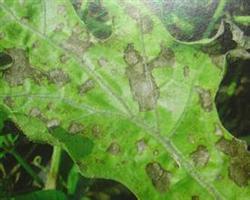
Vine elongation stage: from early March to April, greenhouse temperatures are relatively high, and various diseases begin to occur. Poor ventilation and flood irrigation easily trigger anthracnose, angular leaf spot, viral diseases, gummy stem blight, and sclerotinia rot, and Fusarium wilt enters its peak period. Fusarium wilt, gummy stem blight, and sclerotinia rot cause longitudinal cracking of stems. Anthracnose, angular leaf spot, viral diseases, gummy stem blight, and sclerotinia rot cause leaf blight. When disease focus plants appear, humidity should be reduced promptly and pesticides applied; chlorothalonil smoke agents can be used for fumigation, or targeted pesticides can be used.
Fruit-setting stage: during this period, powdery mildew and Phytophthora blight begin to occur, Fusarium wilt occurs heavily, and gummy stem blight and viral diseases worsen; chemical control is the main measure. Use the biological pesticide Junkeduke (2% ningnanmycin) at 200-250-fold solution for spray control before the onset of viral diseases or in the early stage of onset, and use amino-oligosaccharin for prevention; agricultural antibiotic 120 aqueous solution also controls white mold and anthracnose; hu·phosethyl-Al controls Phytophthora blight and Fusarium wilt.
Fruit enlargement stage: this period is the peak of disease occurrence. Fruit diseases include Phytophthora blight, angular leaf spot, anthracnose, sclerotinia rot, and physiological disorders such as deformed fruit, big-belly fruit, hollow fruit, and misshapen fruit. Strengthen temperature variation, water, and fertilizer management, keep the fruit separated from the ground, and when diseased fruit are found, remove them promptly, take them outside the greenhouse, and bury them deeply.