A Detailed Explanation of the Occurrence Patterns and Control Methods of Garlic Root Maggots
Root maggots is the collective term for the larval stage of Diptera pests that damage garlic and other crops. In recent years, the occurrence of garlic root maggots has shown a trend of increasing year by year. Root maggot damage can cause garlic yield reduction and has a major impact on garlic quality, with severe damage leading to serious economic losses. Garlic root maggots (larvae) generally gather on garlic roots and...
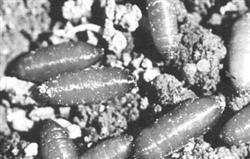
Root maggots is the collective term for the larval stage of Diptera pests that damage garlic and other crops. In recent years, the occurrence of garlic root maggots has shown a trend of increasing year by year. Root maggot damage can cause garlic yield reduction and has a major impact on garlic quality, with severe damage leading to serious economic losses.
Garlic root maggots (larvae) generally gather in the underground parts of garlic such as roots and bulbs, and mainly cause damage by feeding on or boring holes in garlic roots, leaving them incomplete, or by burrowing into garlic cloves to feed and form holes. In severe cases, the garlic flesh is eaten hollow, and the damaged parts become rotten. The above-ground parts of affected garlic plants are stunted, with yellowing leaves, and severely affected plants die. Based on the occurrence patterns and damage characteristics of garlic root maggots, it is recommended to adopt an integrated control strategy combining agricultural control, physical control and chemical control.
I. Physical Control
1. Thoroughly clear plant residues. Garlic root maggots have a strong attraction to diseased and residual plant material, especially rotting garlic plants. At garlic harvest, garlic residues in the field, at field edges and along roadsides should be thoroughly cleared and destroyed, to reduce the food source for root maggots and at the same time reduce the residual pest population in the field.
2. Regulate water and fertilizer and planting schedules to disrupt the environment for root maggot occurrence. Organic fertilizer should be fully decomposed before application. Deeply plow the soil and harrow the topsoil to reduce the pest population. According to local conditions, sow late at the appropriate time. Keep the soil surface dry during the adult emergence and egg-laying period to reduce the number of eggs laid by adults.
3. Trap and kill adults. During the adult occurrence period, place sugar-vinegar liquid (sugar : vinegar : water : 90% trichlorfon crystals = 1 : 1 : 3 : 0.1) at 3-4 spots per mu (1 mu = 667 sq m) to trap and kill adults.
II. Chemical Control
Chemical control mainly includes 3 methods:
1. Toxic soil method. Combined with land preparation, apply 15% chlorpyrifos granules at 1-2 kg per mu, mixed with about 20 kg of fine sand (or combined with fertilizer application), and broadcast it, which can control root maggots well.
2. Seed dressing method. Seed dressing with chemicals before sowing is currently a relatively good method for controlling garlic maggots. The chemicals that can be selected include Dagonglue (600 g/L imidacloprid suspension seed coating agent) and Aocheng (40% chlorpyrifos emulsion in water). The specific method of use is: use 40 g of Dagonglue or 500 g of Aocheng, dilute with 2-3 kg of water to prepare a seed dressing liquid, evenly dress about 100 kg of garlic seed, dry in the shade, and then sow.
3. Root drenching method. After garlic maggots occur, the root drenching method can be used as a remedy. At the early peak period of root maggot larval damage, combined with watering, flushing application of chemicals can control garlic maggots well. The specific usage is: use 500-700 g of Aocheng (40% chlorpyrifos emulsion in water) per mu, prepare a stock solution and put it into a sprayer, remove the sprayer nozzle, and let the liquid flow into the garlic field with the water at the irrigation inlet. Alternatively, remove the sprayer nozzle and spray directly at the base of the garlic plants.