Symptom Identification and Control Measures for Nutrient Deficiency in Garlic
(1) Watering. Although garlic leaves are fairly drought-tolerant, the roots are shallow and have weak absorption capacity, so garlic requires relatively high soil moisture, and different growth stages have different requirements for soil moisture. After sowing, maintain relatively high soil moisture; if it is too dry, water in advance to achieve suitable moisture for sowing. Before winter...
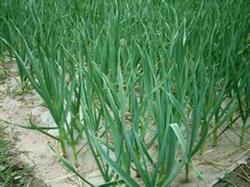 Garlic is a vegetable crop that likes fertilizer and tolerates fertilizer. Because its root absorption capacity is poor, on the premise of applying sufficient base fertilizer, attention should be paid to the application of topdressing to promptly meet garlic's nutrient needs for growth. Under the above fertilization conditions, nutrient deficiency symptoms generally will not occur, but due to differences in soil conditions, the following nutrient deficiency symptoms may occur, and they should be controlled separately to meet the needs of garlic growth.
Calcium deficiency: When garlic is deficient in calcium, necrotic spots appear on the leaves. As the necrotic spots expand, the leaves bend downward, and the leaf tips die quickly. When this symptom appears, calcium nitrate or calcium chloride can be sprayed. Magnesium deficiency: When garlic is deficient in magnesium, the leaves fade green, first appearing at the base of old leaves and gradually developing toward the leaf tips, and the leaves eventually turn yellow and die. When this symptom appears, magnesium sulfate can be sprayed. Boron deficiency: When garlic is deficient in boron, new leaves become yellowed, and in severe cases the leaves wither and die, plant growth stagnates, and small brown cracks can be seen when the leaf sheaths are dissected. When this symptom appears, boron fertilizer can be sprayed.